
8 Outdoor Kitchen Designs on a Budget
Outdoor kitchens don't have to start as luxury construction projects. The most reliable outdoor kitchen designs on a budget control the footprint, phase features, use materials suited to Northern Arizona, and separate safe preparation from work that requires licensed trades. A compact grill station with a useful counter, storage, shade, lighting, and seating can serve a household better than a large kitchen filled with features nobody uses.
R.E. and Sons Landscaping is a licensed, bonded, and insured Prescott-based design-build company serving homeowners in Prescott, Prescott Valley, Chino Valley, and nearby Northern Arizona communities. The team helps turn underused yards into durable outdoor cooking and living areas through consultation, design approval, transformation, and enjoyment. These eight approaches cover hybrid DIY work, reclaimed materials, phased construction, concrete, repurposed grills, modular systems, regional stone, and carefully coordinated gas work.
The planning costs and examples below come from the supplied project information and are not universal quotes. Local conditions matter. Prescott-area freeze-thaw cycles, intense ultraviolet exposure, elevation, drainage, rocky soil, temperature swings, and utility requirements can determine whether a low initial price remains affordable over time. For broader inspiration, compare these ideas with outdoor living space design ideas before choosing a layout.
1. DIY Paver Patio Base with Professional Finishing
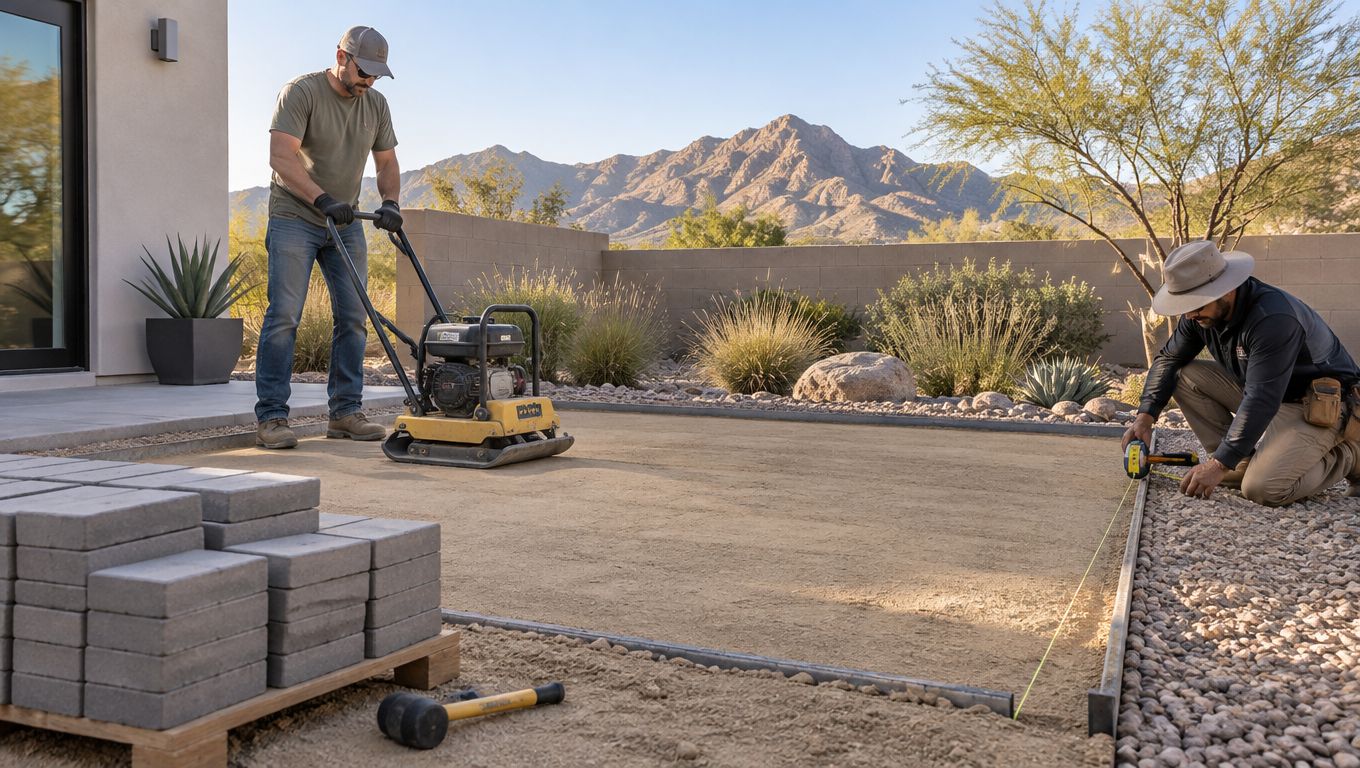
A homeowner can save labor by removing turf, excavating, leveling, and preparing the base, then bringing in R.E. and Sons Landscaping for the work that determines the finished patio's appearance and performance. This hybrid approach fits homeowners who have time and basic tools but don't want to risk an uneven cooking surface, poor drainage, or loose joints beneath an outdoor kitchen.
The DIY portion should include clear documentation. Photograph the excavation, base depth, utility locations, and drainage preparation before the professional crew arrives. Rent a plate compactor rather than relying on hand tamping, because insufficient compaction can lead to settlement and movement. Schedule finishing soon after preparation so wind or rain doesn't disturb the base.
Practical rule: Agree on the meaning of “finished” before starting. A pre-site consultation can clarify grading, paver pattern, edge restraint, cuts, jointing, and sealing.
Prescott's elevation and weather patterns make drainage more than a cosmetic concern. The supplied plan calls for a minimum slope of 1/8 inch per foot before finishing work begins. A sloped Northern Arizona property may also need a designed drainage solution rather than a simple flat patio base.
One Prescott family prepared a 12-by-16-foot patio base and then hired R.E. and Sons for finishing, reporting a $2,400 labor saving while keeping a professional appearance. A Prescott Valley homeowner handled demolition and grading over 2 weekends, while professionals completed a herringbone pattern in 3 days. These are project examples, not guaranteed results or pricing.
For installation methods and preparation details, review how to install paver patios. The most effective split is simple: homeowners handle controlled preparation, while professionals manage precision, drainage correction, cutting, sealing, and the final surface.
2. Reclaimed and Repurposed Materials for Kitchen Counters
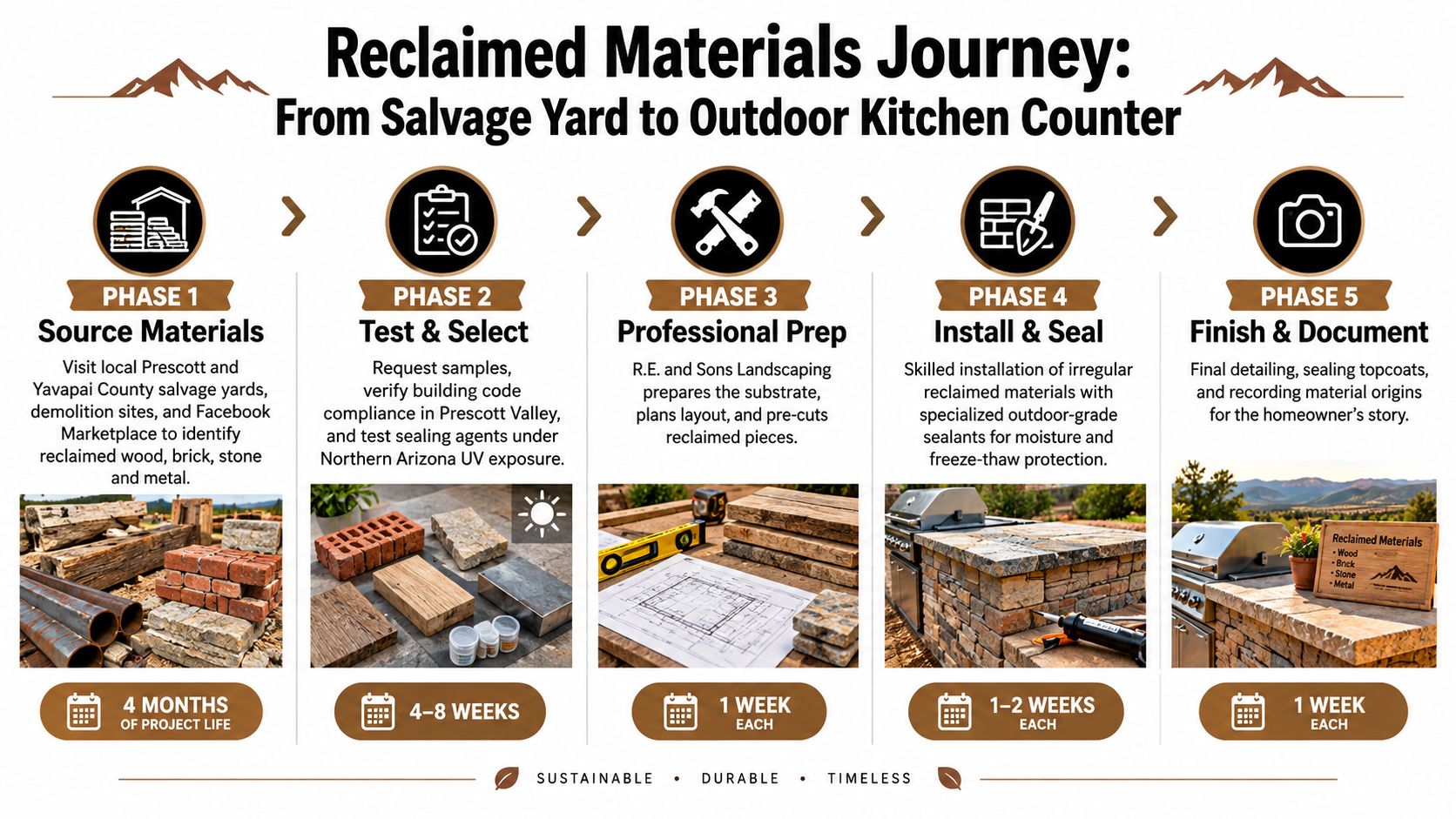
Reclaimed materials can give a small outdoor kitchen more character than a standard package while reducing the need to buy all-new finishes. Salvaged wood, recovered brick, recycled tile, reclaimed stone, and refurbished metal can work well in Prescott, Prescott Valley, and Chino Valley when the material is inspected, supported correctly, and sealed for exposure.
The trade-off is time and uncertainty. A reclaimed slab may have unusual dimensions, hidden cracks, embedded fasteners, or inconsistent thickness. Rushing the purchase can erase the savings if the material needs extensive repair or can't meet the required structural and sanitation needs. R.E. and Sons Landscaping can help homeowners evaluate local architectural salvage yards, demolition sources, and marketplace listings before committing.
Plan for 4 to 6 weeks when searching for a specific reclaimed material, as stated in the project guidance. Request samples and test sealing products before installation, especially under Northern Arizona's intense UV exposure. Reclaimed wood that looks suitable indoors may warp or deteriorate outside without the right construction and protection.
Examples include a Prescott home using reclaimed barn wood from Yavapai County with recycled copper countertop trim, and a Prescott Valley kitchen using recovered red brick from a 1920s Cottonwood building. One plan example placed the recovered brick at $600, compared with $2,100 for new granite. Those figures are supplied project examples, not standard market prices.
Inspect the source: Look for structural damage, contamination, unstable finishes, and moisture problems.
Test the sealer: Apply it to a sample and observe color, adhesion, and surface response.
Confirm local requirements: Verify building-code compatibility in Prescott Valley before purchasing.
Record the story: Material origins can become a meaningful design detail for family and guests.
Reclaimed stone from an Old Town Cottonwood renovation or weathered slate from a local architectural salvage yard can suit a rustic Northern Arizona setting. The material works only when its limitations are part of the design from the start.
3. Phased Installation with Kitchen Elements Added Over Time
A complete outdoor kitchen isn't the only path to a useful cooking area. A phased plan lets homeowners build the foundation and most-used features first, then add plumbing, refrigeration, a pizza oven, bar seating, or extended counters as the space proves its value.
R.E. and Sons Landscaping can prepare a master design for Prescott, Prescott Valley, Chino Valley, or another Northern Arizona property even when construction occurs in stages. That plan should identify future electrical routes, gas capacity, plumbing paths, drainage, structural support, appliance clearances, and access panels before the first counter is installed. Rough-in work is often harder to add neatly after walls, paving, and cabinetry are complete.
A supplied Prescott example used 3 phases over 18 months. Phase 1 included a built-in grill and stone surround at $3,500, Phase 2 added a prep sink and storage at $2,800 after 6 months, and Phase 3 added a pizza oven and extended counter at $4,200 the following year. The stated total was $10,500. This is an example of distributed spending, not a quote for a typical project.
Start with the features you use every week, not the feature that photographs best.
A Prescott Valley couple began with a small gas grill and concrete counters, then added a refrigerator drawer after 8 months and a weather-protected hood system after 14 months. Another Chino Valley homeowner started with a wood-fired pizza oven and added prep space and seating after observing actual entertaining habits.
Use a written master plan, photograph each completed phase, and keep appliance specifications with the project records. The supplied guidance recommends a 10% contingency for each phase, with late fall and early spring identified as useful planning periods for Northern Arizona work. Phasing works best when future expansion is designed before the first purchase.
4. Concrete Countertops with DIY Sealing
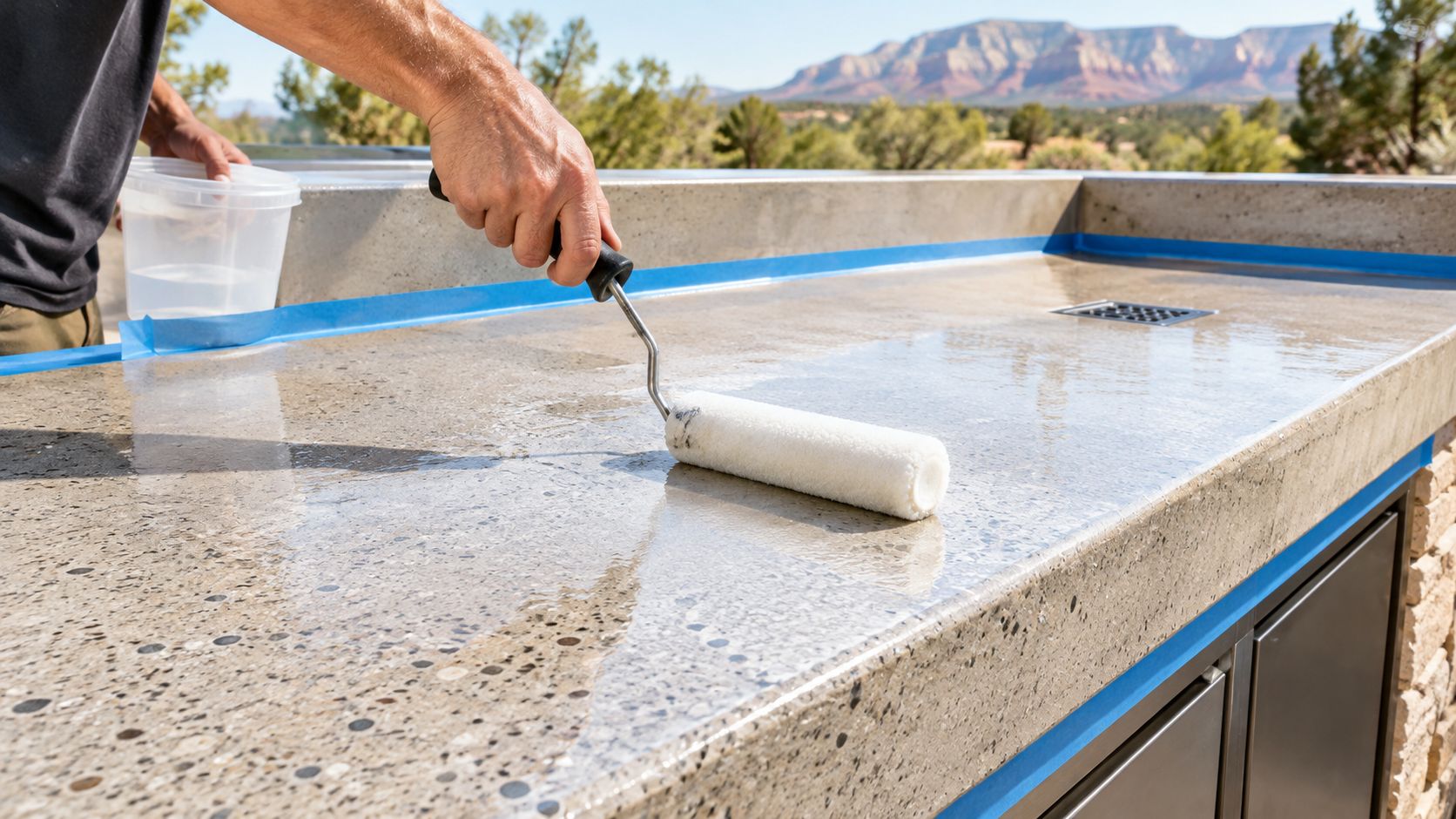
Concrete offers a practical middle ground between inexpensive temporary surfaces and high-cost stone. It can be poured to fit an unusual footprint, stained for a warmer appearance, finished with a custom edge, or embedded with glass aggregate, river rock, or tile. In Prescott's dry climate, the material can perform well, but its success depends on reinforcement, curing, support, drainage, and sealing.
The supplied planning examples place concrete at $30 to $80 per square foot, compared with $150 to $300 per square foot for granite or marble. These are planning figures from the provided examples, not current universal pricing. A professional pour can protect the structural quality while the homeowner handles later sealing if they have the patience and safety equipment to do it properly.
Ask for air-entrained concrete where freeze-thaw exposure makes it appropriate, and have stain samples cured for more than 2 weeks before selecting a color. Northern Arizona sunlight can change how dust, mineral deposits, and surface variation appear. A drainboard, slight counter slope, or planned runoff path can also reduce standing water around the cooking area.
A Prescott homeowner in the supplied example used gray concrete with blue glass aggregate, spending $400 on materials and $800 on professional installation, then applying epoxy personally. The stated total was $1,200, compared with $6,000 for comparable granite. Another Prescott Valley example used stained concrete with smooth river rocks for a $1,500 total cost. These examples show possible design directions rather than promised savings.
For installation considerations, see concrete countertops for outdoor kitchens. R.E. and Sons can handle the pour and initial seal, while a capable homeowner may learn to apply polyurethane or epoxy later. The supplied guidance estimates professional resealing savings at $300 to $600 annually in one example and suggests reapplication every 2 to 3 years, depending on exposure and surface condition.
5. Upcycled Metal and Repurposed Grills as Kitchen Centerpieces
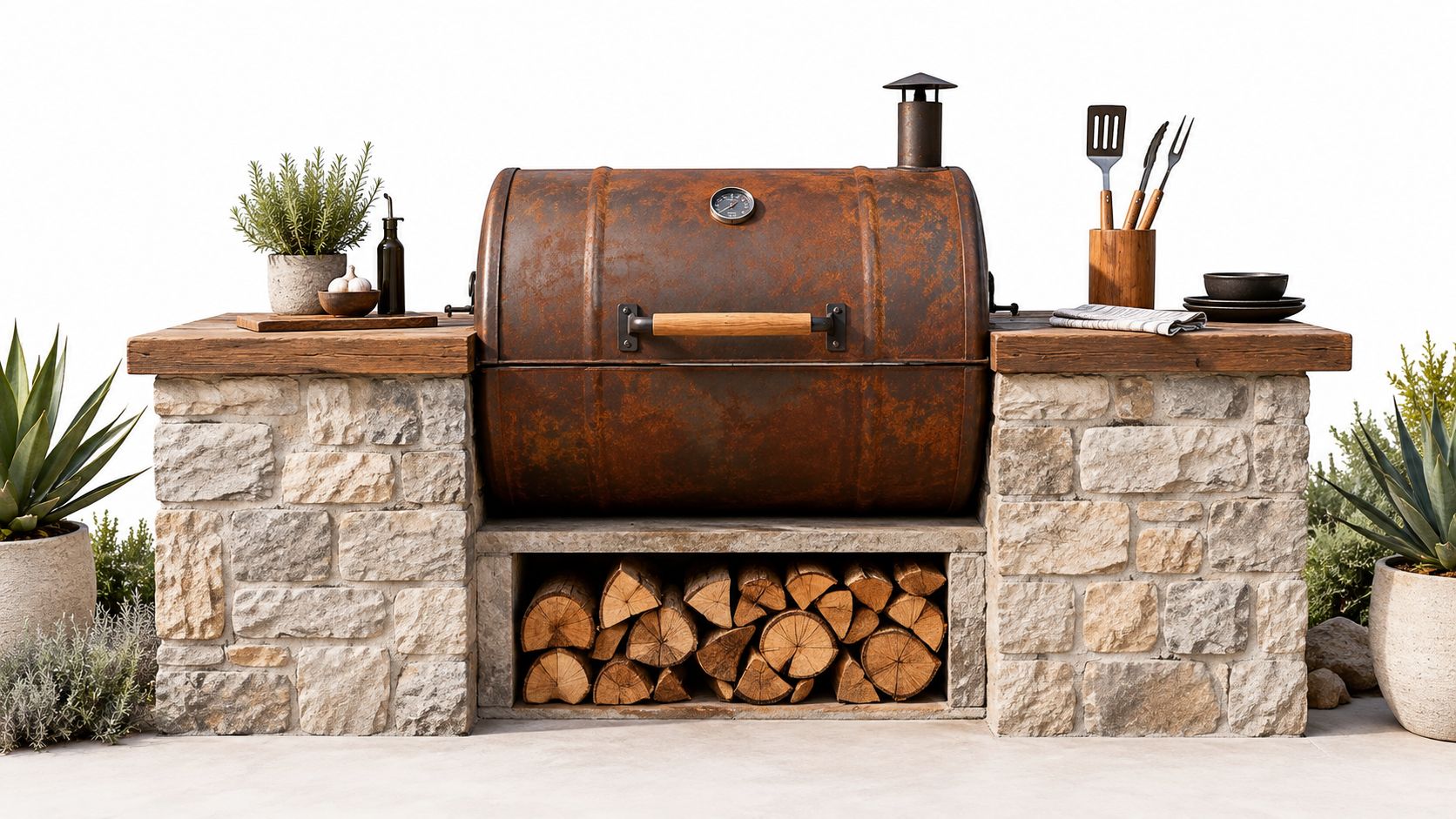
A cooking centerpiece doesn't have to be a new built-in appliance. A sound vintage grill, steel drum, restaurant flat-top, or decommissioned pizza oven can anchor an outdoor kitchen when a professional verifies its condition and builds a stable, heat-appropriate enclosure.
This approach works especially well for rustic, industrial, or eclectic courtyards in Prescott and Northern Arizona. It doesn't work when the appliance has severe corrosion, cracked fire components, unsafe gas fittings, or an uncertain food-contact surface. A low purchase price can't compensate for a grill that can't be cleaned, repaired, or safely supported.
The supplied examples cite repurposed equipment found for $200 to $800, compared with a new built-in grill priced at $3,000 to $8,000 in the planning material. One Prescott homeowner found a vintage oil-drum grill at a local antique market, then had R.E. and Sons build a stone enclosure for $700 total, compared with more than $5,000 for the referenced built-in alternative. These are individual examples, not standard costs.
Check the metal: Reject components with dangerous cracks or deep structural rust.
Test the mechanics: Confirm burners, hinges, grates, controls, and temperature response.
Plan the mounting: A professional should design the concrete or stone support.
Protect the finish: High UV exposure calls for annual rust-preventive attention.
Check compliance: Confirm food-safety and local requirements before permanent installation.
A Prescott Valley family in the supplied scenario integrated a salvaged flat-top griddle from a closed Flagstaff diner into a concrete counter. A Chino Valley restaurant owner reused a decommissioned pizza oven and rebuilt its base. R.E. and Sons can assess whether a found appliance belongs in a permanent outdoor feature or is better kept portable.
6. Modular Prefabricated Kitchen Components
Modular systems make sense when predictable scope matters more than a completely custom layout. Preassembled grill modules, refrigerator units, sink stations, and counter sections can shorten on-site construction and fit into a patio, courtyard, or landscaped cooking zone without requiring every cabinet to be fabricated from scratch.
R.E. and Sons Landscaping can integrate modular components into stone bases, paver patios, concrete counters, shade structures, and surrounding planting. The savings come from reduced design and construction complexity, but the system still needs a compatible site. A module isn't automatically affordable if the homeowner later discovers that gas, electrical, water, drainage, access, or ventilation must be rebuilt.
The supplied planning material estimates modular systems at 40% to 50% less than custom build-outs in some cases and identifies 4 to 8 weeks as a common shipping lead-time range. Those figures are directional planning information, not a guarantee. Confirm the manufacturer's warranty, outdoor rating, finish requirements, and appliance specifications before ordering.
A Prescott family selected a Lynx or FireMagic grill, refrigerator, and sink module, with installation completed in 3 days and a stated project total of $7,200. A Prescott Valley homeowner used a Traeger modular wood-fired cooking center within a custom stone courtyard for $8,500. These supplied examples illustrate how modular components can combine with outdoor construction.
Buy the site plan before buying the module. A delivered appliance can't solve an unplanned utility route.
Choose stainless steel finishes suited to intense sunlight, reserve access for service, and coordinate delivery to Prescott or Prescott Valley early. Ask R.E. and Sons to review the base configuration before purchase. The best modular design leaves a clear path for a future refrigerator, sink, bar, lighting, or storage addition without forcing a complete rebuild.
7. Stone and Rock from Local Northern Arizona Sources
Regional stone can lower transportation demands while giving the kitchen a stronger connection to its setting. Arizona sandstone, Prescott volcanic rock, regional slate, and locally available aggregate can support counters, pavers, seating, retaining elements, and grill surrounds.
The material isn't automatically cheaper just because it comes from nearby. Cutting, shaping, delivery, sealing, structural support, and installation can still affect the final cost. R.E. and Sons Landscaping's local supplier relationships can help homeowners compare available pieces, current inventory, finish requirements, and the amount of custom work each option needs.
The supplied planning information places regional materials at 30% to 50% less than imported granite or limestone in some project comparisons. A Prescott example using Arizona sandstone for counters and pavers reported $3,200 in savings compared with granite. These are provided examples, not pricing promises. Local material should be evaluated for porosity, thermal movement, slip resistance, staining, and maintenance before purchase.
For a useful overview of outdoor material choices, review different types of landscaping rock. Then request samples and observe them outdoors for 2 to 4 weeks in Prescott conditions. That test can reveal how color responds to strong light and whether the surface shows dust or mineral deposits.
A Prescott Valley patio in the supplied example paired red volcanic rock from a Flagstaff-area quarry with Arizona limestone columns. A Chino Valley kitchen used striped Arizona slate for a distinctive regional finish. These choices can look more natural than imported materials that don't relate to the surrounding terrain.
Plan custom cutting as a separate line item, ask about sealing protocols for high-altitude exposure, and consider quarry availability when setting the schedule. Spring and fall were identified in the supplied guidance as useful seasons for regional sourcing and project planning.
8. DIY Natural Gas Line Installation with Professional Code Inspection
Gas work is where budget planning must respect safety and licensing boundaries. A homeowner may be able to handle limited final connections only when a licensed professional has designed, installed, pressure-tested, and verified the system, and when local requirements permit that arrangement. The main gas line installation should not be treated as a DIY task.
The supplied planning examples place professional line installation at $400 to $800, with a Prescott homeowner paying $650 for the main run and reporting a $400 labor saving by completing final appliance connections under the plumber's observation. A Prescott Valley example used a $750 main-line installation and reported a $900 total compared with $1,400 for full service. These are project examples, not guaranteed prices.
A licensed plumber must size the line, confirm delivery pressure, account for appliance demand, perform pressure testing, and follow applicable Arizona and local requirements. At Prescott's elevation, appliance specifications and gas pressure must be checked rather than assumed from sea-level installations.
Hire the licensed trade: Never install the main gas line yourself.
Separate the quote: Ask for main-line work, final connections, testing, and inspection as distinct items.
Keep documentation: Store pressure-test records, inspection certificates, and appliance manuals.
Coordinate the site work: Route the line before paving, planting, walls, and cabinetry are finished.
Confirm clearance: Check appliance listing instructions, ventilation, and combustible-material requirements.
Prescott's special-event requirements specify portable extinguishers rated at least 2A:10BC for kitchen cooking areas, while appliances producing grease-laden vapors require a listed Class K extinguisher. The city document cites 2018 International Fire Code Section 906.4 and NFPA 96 provisions, although applicability depends on the project and permit category. Review the Prescott special-event requirements and confirm the rules governing your installation.
R.E. and Sons can coordinate licensed plumbing work so the gas route fits the hardscape and future kitchen layout. A lower labor bill isn't worthwhile if an unverified connection creates a safety risk or forces reconstruction.
8-Point Comparison: Budget Outdoor Kitchen Designs
Approach | Implementation Complexity 🔄 | Resource Requirements ⚡ | Expected Outcome Quality ⭐ | Ideal Use Cases 💡 | Key Advantages 📊 |
|---|---|---|---|---|---|
DIY Paver Patio Base with Professional Finishing | Moderate, homeowner handles demolition/grade, pros finish | Moderate, basic tools (compactor), pro crew for precise work | High, professional finish and durability (⭐️⭐️⭐️⭐️) | Homeowners with time/ability wanting cost savings + pro-grade result | 30–40% labor savings; faster timeline; professional durability |
Reclaimed & Repurposed Materials for Counters | High, sourcing irregular pieces + skilled install required | Low material cost but high time/coordination and skilled labor | High character; durability depends on selection & sealing (⭐️⭐️⭐️) | Design-conscious, sustainable homeowners valuing uniqueness | 40–60% material savings; eco-friendly; one‑of‑a‑kind aesthetic |
Phased Installation, Add Elements Over Time | Moderate, requires master plan and multi-phase coordination | Spread resource needs over 12–24 months; repeated mobilizations | High final quality; may incur 5–10% extra cost overall (⭐️⭐️⭐️⭐️) | Homeowners wanting premium kitchen without large upfront cost | Spreads cost; tests features; captures seasonal discounts |
Concrete Countertops with DIY Sealing | Moderate, pro pour + homeowner handles resealing | Low material cost; pro installation + DIY reseal supplies | Good to very good if sealed and maintained (15–20 yrs) (⭐️⭐️⭐️) | Budget-minded owners desiring customization and DIY maintenance | ~70% cost reduction vs. stone; highly customizable; DIY maintenance |
Upcycled Metal & Repurposed Grills as Centerpieces | Moderate, sourcing/refurbish + pro integration for safety | Low purchase cost for equipment; budget for refurb and integration | Variable, functional and highly characterful when refurbished (⭐️⭐️) | Eclectic designers wanting strong character and cost savings | Major savings on main cooking element; unique rustic/industrial look |
Modular Prefabricated Kitchen Components | Low, factory-built modules, simple on-site integration | Moderate component cost but low labor/time; predictable budget | Consistent, reliable quality; fast install (⭐️⭐️⭐️⭐️) | Time‑conscious homeowners wanting predictable scheduling/budget | 40–50% less than high‑end custom; fast install; upgradeable modules |
Stone & Rock from Local Northern Arizona Sources | Low–Moderate, selection and integration by pros | Moderate cost with 30–50% savings vs. imported stone; local supply | High, climate-tested durability and authentic regional character (⭐️⭐️⭐️⭐️) | Homeowners seeking regional authenticity and environmental benefit | Cost savings; climate‑appropriate materials; supports local suppliers |
DIY Natural Gas Line Installation (w/ Pro Inspection) | Moderate, licensed pro for main line, homeowner final hookups | Low incremental cost; licensed plumber + mandatory inspection | Safe and code‑compliant if inspected; modest savings (⭐️⭐️) | Mechanically inclined homeowners comfortable with appliance hookups | $300–$600 potential savings; retains professional pressure‑testing & inspection |
Choose the Budget Strategy That Fits Your Yard
The least expensive approach depends on what you already have, what you can safely do yourself, and which features your household will use. A DIY paver base can reduce labor when the ground is manageable and the drainage plan is correct. Reclaimed materials can create the most distinctive appearance, but sourcing takes patience and the material may require testing, repair, or custom fabrication. Modular components usually offer faster, more predictable installation, while local stone can provide strong regional character and climate compatibility.
Phased construction is the best fit when you want to spread spending across several budget cycles. Start with the grill, a useful prep surface, storage, lighting, shade, and seating. Add a sink, refrigerator, bar, pizza oven, or extended counter only after you know how the space is used. The broader market context supports that approach. The outdoor-kitchen market was estimated at approximately USD 26.3 billion globally in 2025 and is projected to reach USD 52.7 billion by 2033, representing a 9.1% compound annual growth rate, according to Grand View Research's outdoor-kitchen market report. That projection is directional, not a promise of local pricing.
Cost planning should include hidden infrastructure. Recent remodeling data reported that 58% of outdoor-kitchen projects involved plumbing, electrical, or heating work, 55% included appliances, and 50% included countertops, as reported by Qualified Remodeler's outdoor-project trends. Those figures explain why a master plan should reserve utility routes, safe clearances, drainage, service access, and future appliance locations before finishes are installed.
Angi reports an average outdoor-kitchen cost of about $16,473, with typical projects ranging from $6,310 to $26,925. Basic installations can start near $950, while luxury builds may exceed $60,000. The same Angi outdoor-kitchen cost guide identifies size, materials, appliances, labor, and design as major cost drivers, with labor estimated at $50 to $150 per hour and design at $500 to $3,000. Treat those figures as planning references rather than a Prescott quote.
Which outdoor kitchen idea costs least
A compact grill station, a prepared patio surface, and a simple counter generally require less work than a full built-in kitchen. A hybrid DIY and professional approach may reduce labor, but only when grading, compaction, drainage, structural support, and utility work are handled correctly.
Is DIY outdoor kitchen work safe
DIY preparation, demolition, material sourcing, and some finishing tasks may be appropriate for capable homeowners. Gas lines, electrical work, structural bases, drainage corrections, appliance clearances, and code-sensitive installations should be reviewed or completed by qualified professionals.
What materials suit Prescott
Materials should tolerate intense UV exposure, temperature swings, occasional runoff, dust, and freeze-thaw conditions. Properly selected and sealed concrete, regional stone, suitable pavers, stainless steel, and carefully inspected reclaimed materials can work well. The correct substrate, drainage, support, and maintenance plan matter as much as the material name.
When should you hire a professional
Bring in a professional before purchasing appliances or materials if your plan includes gas, plumbing, electrical work, significant grading, drainage, built-in structures, reclaimed materials, or permanent cooking equipment. Early review can prevent a counter, grill, pergola, or patio from being placed where it later violates clearance requirements or blocks service access.
R.E. and Sons Landscaping serves Prescott, Prescott Valley, Chino Valley, and Northern Arizona with outdoor-kitchen and full design-build services. The company's four-step process, consultation, design approval, transformation, and enjoyment, helps homeowners move from an idea to a coordinated plan. R.E. and Sons is licensed, bonded, and insured, holds Arizona ROC #300642, and offers complimentary design. Start with a site assessment and master plan before buying the grill, especially when the project involves drainage, utilities, freeze-thaw protection, or reclaimed materials.
R.E. and Sons Landscaping can help plan and build a budget-conscious outdoor kitchen with pavers, local stone, concrete counters, modular components, built-in grills, storage, and related outdoor work. Visit R.E. and Sons Landscaping to request a consultation or complimentary garden layout for your Prescott-area project.
Comments