
Artificial Turf Infill Options for Arizona Yards
Your new lawn is going in next month in Prescott Valley, and the installer wants to know which infill you want. Your dog already has a favorite sunny corner, and you're weighing comfort, heat, cleanup, and what happens when monsoon rain hits. For most residential yards in Prescott, Prescott Valley, and Chino Valley, I recommend acrylic-coated silica sand because it offers dependable fiber support and is less prone to migration than lightweight options when the full system is designed properly.
R.E. and Sons Landscaping helps Northern Arizona homeowners choose and install artificial turf for lawns, pet areas, and custom putting greens. Infill isn't just a finishing detail. It affects how the turf feels, how fibers stand up, how particles move in rain and wind, and how much upkeep the yard needs. The practical comparison is between silica sand, coated sand, crumb rubber, and organic infills such as cork, coconut fiber, and walnut shells.
Choosing the Right Infill for a Prescott-Area Yard
The right choice depends on how you'll use the surface. A putting green needs consistent ball roll and upright fibers; a dog yard needs manageable cleanup and limited tracking; a family lawn needs a comfortable surface and a realistic plan for hot weather. No single infill is ideal for every job.
Northern Arizona makes the decision more consequential than a generic product list suggests. Strong sun can make artificial turf uncomfortable, while heavy seasonal rain can move infill if the material, perimeter containment, and drainage assembly aren't suited to the site. Lightweight particles may migrate more readily, especially where runoff crosses a slope or open edge.
Infill | Heat behavior | Drainage | Maintenance | Best fit |
|---|---|---|---|---|
Silica sand | Won't eliminate surface heat | Dense particles can resist movement; verify the complete system | Check levels and redistribute as needed | General lawns and stable installations |
Acrylic-coated sand | Doesn't make turf cool, but supports a consistent surface | Higher density can help limit displacement | Inspect edges and top off if needed | Many pet and family yards |
Crumb rubber | Can provide cushioning, but doesn't prevent hot surfaces | Depends on system design and containment | Watch for migration and replenishment needs | Athletic-style cushioning or specified impact needs |
Organic infill | Heat and moisture behavior vary by product | Lighter materials can be more vulnerable to movement | Check for moisture-related wear and tracking | Shaded areas where renewable materials are a priority |
Use the table as a starting point, not a substitute for a system specification. Ask the installer to identify the exact product, intended application, drainage plan, and how the material will be contained at edges and transitions.
What Infill Actually Does Inside a Turf System
Artificial turf infill has two primary jobs: stabilizing the fibers and improving surface cushioning. California's Department of Toxic Substances Control describes these as the main functions of infill in its background document on artificial turf materials. In practical terms, small particles settle between the blades, helping them stay upright under foot traffic, while the selected material affects how the surface responds when people walk, run, or play.
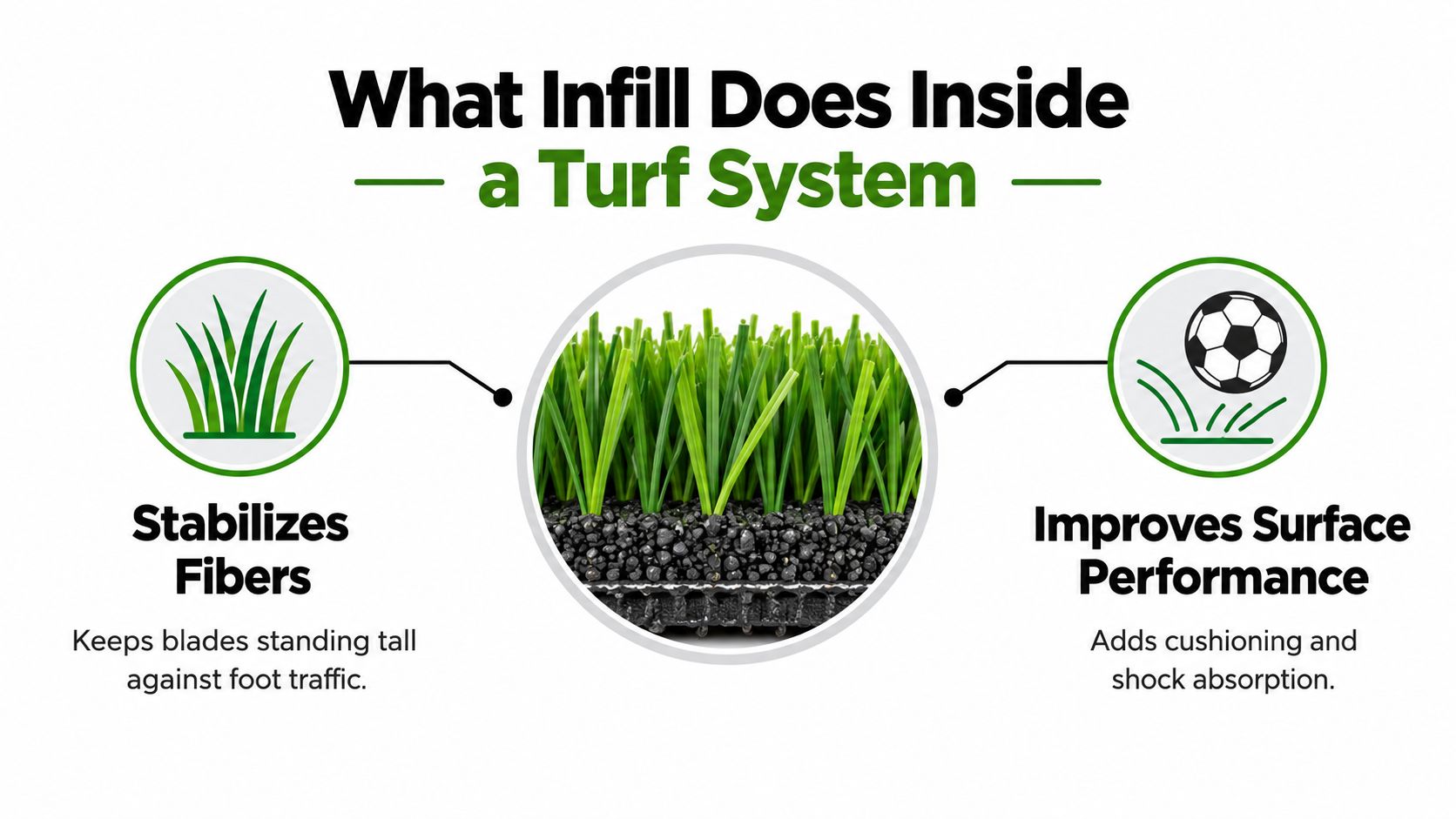
Sand also serves as ballast. Its weight helps keep the turf stable, and the spaces between particles let water pass through the turf layer. Infill participates in drainage, but it can't compensate for a poorly graded subbase, unsuitable backing, blocked outlets, or inadequate edge containment. A contractor should explain how all those layers work together.
Treat infill as part of the turf assembly, not as a decorative topping. The backing, base, drainage path, and edges determine whether the material performs as intended.
The materials homeowners commonly see quoted include crumb rubber, silica sand, elastomers, polymers, coconut fiber, cork, and ground walnut shells. California's DTSC identifies rubber and silica sand as the most common types and notes that crumb rubber is generally made from recycled automotive tires, while sand provides ballast and helps keep fibers upright. The material choice is a trade-off among cushioning, upkeep, environmental profile, and intended use.
When reviewing an estimate, ask what each line item is supposed to do: stabilize fibers, provide a particular feel, meet an impact requirement, or support a putting-green surface. If you're also budgeting a sports project, this youth soccer turf field budget guide offers a useful comparison point for the different choices involved in planning a turf field. For a residential project, consider how the turf and infill work together over time, including the relationship between material choice and artificial grass durability.
Side-by-Side Comparison of the Main Infill Types
A Prescott yard puts infill through a practical test: summer sun, monsoon rain, pets, and routine cleaning. Compare materials by how they hold position, age, and behave underfoot after installation, not by feel alone.
Silica sand
For a general residential lawn, silica sand is a dependable starting point. Its weight helps stabilize the turf and support the fibers. It won't prevent a hot surface, and the result depends on particle size and installation. Ask whether the sand is graded for the specific turf and how the installer will keep it contained at the edges.
Putting greens call for a different standard. A specialty sand matched to the turf can help maintain consistent ball roll. For a typical lawn, ordinary silica sand may be suitable, but it isn't automatically the right choice for a pet area or a play surface where cushioning matters.
Acrylic-coated sand
Acrylic-coated sand combines a mineral core with a coating designed to change how the particles behave. Rounded coated sand is a practical option for family and pet lawns where you want a stable surface that's relatively easy to manage. The coating is not a guarantee against heat or pet tracking, and the material still needs correct installation and routine care.
In Northern Arizona, the sand's weight can help limit movement on a slope or where wind and runoff are concerns. Check the product's composition and care instructions before choosing it. A label alone won't tell you how it will perform after a monsoon or whether it suits your turf system.
Crumb rubber
A 2025 review of crumb-rubber infill reports that weathering particles may contain or release volatile and semi-volatile organic compounds, polycyclic aromatic hydrocarbons, and metals. That finding matters when children and pets use the yard, so request the specific product's composition and safety documentation before deciding.
Crumb rubber, commonly made from used tires, can provide a softer, more resilient feel. California's DTSC identifies it as a widely used infill material. Its cushioning may suit projects where that feel is a priority, but it comes with a different environmental and heat-risk profile than mineral or plant-derived choices. After installation, pay attention to whether particles migrate and whether the surface needs replenishment.
Organic options
Don't assume natural means risk-free or maintenance-free. Cork, coconut-based material, and ground walnut shells are marketed as plant-derived or renewable options, but performance varies by product and installation. Their feel, odor, response to moisture, durability, and replacement needs all deserve attention.
For a Prescott yard, ask how the material handles monsoon rain, whether it tracks indoors with pets, and how often the installer expects it to need replenishment. Lightweight options may be more likely to move in runoff or wind, so confirm how the edges will contain them and what upkeep the product requires.
Choose based on how the yard is used and what you're prepared to maintain. A comfortable feel at installation won't make up for material that shifts, holds moisture, or needs more frequent attention than you can provide. After a summer and a monsoon, containment, tracking, and replenishment are the trade-offs to watch.
Heat, Watering, and Why Infill Alone Won't Cool the Surface
Heat is one of the main concerns homeowners raise about artificial turf, and changing the infill won't solve it by itself. Penn State's synthetic-turf heat testing found differences of as much as 20 degrees between individual fibers and infill materials, but complete turf systems differed by 12 degrees or less. Every system tested exceeded 150°F under the study conditions.
That's why I don't recommend choosing a turf system by color or a cooling claim alone. Shade, exposure, how often people use the yard, and whether water is available for temporary cooling all matter. Plan for hot surfaces rather than assuming a special infill will make a sunny lawn comfortable on every summer afternoon.
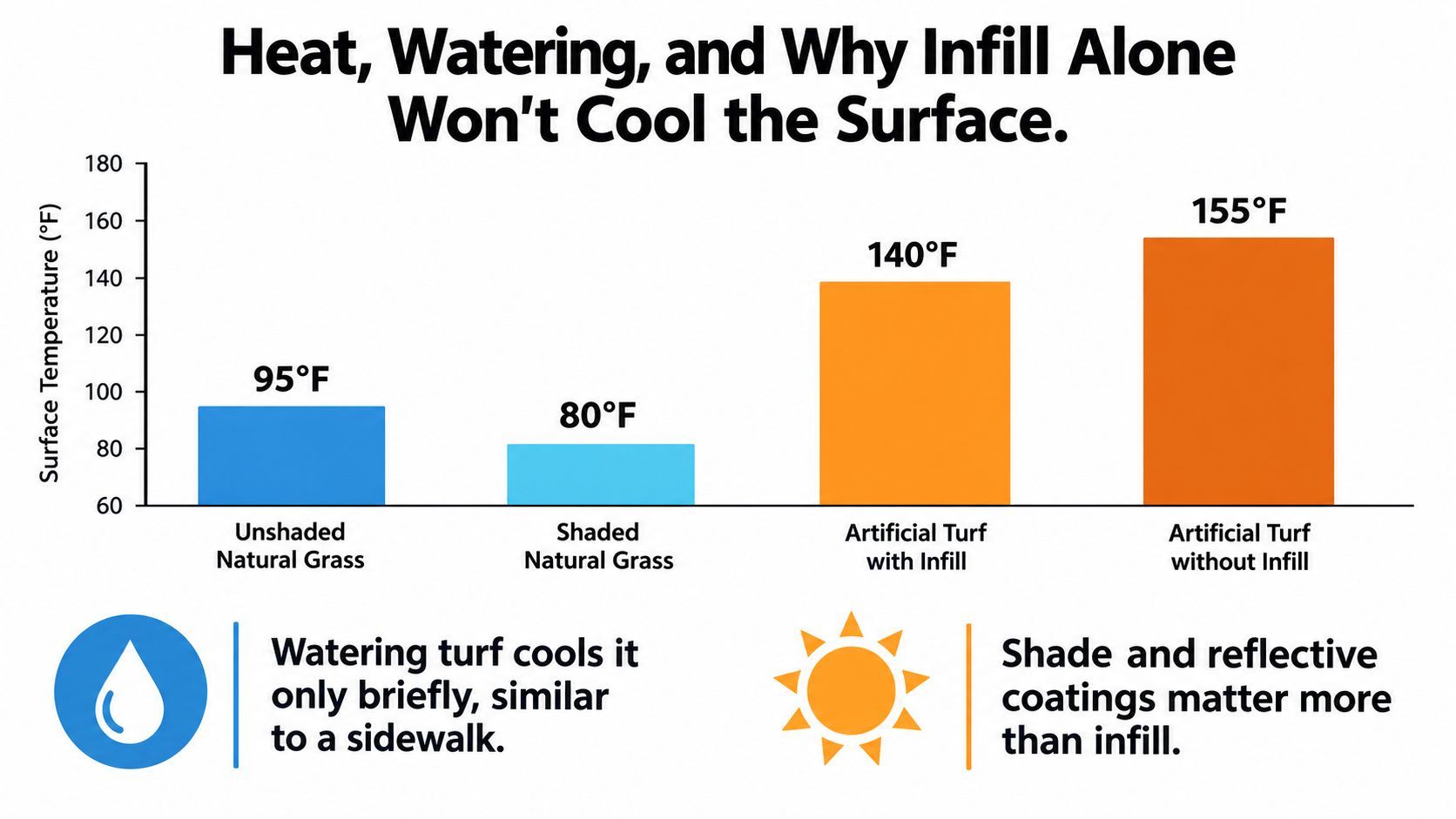
Watering can cool turf, but the effect may be brief. Penn State's research on temperature and color reports that 30 minutes of irrigation lowered one synthetic-turf surface to 29°C, matching nearby natural turfgrass. The surface rose to 49°C within five minutes after watering stopped.
Water can provide a quick temperature drop, but it doesn't guarantee sustained cooling after irrigation ends.
That rebound matters in Prescott, where homeowners may be weighing barefoot comfort, pet use, and outdoor play during hot weather. Watering can still be useful if you're prepared for a temporary effect, but it shouldn't replace shade planning or a realistic schedule for surface use.
For a practical approach to surface comfort, consider the full installation and care plan alongside infill selection. R.E. and Sons Landscaping also outlines options for keeping artificial turf cool, including the role of shade and irrigation in managing expectations.
Matching Infill to Real Northern Arizona Use Cases
A material that suits a putting green may be the wrong choice for a dog lawn. Start with what the yard needs to do, then compare surface feel, particle movement, and the maintenance you're willing to handle.
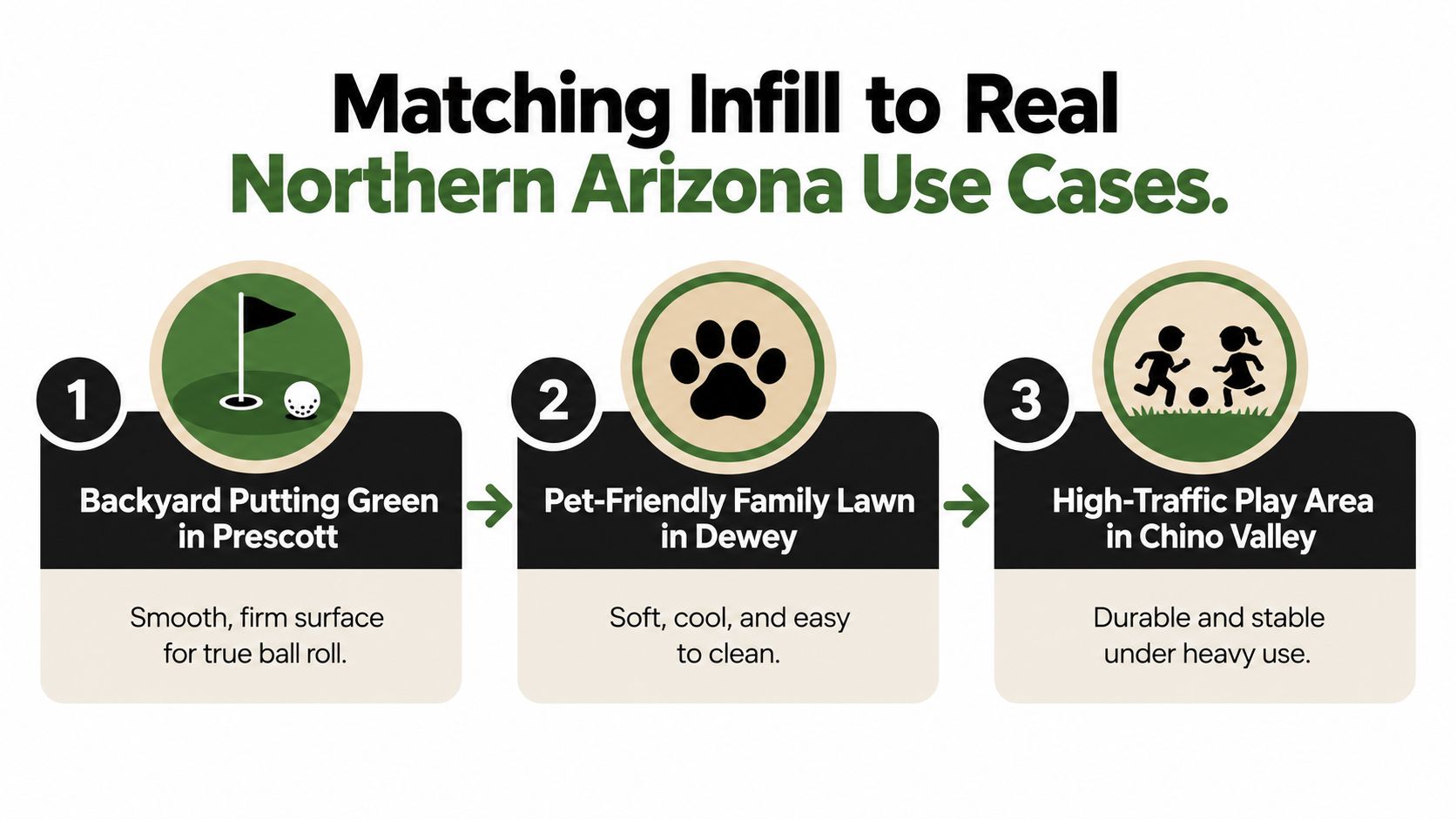
A backyard putting green in Prescott
For a putting green, ball roll and consistent fiber position come first. The usual family-lawn priorities, such as pet tracking or odor, may be less important if the green is used mainly for practice. A specialty sand or coated sand specified for the turf is the practical place to start.
Recommendation: Ask for a putting-green infill selected for predictable ball roll, not a general-purpose lawn product.
A dog-friendly family lawn in Prescott Valley
Dogs put the surface through a different routine: regular use, rinsing, and movement between the yard and the house. Rounded, acrylic-coated silica sand is a strong default to discuss because it provides stable support without relying on crumb rubber. The right turf, drainage, and cleaning plan still matter, so review the complete dog-yard design alongside artificial turf options for dogs.
Recommendation: Choose a coated sand product suited to the turf and confirm how the edges will contain it during cleaning and heavy rain.
A shaded sitting space near Chino Valley
In a shaded side yard used mostly for relaxing, an organic infill may be reasonable if the homeowner accepts the product-specific trade-offs. Ask about moisture behavior, odor, durability, and how often the installer expects the material to need attention. “Natural” on the label doesn't answer those questions.
New Jersey's 2025 technical review of synthetic turf identifies sand, crumb rubber, plastic granules, walnut shells, coconut fiber, cork, and silica as possible infill categories. It also notes that systems exposed to significant rain should use higher-specific-gravity materials to reduce displacement and migration.
Recommendation: Consider an organic blend only where shade, use, and maintenance expectations make its moisture and movement trade-offs acceptable.
Why R.E. and Sons Landscaping Recommends Coated Silica Sand
For most residential turf projects in Prescott, Prescott Valley, and Chino Valley, acrylic-coated silica sand is the most practical default to evaluate first. Its density can help reduce movement compared with lightweight alternatives, while its mineral base avoids the tire-derived composition questions associated with crumb rubber. The exact product still matters, and the full installation must be designed to drain and contain the infill.
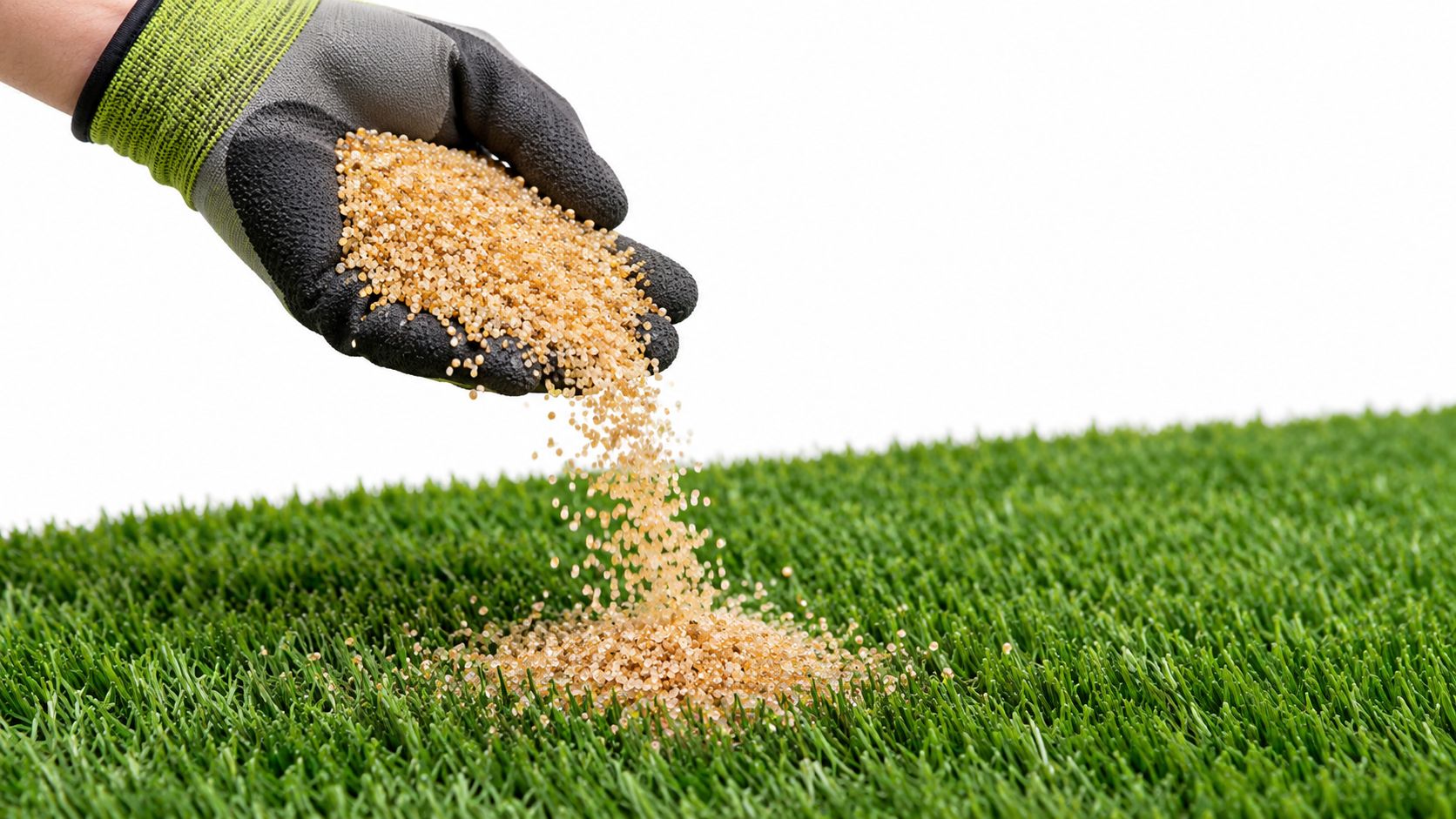
For a family lawn, that recommendation balances fiber support, day-to-day use, and a straightforward replenishment plan. It doesn't mean the surface will stay cool in full sun, or that infill can fix weak drainage. It means the material is a sensible starting point for a region where heat and seasonal rain should both shape the specification.
Decision rule: Use coated silica sand for most home lawns, specialty sand for putting greens, and a rubber or TPE option only when a genuine cushioning or impact requirement justifies it.
A putting green may need a finer, rounder specialty sand to support the intended ball roll. A playground-style area with a defined fall-height requirement may call for a rubber or TPE layer chosen to meet the project's impact needs. Organic material can make sense in a shaded, lightly used space when the homeowner understands its moisture, movement, and upkeep requirements.
Here's what to ask before approving the estimate:
Product identity: What is the exact infill product and composition?
Drainage: What rate is the complete turf-and-backing/infill system designed to meet, and how will the base and outlets support it?
Containment: How will the installer limit movement at edges, gates, and transitions?
Care: What should the homeowner check after monsoon rain, and how will the installer determine whether replenishment is needed?
A clear specification is more useful than a generic promise of “cooler,” “softer,” or “eco-friendly” turf. Bring the intended use, slope, pet habits, and shade conditions into the consultation so the material recommendation reflects the actual property.
Common Questions From Prescott Homeowners
How long does artificial turf infill last before it needs topping off?
There's no single schedule that fits every yard. Use, rain, cleaning, and whether the material stays contained affect how it holds up. Ask your installer what signs to watch for, and have the surface checked if fibers begin to lean or the infill becomes visibly uneven.
Will my dog track infill into the house?
Some loose material may move with paws, especially around edges or high-use paths. Product choice, installation, and routine cleanup all affect tracking. Ask for a sample and discuss how the material behaves in the specific turf being installed.
What's the safest infill for kids and pets?
There isn't one material that answers every safety question. Ask for the exact product composition and safety documentation, then weigh direct contact, heat, odor, pet ingestion, and environmental release. A “natural” label alone doesn't establish that a product is risk-free.
Is watering artificial turf on hot days worth it?
Watering can lower surface temperature temporarily, but Penn State's research shows that the surface can heat up again quickly after watering stops. Use irrigation as a short-term option, not a promise of sustained cooling, and plan shade and use expectations accordingly.
R.E. and Sons Landscaping can specify the infill product, drainage rate, and edge containment for a Northern Arizona yard before installation begins.
R.E. and Sons Landscaping designs and installs artificial turf and custom putting greens for homeowners in Prescott, Prescott Valley, Chino Valley, and nearby Northern Arizona communities. Bring your plans for pets, play, or golf practice to a consultation, and visit R.E. and Sons Landscaping to discuss an infill specification suited to your property.
Comments