
Patio Paver Maintenance for Prescott Homes
After a monsoon blows dust into the joints and a few pavers start rocking, most Prescott homeowners notice the same thing. The patio still looks usable, but weeds are back, the color looks dull, and the surface doesn't feel as solid underfoot as it did last season. That's the moment patio paver maintenance stops being cosmetic and starts protecting the base, the drainage, and the finish.
R.E. and Sons Landscaping works with homeowners, HOAs, and property managers across Prescott, Prescott Valley, Chino Valley, and nearby Northern Arizona communities who need patios that hold up through windblown dust, monsoon runoff, and freeze-thaw swings. The job isn't just to clean pavers, it's to keep the installation from drifting into bigger repair work.
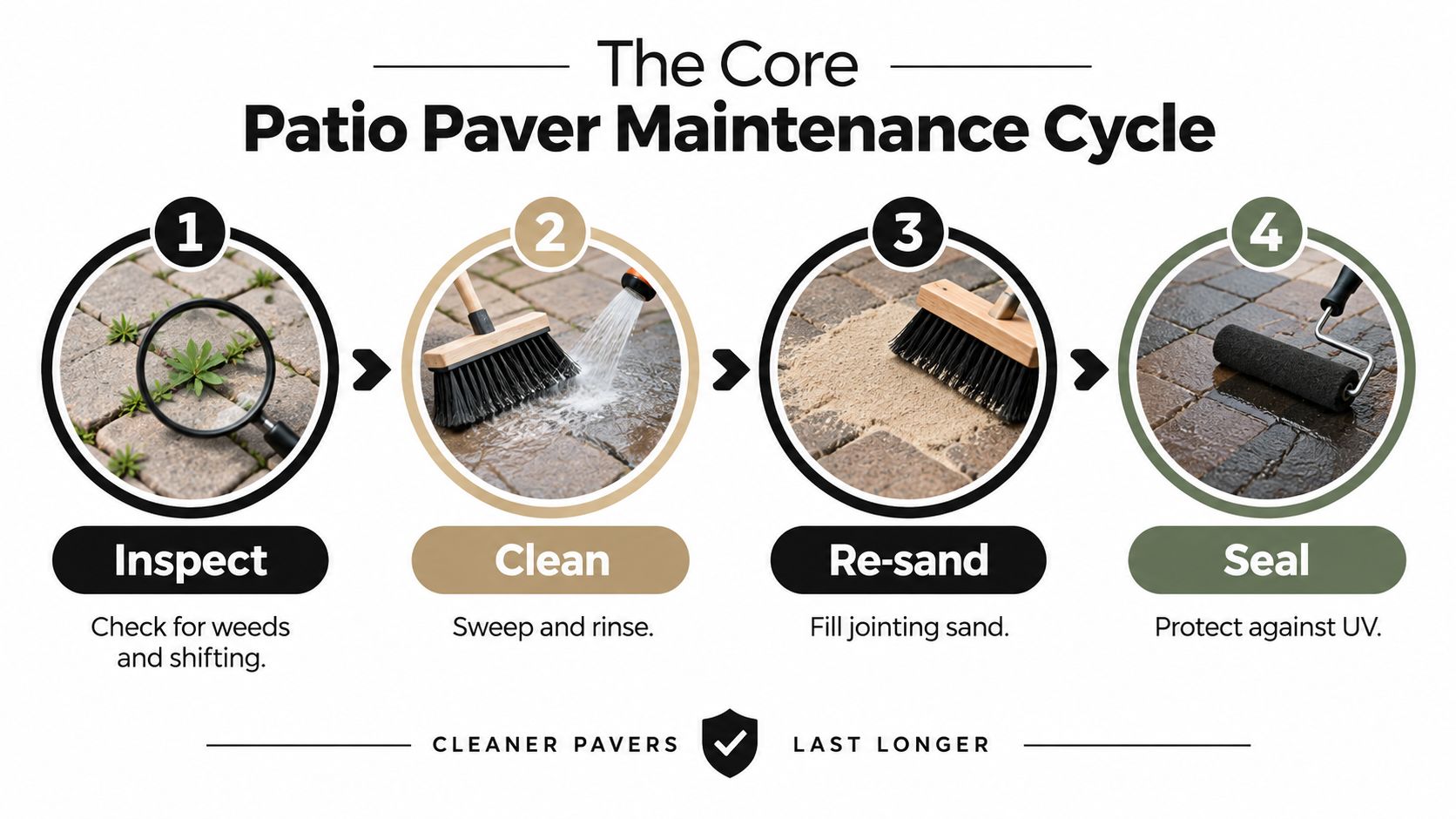
The Core Patio Paver Maintenance Cycle
The cleanest patios I see in Prescott usually follow the same pattern. First, the owner notices weeds, a stain, or a loose unit after a wet summer storm or a cold snap. Then the fix starts in the right order, with dry debris removal before any water touches the surface.
Start with dry cleanup, not a hose
Leaves, grit, and sand should come off first with a blower or soft broom. If you wash before removing that dry material, abrasive particles get driven into the paver face and into the joints. That's where a simple cleanup turns into avoidable wear.
Practical rule: if the patio still has loose grit on it, it's not ready for wet cleaning.
After that, handle stains with a product that matches the paver manufacturer and the type of spot you're treating. Oil, grease, biological growth, and efflorescence all behave differently, so a one-size-fits-all cleaner rarely works well. Once the stain is out, rinse at low pressure and let the surface dry completely before anything else happens.
Don't seal over moisture or contamination
Sealing only helps when the patio is clean, dry, and stable. A damp or dirty surface can trap stains, turn cloudy, or cure unevenly. On many patios, that mistake causes more frustration than the original stain ever did.
For a basic homeowner reference, this paver patio how-to guide is a useful companion to a maintenance plan, especially if you're trying to understand where cleaning ends and repair begins. The key is to treat maintenance as a sequence, not a random weekend checklist.
Seasonal Sweeping and Debris Management
In Northern Arizona, sweeping isn't just about keeping a patio neat. It's a structural habit, because fine dust, pine needles, and leaf litter don't stay on the surface for long. They work into the joints, and on permeable patios they can clog the openings that let water move through the system, which is why the EPA treats clogging as the main operational concern for permeable pavements. The EPA also recommends routine debris removal, periodic sweeping with regenerative-air or vacuum equipment, and regular inspection of condition and infiltration in its permeable pavement guidance. EPA permeable pavement guidance
What to sweep, and what not to blast
A push broom, blower, or mechanical sweeper works because it removes loose material before it gets packed into the joints. Routine sweeping is especially important in spring, when winter sand and residue hang around, and again in fall before leaves and dirt settle in for the wet season. The Concrete Masonry and Hardscapes Association specifically calls out spring and fall sweeping as a practical baseline for paver care. CMHA seasonal sweeping guidance
Pressure washing is a different tool, and it needs restraint. Used carelessly, it can blow out joint sand or damage the paver face, especially if the nozzle rides too close or tracks along the joints. If you're dealing with stubborn grit, vacuum-based removal is a better fit when the goal is to pull particles out of joint openings instead of just moving them around.
Sweep first, then inspect. If the joints keep looking low after each cleanup, the problem is probably not cosmetic anymore.
Homeowners who are also thinking about patio layout, shade, or rail details can get ideas from patio balustrade ideas for homeowners, but the maintenance priority stays the same, keep the joints open and the surface free of packed debris. That's what helps a paver patio drain instead of pudding up at the edges after a storm.
Washing Techniques and Runoff Protection
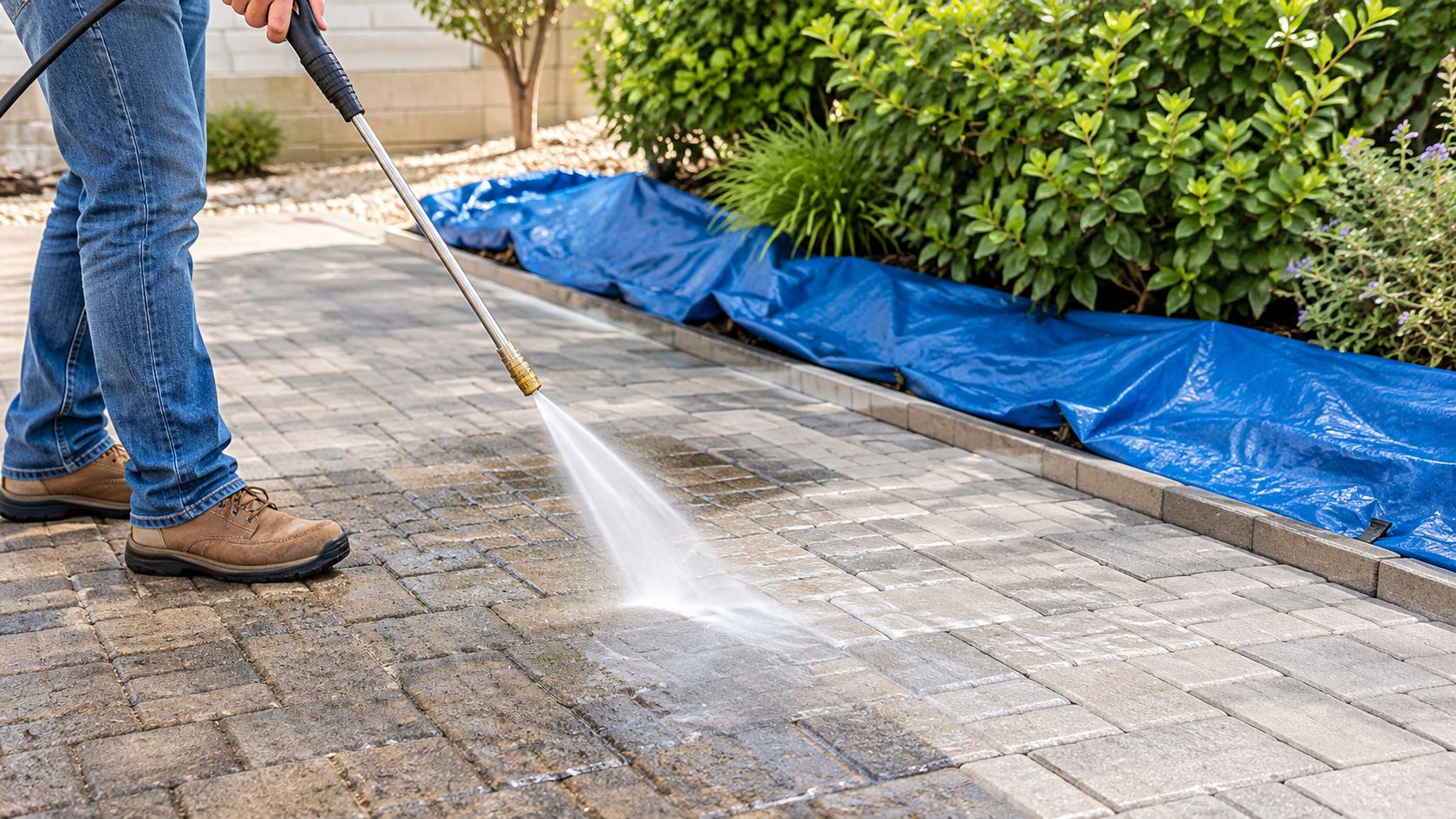
Washing pavers is where a lot of good intentions go sideways. The cleaning itself isn't the hard part, the runoff is. On patios bordered by turf, planting beds, gravel, or an outdoor kitchen, you need to know where the water and cleaner are going before you start.
Start stain removal at the lowest point of the patio and work uphill in manageable sections. That gives you control over the flow instead of letting chemical rinse water run wherever the slope sends it. CMHA's cleaning guidance also recommends anticipating drainage and directing wash water across the pavement rather than onto grass or other vulnerable planted areas. CMHA cleaning and runoff guidance
Use pressure with control, not force
A pressure washer can be useful, but only when it's treated like a precision tool. Hold the nozzle too close, and you can strip joint sand or mark the surface. Work along the joints carelessly, and you'll create the very gaps you were trying to clean out.
If you want a practical example of how patio washing is handled in the field, Cultivate House Detailing's paver cleaning tips are worth reviewing before you decide whether a stain needs a light rinse or a more aggressive pass. The same logic applies here in Prescott, where dust, monsoon mud, and hard water spots can stack up fast.
Once the surface is clean, give it time to dry all the way through before any joint work or sealing. A wet patio doesn't take sealer well, and trapped moisture is where whitening and uneven cure usually start. For a deeper maintenance walkthrough, this paver patio cleaning guide is a solid reference point for homeowners trying to keep the job under control.
Sealing Decisions for High Desert Climates
A lot of patios are sealed for the wrong reason. People want the color to pop again, so they add a coating without checking whether the patio needs protection or whether it still breathes the way it should. In a climate like Prescott's, that can backfire.
Breathability matters more than shine
Film-forming acrylic sealers can trap moisture. In colder conditions, that trapped moisture can contribute to lifting during freeze-thaw cycles, especially on patios that already hold winter dampness or deicing residue. Breathable penetrating sealers are generally the safer fit where the patio needs moisture release rather than a glossy skin.
The trade-off is maintenance cadence. Independent sealing guidance notes that penetrating sealers tend to last longer, roughly 3 to 5 years, while glossy acrylic coatings are often tied to a shorter 18 to 24 month cycle. Those intervals are a reminder that the sealer should match the patio, not the other way around. Independent review of paver sealers
Test the patio before you coat it
A patio that still absorbs water, has loose joints, or shows signs of base movement is telling you something. Sealers don't fix drainage defects, and they don't stabilize an installation that's already moving. Before resealing, check whether water still soaks in, whether the joints are dry and stable, and whether the surface is being sealed for protection or just to restore gloss.
Good sealing follows diagnosis. If the patio is damp, shaded, newly installed, or still shifting, pause before applying anything.
That matters even more in Northern Arizona, where intense sun, dust, monsoon runoff, and temperature swings all work against a lazy maintenance plan. The right question isn't “Should this patio be sealed every year?” It's “Does this patio need a breathable protectant, or does it need drainage and joint repair first?”
Diagnosing Sinking Pavers and Joint Erosion
Recurring weeds, empty joints, and sinking pavers get dismissed too quickly. A lot of homeowners treat them as surface cleanup problems, then wonder why the same spot keeps failing after every refill. Joint sand is part of the interlocking system, not decoration.
Know the difference between wear and failure
A single rocking paver can sometimes be lifted and reset if the bedding has a small void underneath it. But when the movement keeps returning in the same low spot, or shows up near a downspout discharge, the issue usually points deeper. Persistent localized sinking is often tied to base-compaction problems or water pooling that erodes the base below the surface.
That's where a site like residential slab foundation fixes becomes a useful comparison point. Different structure, same lesson, repeated movement is a symptom, not a nuisance. If water is consistently running through or under one section of the patio, topping off the joints won't solve the cause.
Use symptoms to decide the next step
A few practical cues help separate a quick repair from a bigger one.
Isolated weed growth, usually means joint material has thinned in one spot.
Widespread empty joints, often signals repeated washout or aggressive cleaning.
Rocking pavers in one area, can mean a localized void or bedding issue.
Pooling water near the same edge, points to a drainage defect, not just a dirty surface.
Pressure washing can also be part of the problem if it repeatedly removes joint material before replacement. And polymeric sand should never go into damp or unstable joints, because the repair won't hold long enough to matter.
For homeowners who want a repair perspective before the issue spreads, this paver patio repair guide helps frame the difference between a unit that needs resetting and a patio that needs drainage or base correction. In practice, repeated movement in one place is the signal I trust most.
Your Northern Arizona Hardscape Care Schedule
Spring in Prescott is the time to clear winter grit, check for loosened joints, and look for any freeze-thaw damage before the patio gets heavy use. Summer usually calls for a deeper clean, spot treatment, and re-sanding where windblown dust and monsoon runoff have worn things down. Fall is the clean-up window, remove leaves, pull out debris, and make sure the joints are ready for wetter weather.
A simple year-round rhythm
Winter care is lighter, but it still matters. Remove ice gently, keep standing water from lingering where possible, and don't let repeated freeze-thaw cycling work on already loose pavers. ASTM's freeze-thaw test method for concrete paving units exists for a reason, it's there because moisture and salt exposure are real durability issues for pavers in cold conditions. ASTM C1645 test method
A practical homeowner schedule in Northern Arizona looks like this:
Spring: sweep winter debris, inspect joints, and check for rocking units.
Summer: deep clean, let everything dry fully, then re-sand where needed.
Fall: clear leaves and dirt before storms and cooler weather set in.
Winter: remove ice carefully and avoid unnecessary stress on the surface.
R.E. and Sons Landscaping's maintenance department can handle that kind of recurring care for patios, walkways, and connected outdoor spaces across Prescott, Prescott Valley, and nearby communities. For homeowners and HOAs that don't want to guess about when a surface is just dirty versus when it's failing, a scheduled maintenance plan keeps the work consistent and the problems smaller.
If your patio pavers need sweeping, washing, joint repair, sealing advice, or a closer look at recurring movement, visit R.E. and Sons Landscaping and set up a maintenance conversation. The right local crew can tell the difference between a cleanup job and a drainage or base problem, then keep your hardscape in shape through Prescott's dust, sun, monsoons, and winter swings.
Comments