
Water Feature Wall Outdoor Design Guide Prescott
You're sitting on the Prescott Valley patio at the end of a hot day, but the yard still feels exposed, dry, and unfinished. A well-designed outdoor water feature wall can change that experience by adding moving water, a visual anchor, and a more comfortable sense of enclosure. The right design can soften neighborhood noise, support a gathering area, and make an unused section of yard feel intentional.
R.E. and Sons Landscaping helps homeowners in Prescott, Prescott Valley, Chino Valley, and nearby Northern Arizona communities turn difficult or underused outdoor spaces into durable living areas. The practical problem isn't just finding an attractive wall. It's creating a feature that handles intense sun, wind, mineral deposits, electrical requirements, and freeze-thaw cycles without becoming a constant repair project.
Transforming Your Prescott Backyard With an Outdoor Water Wall
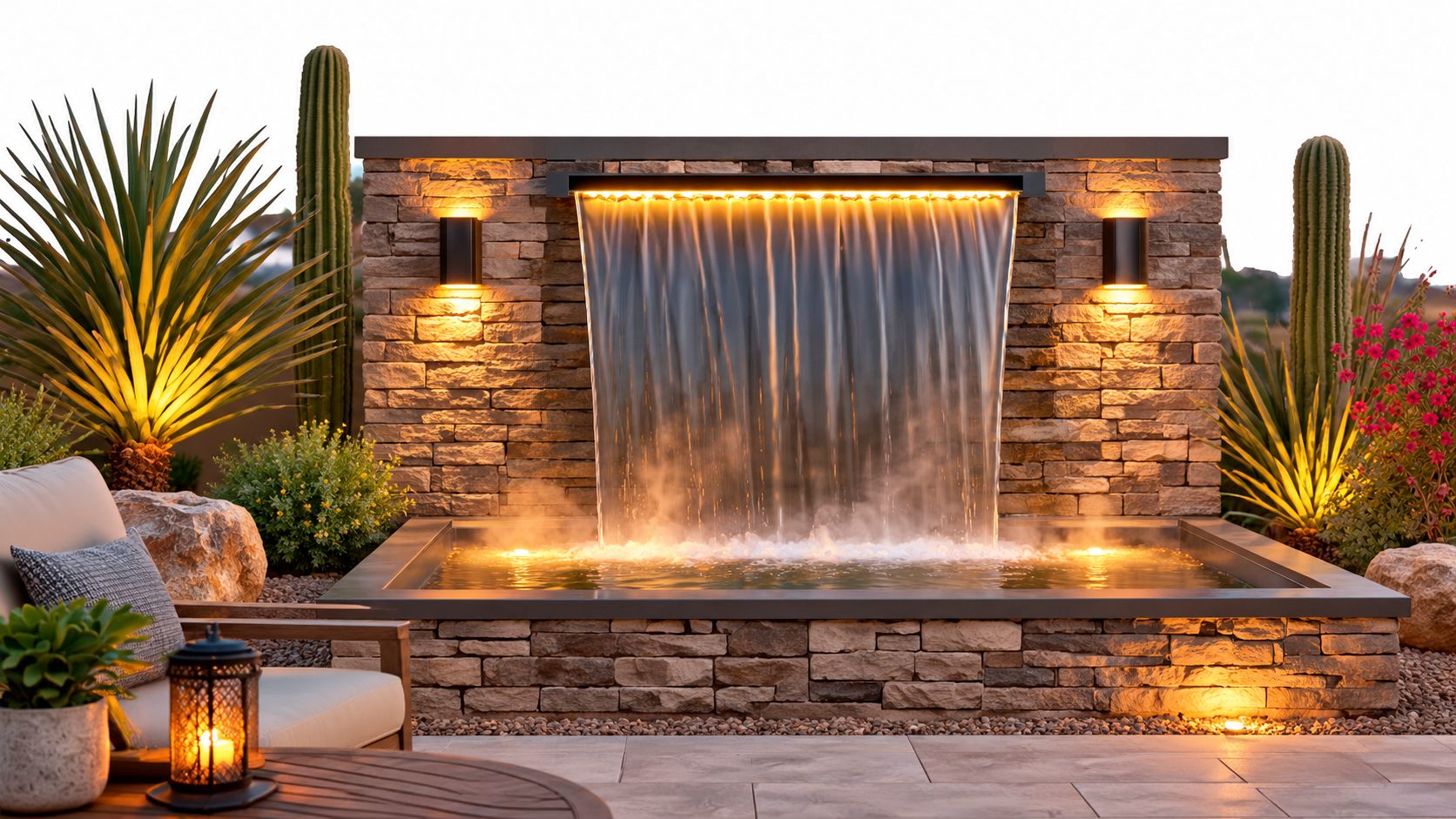
An outdoor water wall is a vertical architectural feature where water flows across or over a finished surface into a basin or concealed reservoir. The pump sends that water back to the top, creating a controlled loop of sound and movement. Depending on the wall's scale and placement, it can function as a patio backdrop, courtyard divider, poolside focal point, or transition between an outdoor kitchen and seating area.
Outdoor water walls have moved beyond purely decorative landscaping. A documented hotel project in Northern Greece used a wall measuring 15.50 meters long by 12 meters high as an entrance feature near swimming pools, with the design also intended to help create a cooling breeze. Another project used water flowing over glass to produce rhythmic visual patterns and connect the space with the tradition of ancient Greek spas. The same design research reported that water-based architectural interventions moderated extreme temperatures by approximately 5°C in the studied context. The architectural research on water walls and climate-responsive design offers useful perspective, even though a residential Prescott installation operates at a much smaller scale.
What problem does a water wall solve?
It gives a dry yard a strong focal point while helping define how people use the space. A wall can screen an unattractive view, separate a dining area from a walkway, or create a natural gathering point beside a fire pit or outdoor kitchen. The sound can also make nearby activity feel less prominent, although the effect depends on spillway width, flow, and the surrounding hardscape.
Practical rule: Design the wall around the way you'll use the patio, not around a product photo. A dramatic feature in the wrong location becomes visual clutter and a maintenance obstacle.
Placement matters just as much as appearance. A wall beside a covered seating area may provide atmosphere without exposing the basin to constant wind. A feature aligned with an outdoor kitchen can become a backdrop for meals, while a wall near a fire pit can balance heat, stone, and sound. Before choosing finishes, review broader circulation and entertaining needs with these outdoor cooking space planning tips.
Choosing the Right Materials and Styles for Northern Arizona
Northern Arizona exposes outdoor finishes to intense sunlight, dry air, wind, and repeated temperature changes. The material on the wall face must look good when wet, tolerate mineral deposits, and allow practical access to plumbing behind or below it. The most attractive finish isn't always the one that stays easiest to service.
Natural stone
Natural stone suits Prescott's canyon, mountain, and Southwestern architecture. Granite and dense ledgestone can provide texture and visual weight, while carefully selected flagstone can connect the wall to existing patios and retaining walls. Dense stone generally offers a more forgiving surface than highly porous material, but every joint, cap, and transition still needs proper detailing.
Porous stone can absorb water and minerals. In a recirculating feature, that may lead to visible deposits, discoloration, or damage when trapped moisture freezes. Sealing can help, but it creates an ongoing care requirement rather than removing the underlying issue. Use a sample board and wet-test it before committing to the entire face.
Corten steel
Corten steel provides a thin, contemporary profile and a warm rust-colored finish that works well with native rock, gravel, and ornamental grasses. Its patina can complement the high-desert palette, and the relatively clean geometry fits modern mountain and contemporary homes.
The runoff deserves attention. Rust-colored water can stain light paving or walls, especially during the early patina stage. Provide a controlled basin, protect adjacent surfaces, and confirm that the steel assembly is isolated from incompatible materials. The wall should also be designed so the sheet, support structure, and reservoir can be inspected without removing finished landscaping.
Tile and glass
Tile gives homeowners broad control over color, pattern, and reflectivity. Glass can create a sleek sheet effect, similar to the water-over-glass approach used in the Sani Beach Club Spa Center project described in the architectural research. These finishes work particularly well in courtyards and contemporary patios, but installation quality matters more than the visual sample.
Small defects become obvious when water flows continuously across a smooth face. Use exterior-rated materials, stable substrate construction, flexible movement detailing where appropriate, and a spillway that distributes water evenly across the full width.
Basin-fed and mixed-material designs
A basin-fed wall can use stone, steel, tile, or masonry above a concealed catch basin. This approach keeps the plumbing out of sight and allows the designer to control splash, reservoir depth, and access. A shallow visible trough may look elegant, but it needs enough geometry to prevent windblown water from reaching nearby paving.
Wood can appear in the surrounding structure, but it shouldn't be treated casually where it stays wet. For homeowners considering timber accents, this guide to charred timber for self-builders provides useful background on exterior wood cladding and finish selection. R.E. and Sons Landscaping also shows how custom water features can be integrated into broader site construction in its custom water feature portfolio.
For a material decision, weigh four questions:
Does the surface tolerate wetting and drying?
Can mineral deposits be removed without damaging the finish?
Will runoff stain nearby materials?
Can the pump, spillway, and reservoir be reached later?
A rustic wall usually benefits from varied stone and a quieter cascade. A contemporary wall may need a precise stainless spillway and a smooth, uninterrupted face. Both can work in Prescott, but only when the structure and drainage match the finish.
Sizing the Pump and Spillway for the Perfect Flow
A water wall can look beautifully simple while hiding a demanding hydraulic setup. Too little flow leaves gaps across the spillway. Too much creates noise, splash, higher energy use, and more refill work, problems that become harder to manage in Prescott's wind, heat, and freeze-thaw cycles.
How much flow does a water wall need?
For a continuous sheet spillway, a practical benchmark is 100 to 150 gallons per hour per inch of spillway width. A 12-inch spillway therefore needs approximately 1,200 to 1,800 GPH, while a 24-inch spillway needs approximately 2,400 to 3,600 GPH at operating conditions. The spillway and pump sizing guidance identifies the lower end as a quieter, thinner sheet and the higher end as stronger movement with more sound.
Those figures apply to water reaching the spillway, not the pump's advertised maximum at zero head. A pump can show a high GPH rating yet deliver substantially less after lifting water vertically and pushing it through pipe, elbows, valves, and filters.
Why total dynamic head changes the result
Total dynamic head combines vertical lift with plumbing resistance. A practical field estimate adds roughly 1 foot of head for every 10 feet of horizontal pipe, in addition to the vertical rise. Check the pump curve at that operating head, because flow decreases as head increases.
Before selecting equipment, document the following:
Spillway width: This establishes the target flow range.
Vertical lift: Measure from the reservoir water level to the spillway outlet.
Pipe length: Include the horizontal run and every bend.
Fittings and filters: Restrictions can disrupt a thin, even sheet.
Flow control: Adjustment lets you reduce sound and splash during windy weather.
An adjustable-flow pump gives a water wall more practical operating range around Prescott. Increase movement for an evening gathering, then reduce it during windy conditions or freezing weather. The pump vault or service opening should be large enough for cleaning and replacement. If reaching the pump requires dismantling stonework, a small mechanical failure can become expensive reconstruction.
R.E. and Sons Landscaping's water feature installation guide offers a practical overview of installation considerations. The target is an even sheet, controlled splash, suitable sound, and equipment that can be serviced without damaging the wall.
Managing Water Efficiency and Evaporation in a Dry Climate
A water feature isn't automatically irresponsible in a drought-conscious region. A poorly designed feature can waste water, but a closed-loop system can limit demand to evaporation, splash-out, leaks, and occasional maintenance. The distinction comes from the entire system, not the presence of a basin alone.
What actually determines water use?
Initial fill volume is a weak planning metric. The more useful questions concern the exposed water surface, wind exposure, sunlight, operating hours, splash pattern, and refill frequency. A narrow wall with a protected reservoir may lose less water than a larger natural-looking feature with broad exposed pools.
Research on 16 felt-based outdoor living walls in Spanish cities recorded annual water consumption of approximately 2.5 to 9 liters per square meter per day, with monitoring periods ranging from 1 to 4 years. These living walls aren't identical to decorative recirculating water walls, but the measurements show how climate, plant selection, orientation, solar exposure, and density influence water demand. The living-wall water-use research also supports recirculation and reuse of excess drainage where practical.
EPA WaterSense guidance recommends recirculation rather than a single-pass supply, smaller pumps, lower pumping rates, and pressure-reducing valves where appropriate. It also notes that higher flow increases evaporation, while a downward cascade generally loses less water than a jet that shoots upward. The EPA outdoor water features technical sheet provides the underlying conservation guidance.
How do you reduce refill demand?
Use a covered or concealed reservoir with automatic low-water protection. Keep the wall out of the strongest prevailing wind when the site allows it, and use nearby planting or architectural screening to reduce air movement across the water. Shade can also help, particularly during the hottest part of the day.
Overflow should have a deliberate destination. Rather than allowing water to run onto pavers, direct controlled overflow toward an appropriate planted area when grading, soil, and local requirements allow. This approach doesn't make water loss disappear, but it can keep occasional overflow from becoming damage or waste.
You can measure the feature instead of guessing. Mark the water level, record refill volume during hot weather for 7 to 14 days, and calculate the average gallons per day. That result gives you a useful operating baseline and can reveal a leak, excessive splash, or oversized flow before the issue becomes expensive.
The EPA also recommends shutting the feature off when practical, checking the recirculation system annually for leaks or damage, and considering non-potable water where appropriate and legally permitted. Its landscaping water-efficiency guidance supports using timers or operating schedules when continuous circulation isn't necessary.
Winterizing and Maintaining Your Water Feature Year-Round
Prescott's winter conditions make drainage and access structural concerns, not minor maintenance details. Water trapped in shallow plumbing, spillway cavities, porous masonry, or an improperly drained basin can freeze, expand, and crack liners, fittings, stone, or adjacent hardscape. Repeated freeze-thaw cycles can cause damage even when no single cold snap appears dramatic.
What should you check every week?
A short visual inspection catches problems early:
Watch the water level: A sudden change may indicate a leak, excessive splash, or pump issue.
Inspect the spillway: Look for uneven flow, mineral buildup, leaves, and debris.
Check nearby paving: Damp or slippery areas can reveal splash migration or overflow.
Listen to the pump: A new rattle, hum, or grinding sound deserves attention.
Look inside the reservoir: Remove leaves and sediment before they reach the intake.
Hard-water deposits are common on continuously wetted surfaces. Don't attack delicate stone, tile, or metal with aggressive cleaning or pressure that can damage joints and finishes. Use a material-compatible cleaning method, protect the pump intake, and confirm that runoff won't stain adjacent surfaces. This water-feature cleaning guidance from Water Works Power Washing is a useful reminder that cleaning technique must match the surrounding material.

How do you winterize a water wall?
Before a hard freeze, establish whether the equipment is designed to operate in those conditions. If the system will be shut down, remove vulnerable pumps, drain exposed lines, empty shallow spillway cavities, and protect basins from collecting and freezing water. Don't leave water trapped in decorative stone channels or small plumbing pockets.
The wall also needs overflow control for rainfall, snowmelt, and refill events. Service panels should remain accessible after winter covers or ground materials are installed. A maintenance plan that requires demolition isn't a plan. It's deferred cost.
Spring preparation includes checking fittings, inspecting the liner or basin, cleaning the intake, and confirming that the spillway distributes water evenly before full operation. R.E. and Sons Landscaping outlines related service considerations in its water feature maintenance resource.
Why Hiring a Licensed Local Design-Build Team Matters
A water feature wall combines structural masonry, plumbing, drainage, and electrical work. A kit or informal installation may appear simple until the wall shifts, the basin overflows, the pump becomes inaccessible, or water reaches an unprotected electrical connection.
Prescott-area projects should confirm permitting before construction. The City of Prescott lists plumbing addition, move, or demolition among work categories that may require a permit, although requirements depend on the project's scope and jurisdiction. The City of Prescott permit guidance is a useful starting point for identifying regulated work.
What does safe installation involve?
The U.S. Consumer Product Safety Commission advises keeping electrical products at least 5 feet from the water and using GFCI protection for outdoor receptacles within 20 feet of the water's edge. The CPSC electrical safety guidance also addresses testing GFCI equipment and protecting water-feature circuits.
A qualified design-build team coordinates the wall structure, pump vault, drainage, basin geometry, lighting, and electrical scope before finishes are installed. That coordination matters for families and pets because splash control, stable paving, protected wiring, and accessible shutoffs all affect how safely the feature operates.
R.E. and Sons Landscaping is a licensed, bonded, and insured Northern Arizona design-build company with Arizona ROC #300642 and 2,500+ satisfied customers, according to its company information. Its four-step process covers consultation, design approval, transformation, and enjoyment. The company provides garden design and builds outdoor living features including water walls, fountains, ponds, waterfalls, bubblers, and pondless features, while its maintenance department supports ongoing care.
Common Questions About Outdoor Water Walls Answered
How much does an outdoor water feature wall cost?
A reliable cost range can't be stated without knowing the wall dimensions, material, foundation, plumbing distance, electrical scope, drainage, pump access, and finish details. Custom stone, Corten steel, tiled, and basin-fed designs can involve very different construction requirements. Ask for a written scope that separates structure, finish, pump equipment, electrical work, access, and maintenance.
Where should I place a water wall?
Place it close enough to seating for the sound to be useful, but protect it from strong wind and direct splash onto walking surfaces. A location beside a patio, outdoor kitchen, or courtyard often works better than an exposed property edge. Check sightlines from the house and confirm that overflow has a controlled path.
Can a water wall work beside an outdoor kitchen or fire pit?
Yes. The wall can define the edge of an entertaining zone and balance the dry heat of a fire feature. Keep service access clear, separate wet and electrical components properly, and prevent splash from reaching food-preparation areas or slippery paving.
Is an outdoor water wall safe around children and pets?
It can be, when the basin is stable, edges are controlled, electrical work is GFCI protected, and cords and equipment are kept away from the water. Include a shutoff, secure access panels, and a maintenance plan during design rather than adding safety measures afterward.
R.E. and Sons Landscaping designs and builds custom outdoor water walls, fountains, ponds, waterfalls, and pondless features for homeowners in Prescott, Prescott Valley, Chino Valley, and across Northern Arizona. For a climate-appropriate design with practical pump sizing, water management, winterization, and service access, visit R.E. and Sons Landscaping to schedule a consultation.
Comments