
How to Build a Safe Fire Pit in Your Prescott Backyard
Fire pits and outdoor heaters caused an estimated 6,200 emergency-room visits in 2021 in the United States, and that's the right place to start if you're planning one in Prescott. A safe fire pit isn't just a ring of block a few feet from the house, it's a built system that controls heat, sparks, drainage, and how people use it.
R.E. and Sons Landscaping builds outdoor living spaces for homeowners in Prescott, Prescott Valley, Chino Valley, and Northern Arizona, and fire pits are one of the features where shortcuts show up fast. If you want a fire pit that's designed for real use, not just a good photo, the same standards that guide our crews on job sites should guide the build, from site selection to base prep to final clearances. For a practical companion resource, Woodstock Furniture & Mattress Outlet's guide is useful for comparing patio-friendly setups before you choose a style.
The injury data also makes one thing clear, especially for families. A 2019 Journal of Burn Care & Research study cited in the Consumer Reports summary recorded 10,951 fire-pit-related burns among people 19 and younger from 2006 to 2017. That's why the safest builds prioritize containment, separation, stable materials, and supervision, not just distance alone. If you want the local safety baseline we use on installations, see the fire pit safety guidelines from R.E. and Sons Landscaping.
Why Fire Pit Safety Is a Design Problem Not Just a Distance Rule
A lot of homeowners start with the wrong question. They ask how far the pit should sit from the house, then stop there. Distance matters, but the build still has to manage heat, sparks, drainage, wind, and the way people use the fire. The U.S. Fire Administration advises placing outdoor fireplaces and fire pits at least 10 feet from a home or anything that can burn, and Consumer Reports fire pit safety advice makes the same basic point, spacing lowers risk, it does not remove it.
The hidden failures show up in the structure. A pit needs a stable, noncombustible base, walls that stay level, and materials that can handle heat without cracking or shifting. If the foundation is soft, the block is sitting on poor fill, or moisture gets trapped under the build, the pit can move, spall, or fail after a few freeze-thaw cycles.
Practical rule: if the build cannot handle wind, ash, and ordinary mistakes, it is not a safe build.
That is why I treat fire pits as a design-and-construction job, not a décor decision. R.E. and Sons Landscaping works this way across Prescott, Prescott Valley, Chino Valley, and Northern Arizona, and the same standards apply whether the pit is part of a patio, a seating wall, or a larger outdoor kitchen project. For homeowners who want to compare construction details against code-oriented guidance, the fireplace building codes resource is a useful reference.
Air quality matters too, especially in wildfire-aware neighborhoods around Prescott. A pit that burns poorly throws more smoke, leaves more soot, and gives off less usable heat, which is why the burn chamber, draft path, and fuel choice all affect safety. In the field, I have seen a poorly built pit smoke more than it heats, which usually means the opening is wrong, the base is holding moisture, or the interior geometry is choking airflow. The best backyard fire pits are the ones that keep shape, keep clearance, and keep people from being surprised by heat, sparks, smoke, or shifting block after a hard winter.
Choosing the Right Location and Checking Local Requirements
Start with the site, not the materials. A fire pit belongs on a flat location with enough separation from structures, fences, overhanging branches, and other combustibles to keep sparks from turning into a problem. In practice, that usually means at least 10 to 25 feet of clear space, with the lower end matching the minimum safety guidance and the wider end giving you more room for chairs, movement, and errant embers fire pit step-by-step guide.
What to check before you dig
Look up, not just around. Low branches, covered patios, rooflines, and nearby furniture all count, because heat and embers don't care whether the clearance problem is horizontal or overhead. Prescott's high-desert wind can also push sparks farther than a calm evening would suggest, so a site that feels fine at sunrise can feel different at dinner.
A good location also drains well. Standing water around the pit is a long-term problem because it weakens the base and makes cleanup messy, especially after weather swings. If the ground slopes hard, or the spot seems convenient but cramped, that's usually the wrong spot.
Before breaking ground, check the permit question with your local jurisdiction or HOA. Rules can vary by neighborhood and community, and some Prescott Valley associations add their own restrictions beyond city or county expectations. For a general sense of how permit-focused projects get reviewed, the building permit guide for roofers is a helpful example of the kind of paperwork mindset inspectors expect, even though the trade is different.
A simple way to think about approval is this, if an inspector looked at your setup tomorrow, they'd want to see a safe location, clear spacing, and a build that won't create a drainage or fire hazard. That's the standard worth using before the first shovel goes in the ground.
Excavating and Building a Stable Drainage Base
Most DIY fire pits fail at the base, not the wall. They settle, lean, trap water, or crack because the installer treated the foundation like a place to save time. The build that lasts starts with excavation and drainage, not with the first block.
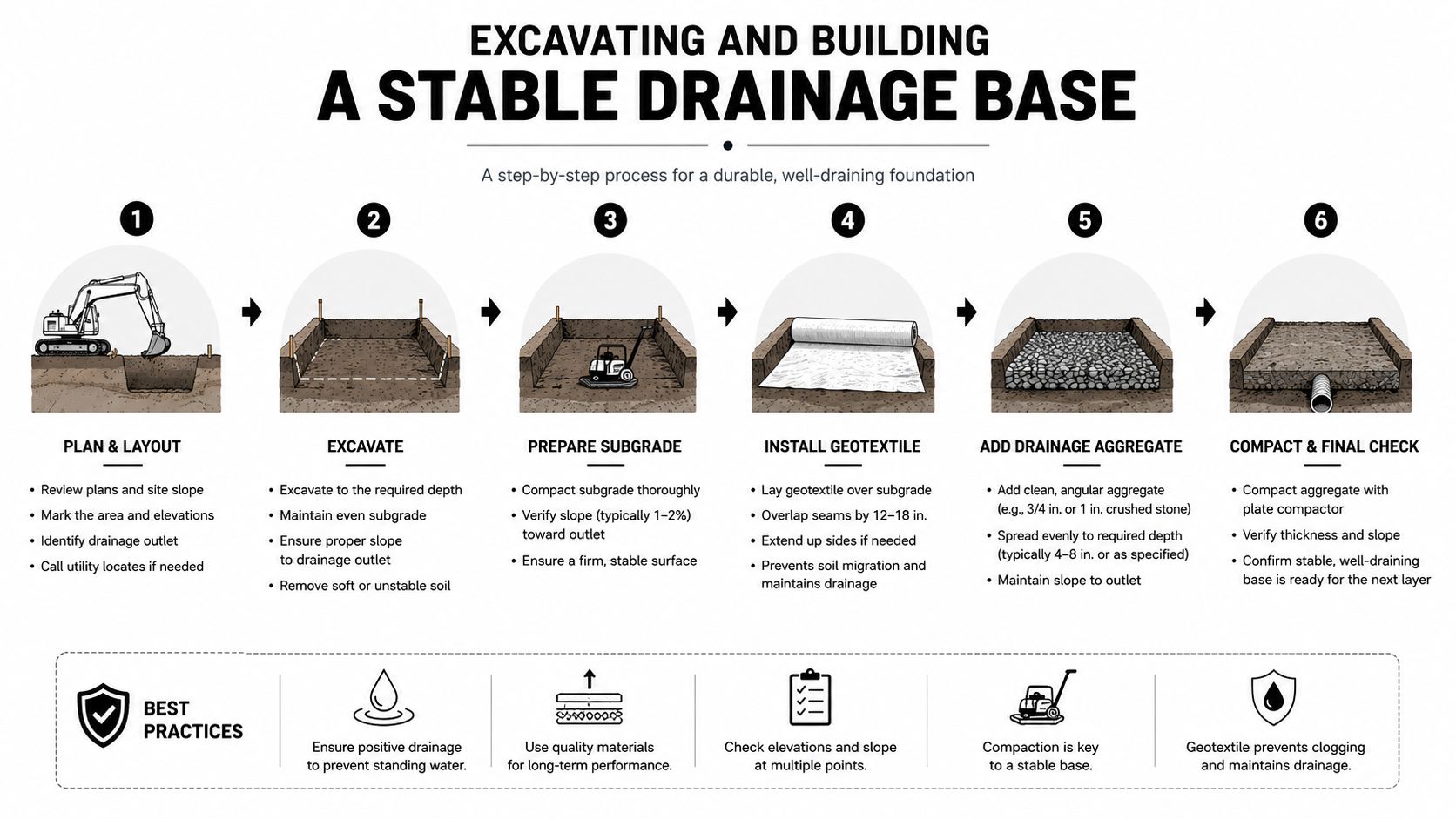
The base layer sequence that holds up
Dig roughly 6 to 8 inches deep. That gives you room for a compacted sub-base and a stable finished height without crowding the first course of wall material. Then add a 2 to 4 inch compacted gravel or crushed-stone layer, which improves drainage and helps the pit stay level over time fire pit building materials safety guide.
Angular gravel performs better than rounded pea gravel because the pieces lock together instead of rolling under load. That matters when chairs shift, people step near the edge, or rain works into the base. A level, compacted pad is what keeps the wall from walking out of square after a few hot and cold cycles.
Drainage is where a lot of pretty builds get exposed. If water has nowhere to go, the base softens, frost or heat movement has more effect, and the pit starts to drift out of level.
What changes on a slope
A sloped yard needs more thought. The workable method is to cut into the uphill side, use the removed soil to build the downhill side, and stabilize the pad with compacted fill or a low retaining edge. For steeper grades, about 25 degrees or more, a non-combustible deck pad may be safer than forcing a standard ground-level build sloped-yard fire pit guidance.
A fire pit on a slope fails first, often without obvious signs. Water settles on one side, the base moves, and the wall starts to open up.
Concrete brings a different problem. Direct contact can cause cracking and discoloration, so the safer approach is a heat barrier and airflow. Fire bricks, ember pads, raised stands, or a fire-resistant mat help protect the slab, and the best setups keep a small air gap under the unit when possible fire pits on concrete guidance concrete protection guide.
If the base is right, the rest of the project gets easier. If it isn't, no amount of pretty stone will fix it.
Assembling Walls With Firebrick Liners and Proper Bonding
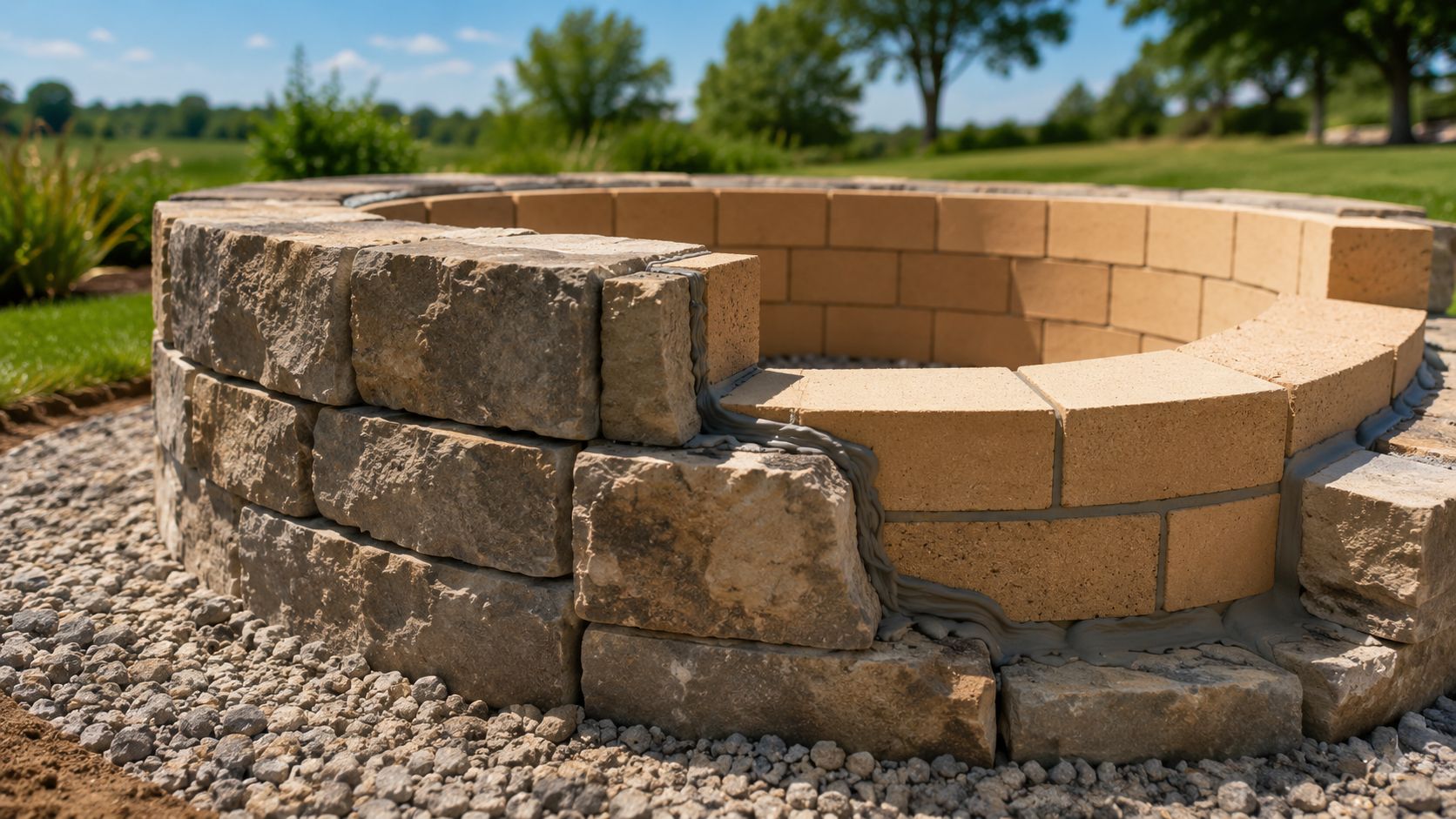
A fire pit that holds up over time usually has two layers. The outer wall gives the pit its shape and finished look, often built from stone or concrete retaining-wall units. The inner layer takes the heat, and that is where firebrick or a steel fire ring provides functionality DIY fire pit build guide.
Build the shell before you bond anything
Dry-fit the first course before you commit to adhesive. That step sounds basic, but it is where a lot of weak builds go sideways. If the first row is out of level, the wall can drift, the draft can pull unevenly, and the finished pit can start showing cracks earlier than it should.
Once the base checks out level, stack the block with staggered joints so the vertical seams do not line up from one course to the next. That gives the wall better structural integrity and helps it resist heat and weather movement. Use fire-safe construction adhesive or refractory cement only after the dry-fit is right, because bonding too early just locks in a mistake.
The interior liner should take the heat, while the outer decorative wall stays out of direct flame exposure. For permanent installations, some guides recommend refractory cement rated to 1,500°C, which suits a fixed build that needs to handle repeated firing without breaking down concrete protection guide.
What goes wrong most often: people bond the block too early, skip the dry fit, and then wonder why the ring opens up after a few burns.
A non-combustible barrier should extend at least 6 inches beyond the outer edge where the design calls for protection. That helps shield nearby finishes and gives the pit a cleaner heat break. On real job sites, that detail matters just as much as the visible stone, especially where the pit sits near concrete or another hard surface.
One option homeowners sometimes ask about is a full design-build installation from R.E. and Sons Landscaping, which makes sense when the pit needs to tie into a patio, retaining wall, or other hardscape element. The value there is not just the look, it is getting the base, wall, and clearances handled as one system.
Wood Versus Gas and the Case for Smokeless Burn Design
Fuel choice changes how the pit feels, how it behaves, and how much maintenance it asks of you. In Northern Arizona, that choice also affects smoke, spark control, and how comfortable the fire feels on dry evenings when air quality is already on people's minds. Smokeless designs are getting more attention because they use lower and upper air inlets to improve airflow and secondary combustion, which reduces visible smoke DIY smokeless fire pit guide.
Comparing the main options
Fire Pit Fuel Options Compared | Heat Output | Spark Risk | Maintenance | Installation Complexity | Smoke and Particulates |
|---|---|---|---|---|---|
Wood-burning | Strong, classic feel | Higher | Ash cleanup, wood storage | Moderate | More visible smoke |
Natural gas | Consistent and controllable | Low | Low routine cleanup | Higher, especially for line work | Cleaner burn |
Propane | Consistent and portable | Low | Low routine cleanup | Moderate | Cleaner burn |
Smokeless wood design | Strong, with improved burn efficiency | Lower than open wood rings | Similar to wood, but cleaner use | Moderate | Reduced visible smoke |
Wood gives you the traditional campfire experience and a lot of heat, but it needs more spark management and more clearance discipline. Gas is cleaner and easier to control, though professional line installation is part of the safety picture. Smokeless wood designs sit between the two, giving homeowners a cleaner burn without giving up the wood-fire experience.
What matters in Prescott
Wildfire smoke and PM2.5 exposure are already part of life in the region, so a pit that burns hotter and cleaner can be easier to live with than a smoky open ring. That doesn't make smokeless designs magic, and it doesn't remove the need for spacing, but it does address a real usability issue that a lot of basic how-to guides ignore.
The right choice comes down to how you plan to use the space. If you want simplicity and the easiest cleanup, gas has a clear advantage. If you want the ritual of wood but less smoke in the seating area, a smokeless design is worth considering.
Seasonal Inspection and When to Call a Licensed Landscaper
A fire pit needs regular attention, and Prescott's seasonal swings expose problems fast. Winter can stress masonry, spring brings dry debris, and summer use often shows weak spots in the base, liner, or drainage. The safest owners inspect the pit the way they would inspect a grill or roofline feature, as part of routine property maintenance, not as a one-time install.
The checks that matter most
Start with the structure. Look for cracked firebrick after freeze-thaw cycles, loose cap stones, and any gap that was not there the last time you used it. Check the base for settlement too, because a pit that looks fine on top can still be losing support underneath after repeated heat and weather exposure.
Clear ash and debris before peak fire season so embers are not sitting in old residue. That matters even more on sloped lots, where runoff can wash ash into low spots and leave fine debris around the burn area. If the pit uses gas, inspect the lines and connections regularly, and do not assume a line is safe just because the flame still lights.
Keep clearance honest. Plants grow, furniture moves, and what felt open last month can get crowded quickly. A spark screen helps contain embers, and a hose, bucket of water, or extinguisher should stay close enough to reach without crossing the hot zone Consumer Reports fire pit safety advice.
What homeowners can handle and what they shouldn't
Cleaning ash, checking the screen, and looking for obvious damage are homeowner tasks. Gas line work, structural repairs, and any change that affects drainage or clearance need a licensed professional. That line matters because small mistakes around heat and fuel can create problems that do not show up until the pit is already in use, especially when concrete starts cracking from poor support or heat transfer.
For homeowners comparing a new install, a conversion, or a repair, the fire pit installation cost overview gives a practical starting point for understanding the scope of the project. If the build has started to move, crack, smoke badly, or hold water after rain, stop patching and bring in help.
R.E. and Sons Landscaping handles new installations, gas integration, and full outdoor living projects across Prescott, Prescott Valley, Chino Valley, and Northern Arizona, including fire pits tied into patios, seating walls, and outdoor kitchens. A licensed, bonded, and insured crew adds the most value when the pit is part of a larger build, because the fire feature depends on the grading, drainage, and surrounding hardscape working together.
Common Fire Pit Questions From Prescott Homeowners
Many fire pit problems start with the wrong assumption that a clean-looking setup is a safe one. In Prescott yards, failures usually show up under the surface, around drainage, base support, airflow, and heat transfer.
How close can a fire pit be to a fence or deck?
Keep it at least 10 feet from anything that can burn, and give yourself more room if the site gets windy or feels tight. If a fence, deck, railing, or wall sits nearby, the better choice is usually more separation, not just the bare minimum.
Spacing also matters for smoke behavior. A pit tucked too close to a structure tends to trap heat and push smoke back into the seating area, which makes the space less comfortable and can raise the risk around dry wood, vinyl, or railings.
What is the safest material for the base?
A compacted gravel or crushed-stone base over a stable, noncombustible site is the most dependable choice for a backyard build. It drains better than plain soil, holds the structure more evenly, and helps keep the pit from settling after runoff or monsoon rain.
On concrete, the issue changes. Concrete can crack or spall when heat sits directly on it, so use a heat barrier such as fire bricks, an ember pad, a fire-resistant mat, or a raised stand to reduce direct contact. That extra layer is there to protect the slab and keep heat from concentrating in one spot.
Do I need a permit in Yavapai County?
That depends on the exact location, the type of fire feature, and the local jurisdiction. Some projects also run into HOA rules, so check before you dig or order materials. A safe build starts with the rules for your address, not the rules for a nearby neighborhood.
Can I convert a wood-burning fire pit to gas?
Yes, but it should not be treated like a simple swap. Gas conversion changes fuel delivery, burner placement, clearance, and the way heat moves through the pit, so a licensed installer should handle the line and the final setup.
A wood ring and a gas unit may look alike from a distance, but they behave differently once they're burning. If the burner is set too low, airflow suffers. If it is set wrong, the pit can run dirty, waste fuel, or overheat surrounding materials.
Will a fire pit add value to my yard?
A well-built fire pit can make a backyard more usable and more appealing, especially when it connects cleanly with a patio or seating area. The value comes from the full outdoor design, not just the ring itself.
That is especially true in Prescott, where homeowners care about smoke, drainage, and whether the feature will hold up after weather swings. A good fire pit feels like part of the yard instead of a bolt-on feature.
If you're planning a fire pit in Prescott, Prescott Valley, or Chino Valley, R.E. and Sons Landscaping can help with site selection, excavation, safe clearances, and a build that fits the rest of your outdoor space. Visit R.E. and Sons Landscaping to schedule a consultation and talk through a fire pit layout that's built for your yard, your fuel choice, and the way you will use it.
Comments