
Landscaping Maintenance Cost: A Prescott Homeowner Guide
Most Prescott-area homeowners should expect about $100 to $300 per month for routine landscaping maintenance on a typical yard, with larger or feature-rich properties costing more. The 12-month carrying cost usually runs $1,500 to $4,000 or more once irrigation checks, seasonal cleanup, monsoon preparation, and winterization are included.
That's the number I use when helping homeowners in Prescott, Prescott Valley, Chino Valley, and nearby Northern Arizona communities plan responsibly. A monthly mowing quote can look manageable until forgotten seasonal work appears as separate invoices. R.E. and Sons Landscaping helps homeowners, property managers, and HOA boards understand those line items, build a defined maintenance scope, and protect the grounds they've already invested in.
What Landscaping Maintenance Costs in Prescott Right Now
For a typical residential yard in the Prescott area, routine maintenance generally falls near $100 to $300 per month. Smaller lots with limited turf and simple planting beds tend to sit near the lower end, while half-acre-plus properties, mature trees, slopes, irrigation systems, and decorative features move higher. Broader residential benchmarks place professional maintenance around $100 to $200 per month, with larger yards often reaching $300 or even $410 per month (industry landscaping maintenance benchmarks).
That monthly figure usually covers recurring mowing, edging, trimming, blowing, basic bed weeding, and standard shrub pruning. It usually doesn't include irrigation repairs, major tree work, seasonal cleanups, mulch or rock refreshes, storm cleanup, or specialty maintenance. Those exclusions matter in Prescott because a property can look quiet during winter and still need several important service visits across the year.
Property Size | Monthly Routine Maintenance | Annualized Carrying Cost, Including Seasonal Line Items |
|---|---|---|
Small lot with simple turf and beds | $100–$150 | $1,500–$2,200 |
Typical Prescott residential yard | $150–$300 | $1,800–$4,000+ |
Larger or feature-rich property | $300–$410+ | $3,000–$4,000+ |
These are practical planning ranges, not guaranteed quotes. National pricing references place routine residential maintenance around $100 to $410 per month, while per-visit mowing commonly falls near $35 to $55 (lawn care pricing benchmarks). A walkthrough remains essential because two properties with the same lot size can require very different labor.
Prescott also shouldn't be priced like Phoenix or Sedona. Crews work at elevations above 5,000 feet, where turf growth patterns differ, travel between communities can take longer, and monsoon storms bring sudden debris, drainage, and cleanup demands. The local conditions are part of the landscaping maintenance cost, not an afterthought. For a plain-language explanation of what recurring service includes, homeowners can review what landscape maintenance covers.
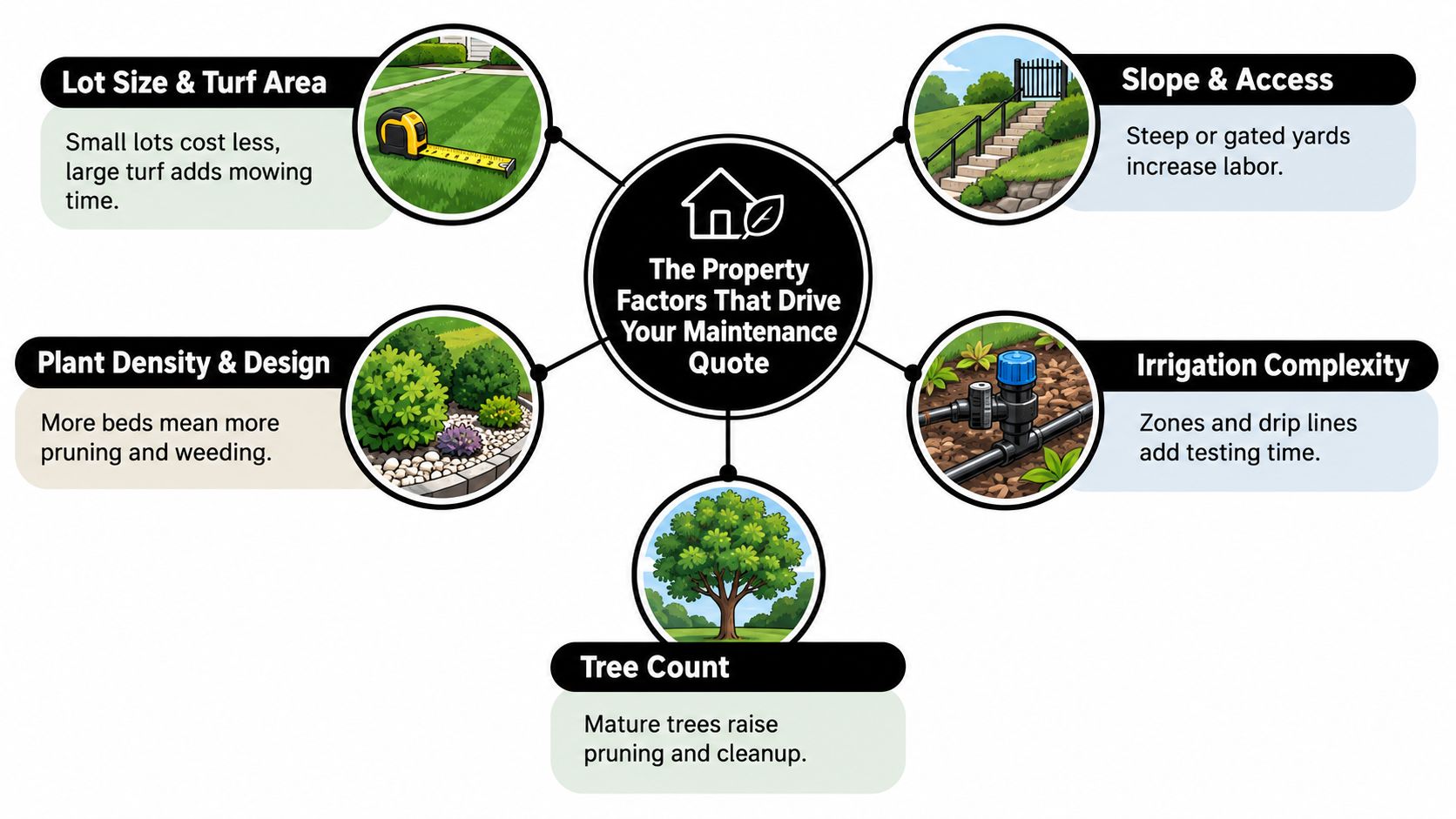
The Property Factors That Drive Your Maintenance Quote
When I walk a Prescott yard, I don't start with the address and guess a monthly number. I look at how many minutes a crew will spend moving, trimming, testing, pruning, loading debris, and reaching each part of the property. The invoice reflects that operational map.
Lot size is only the starting point
Total maintained area sets the baseline. A small front yard with one turf zone and a few shrubs is straightforward. A larger lot with multiple turf sections, isolated planting islands, long gravel paths, and separate backyard access takes more time even when the total square footage doesn't seem dramatically different.
Composition changes the cost per acre. Historical maintenance benchmarks indicate that ground cover can cost about three times as much per acre to maintain as standard turf or comparable categories, while shrub and tree areas and surfaced areas can each cost about half as much per acre (ERIC landscape maintenance benchmark). Ground cover often requires hand edging, selective pruning, and careful weed suppression. Rock and paved surfaces reduce mowing, but crews still need to blow debris, inspect edges, and manage weeds.
Plants and turf determine labor intensity
A native xeriscape palette can reduce frequent mowing and irrigation demand, but dense beds still need weeding, pruning, deadwood removal, and plant replacement. Roses, ornamental grasses, annual color, and mature shrubs create more hands-on work than sparse native plantings.
Natural bluegrass and fescue can perform well at Prescott's elevation, but they need mowing, feeding, irrigation oversight, and seasonal attention. Bermuda behaves differently and may go dormant during cooler periods. Artificial turf removes mowing, yet it isn't maintenance-free. It still needs brushing, debris removal, occasional infill attention, and weed control along seams and edges.
Access and features add separate work
A steep backyard slows every task. Tight side gates may prevent equipment access, forcing crews to carry tools and hand-trim areas that would otherwise be handled faster. Mature trees add pruning cycles and leaf volume, while fire pits, water features, decorative rock, and paver areas create edges and surfaces that need inspection and cleanup.
Irrigation complexity is another major factor. A property with several spray zones, drip valves, filters, pressure regulators, and buried lines takes longer to test than a simple system. Water costs should also be separated from labor when comparing bids, because bundling irrigation use with maintenance can make a contractor's labor appear artificially high. The U.S. EPA notes that outdoor water use accounts for nearly 30% of household water use on average, and roughly half of that outdoor water can be wasted through evaporation, wind, or overwatering (EPA water-use information).
How Maintenance Services Are Priced
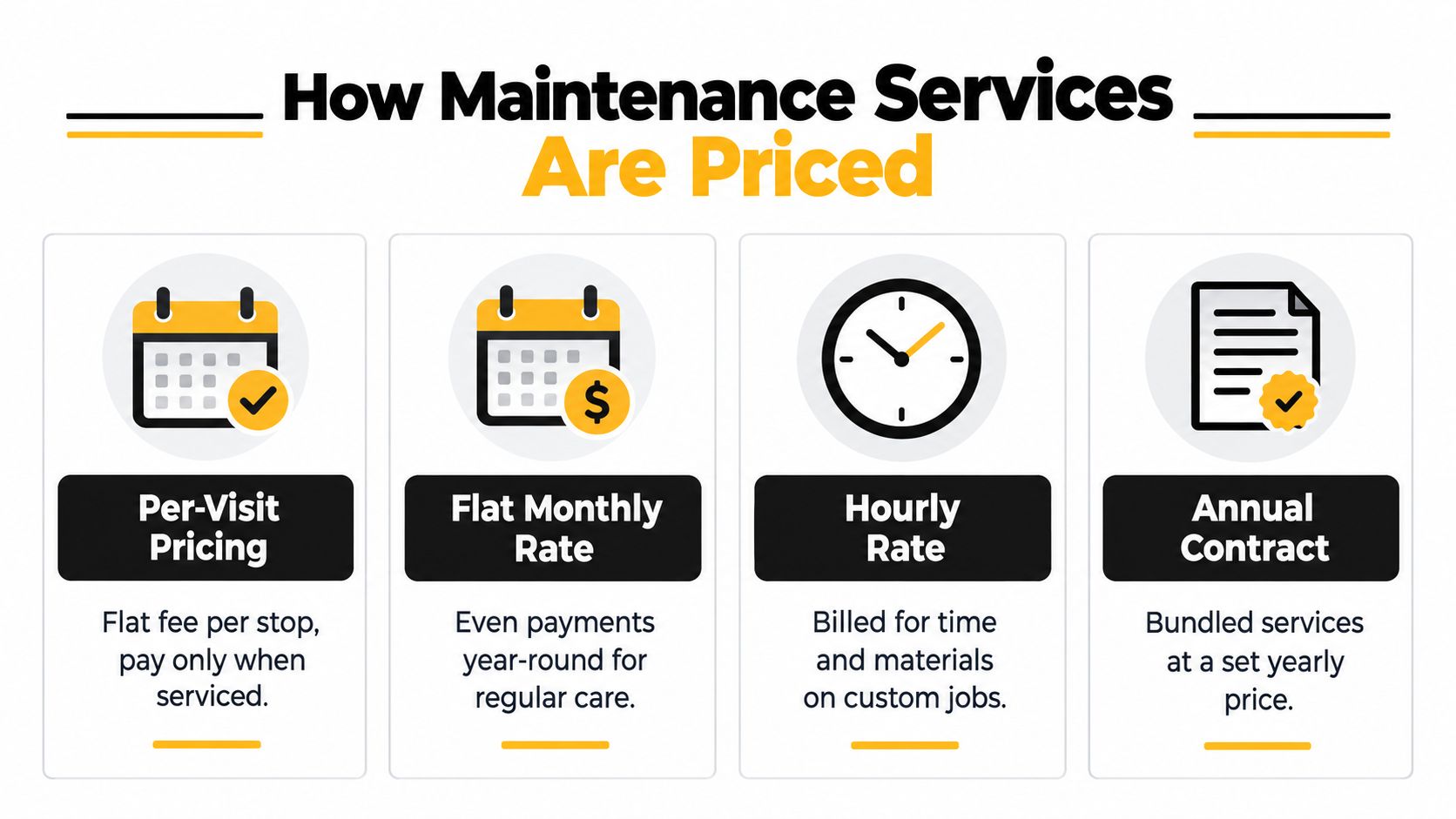
Prescott homeowners generally encounter four pricing structures. The right model depends less on the lowest advertised number and more on how predictable the property's needs are.
Per-visit pricing
A crew charges a flat amount for each stop, and you pay only when work occurs. This can suit a small yard, a vacation property, or a homeowner who wants seasonal cleanup without a year-round commitment.
The trade-off is inconsistency. If you postpone mowing during slow growth, you may save a visit, but pruning, irrigation testing, and leaf cleanup still arrive as separate needs. Ask whether edging, blowing, bed work, and green-waste removal are included or billed separately.
Monthly packages
A monthly package spreads payments across the year and defines a recurring scope. A typical agreement might include a set mowing schedule, edging, blowing, light bed maintenance, and routine pruning. This works well for occupied homes in Prescott and Prescott Valley where owners want one predictable bill.
Read the service frequency carefully. “Monthly maintenance” can describe monthly billing, not one visit per month. Confirm the number of visits, seasonal adjustments, weather policies, included materials, and how extra work is approved. The landscape maintenance services overview is useful when comparing routine care against broader property management.
Annual contracts
An annual contract sets a defined program for 12 months, often combining routine visits with seasonal services. It can provide budget certainty and priority scheduling, particularly before spring demand increases.
This structure works best when the scope is specific. The agreement should list irrigation startup and shutdown, pruning cycles, cleanup expectations, fertilization, storm response, and exclusions. For a deeper discussion of building profitable, sustainable service pricing, see pricing landscaping with VerticalRent.
HOA and property-manager pricing
HOA and commercial bids are usually built around annual contracts, service areas, access requirements, liability documentation, and standardized presentation standards. Cost per maintained area is often more meaningful than a flat residential monthly fee because acreage, common areas, and service intensity vary substantially.
An HOA should request a scope that identifies turf, shrub beds, trees, irrigation responsibilities, seasonal color, debris removal, and emergency work. A low bid that omits irrigation oversight or storm cleanup isn't necessarily cheaper. It may move the cost into change orders.
A Realistic 12-Month Maintenance Budget for Prescott Yards
A responsible budget follows Prescott's calendar rather than multiplying a monthly mowing price by the number of months in a year. The exact bill depends on scope, but typical residential planning should allow $1,500 to $4,000 or more annually when seasonal work is included.
Spring startup from March through April
Spring is when dormant problems become visible. Crews may turn irrigation systems on, test valves and drip lines, inspect spray coverage, apply pre-emergent where appropriate, complete the first mow and edging, refresh mulch, and clean up roses and dormant perennials.
Irration startup deserves its own line item because a small leak or blocked emitter can kill plants before the homeowner notices. Spring pruning also needs judgment. Cutting everything back at once can damage plants that are still responding to cold nights, so the timing should follow the plant palette and elevation of the property.
Summer peak from May through August
Late spring and summer bring the most regular mowing, edging, fertilization rounds, weed control, and irrigation adjustments. Turf growth, water demand, and plant stress don't stay constant, so a fixed routine may need seasonal changes rather than identical visits every month.
Monsoon preparation belongs in this period. Crews should clear debris, inspect drainage paths, check slopes and washes, and identify areas where runoff could undermine rock, soil, or hardscape. Storm response is usually separate from routine service because fallen limbs, washed-out material, and heavy debris require different equipment and labor.
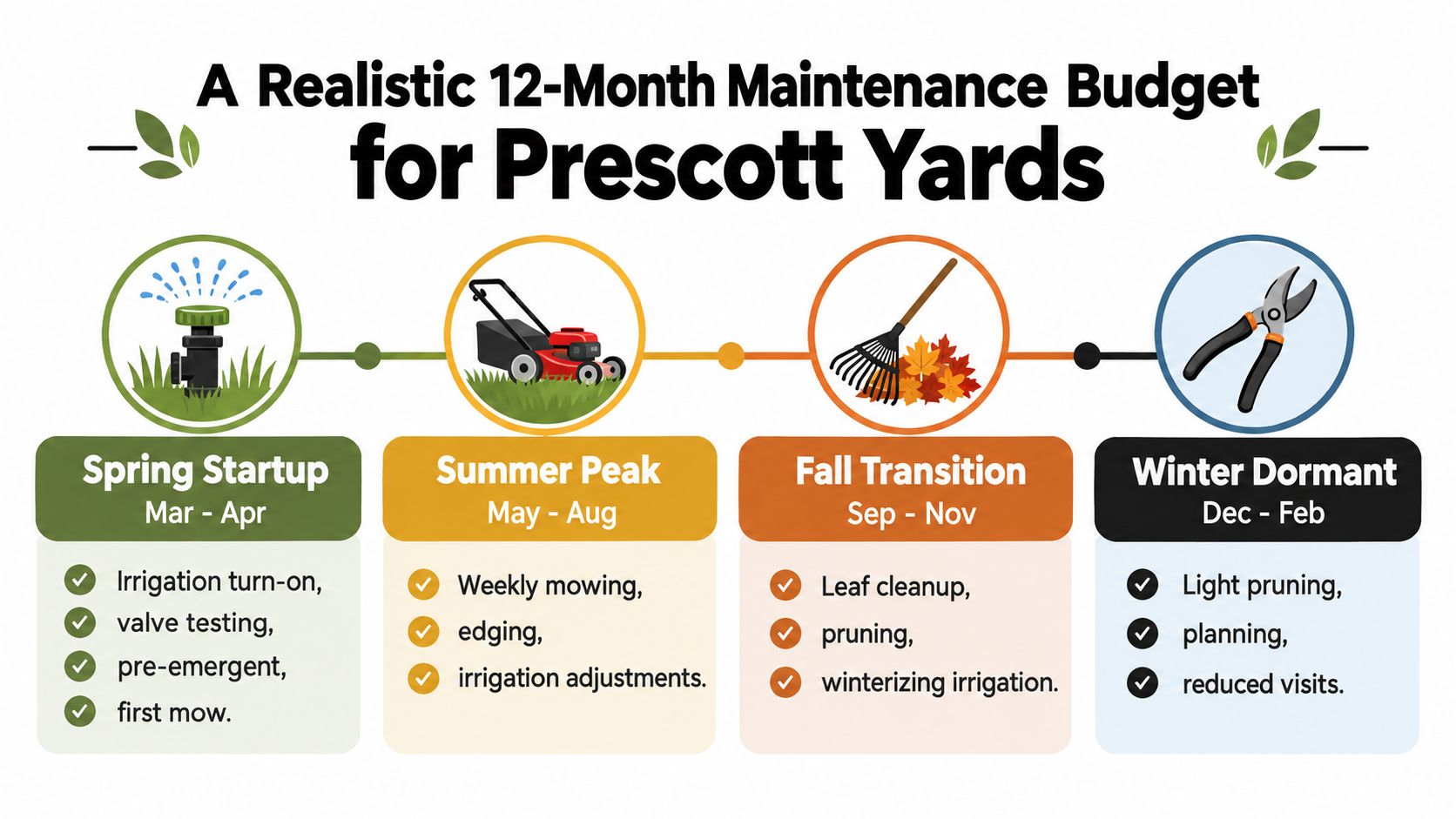
Fall transition from September through November
Fall brings leaf cleanup, a final seasonal mow, perennial cutback, pruning, and possible overseeding or rye installation for cool-season color. Mature trees can make this period expensive because cleanup volume increases even when turf growth slows.
The important budgeting question is whether fall cleanup is included in the monthly package. If it isn't, the homeowner may receive a separate bill precisely when several other seasonal tasks are due.
Winter dormant period from December through February
Winter usually reduces visit frequency, but it doesn't eliminate responsibility. Dormant pruning, snow and ice observation, plant protection, and irrigation shutdown or blow-out help prevent freeze-related damage at elevation.
A winter plan may be lighter than summer service, yet skipping it entirely can create spring recovery work. Use a landscape maintenance schedule template to compare the tasks your current agreement includes. A visual seasonal schedule can also help household members understand why the annual carrying cost differs from the advertised monthly mowing rate.
Common Misconceptions About Maintenance Costs
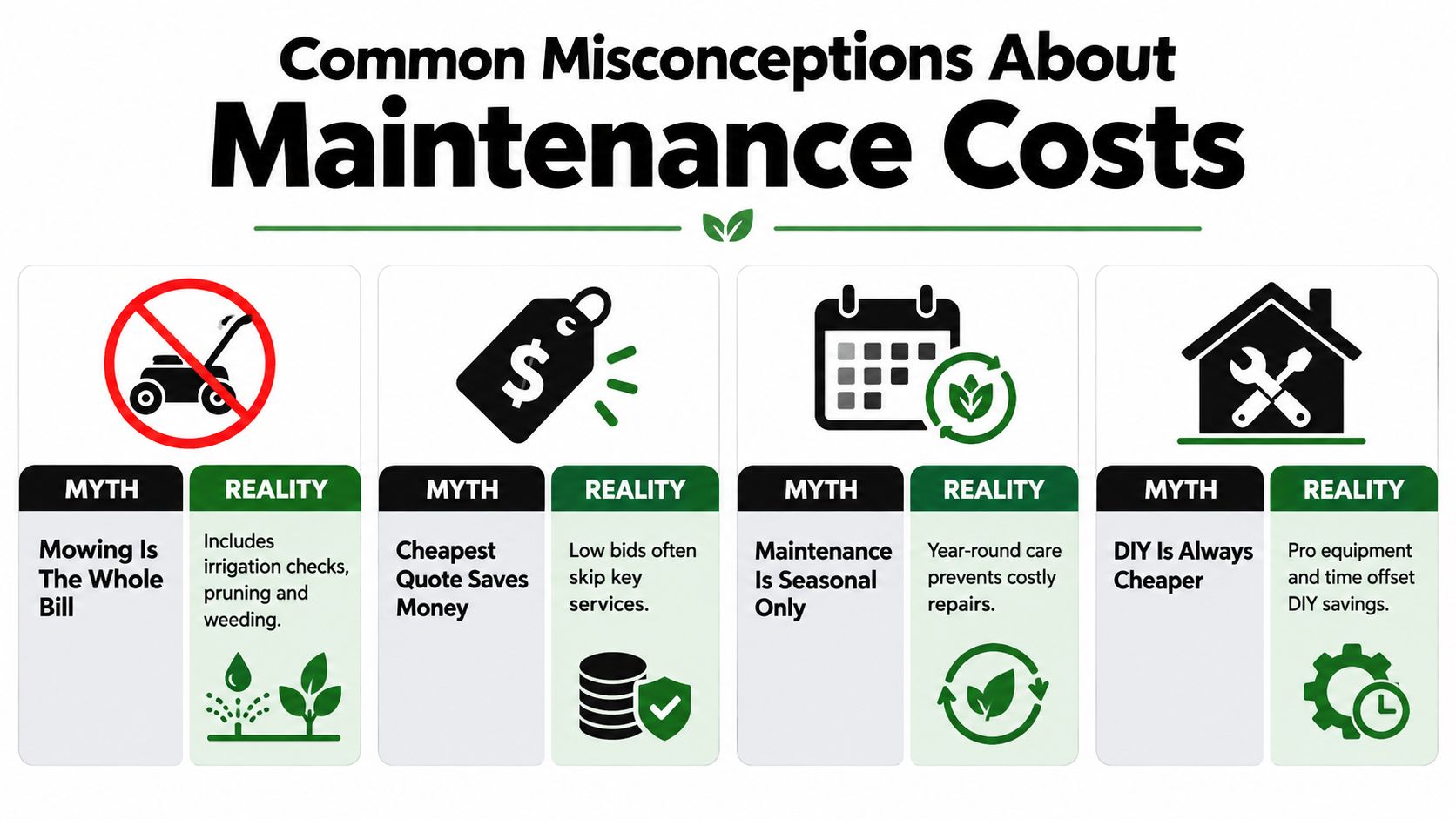
The first quote surprises many homeowners because the visible work, mowing, isn't the whole program. A mower makes the invoice easy to notice, but plant health, irrigation, pruning, and seasonal cleanup often determine whether the yard remains stable.
Mowing is the whole bill
Mowing is only one recurring task. Irrigation checks, shrub pruning, fertilization, bed weeding, mulch refreshes, leaf removal, and winter preparation can equal or exceed the mowing portion over a full year.
Ask for a scope rather than a single total. If a proposal lists only mowing, trimming, and blowing, it may be a lawn service quote rather than maintenance.
Artificial turf means zero upkeep
Synthetic grass removes mowing and reduces routine irrigation, but it still collects leaves, dust, pet waste, and windblown debris. It may need brushing, edge weed control, seam inspection, and infill attention.
Artificial turf is a labor shift, not a complete elimination of maintenance. A low-maintenance design can still produce occasional higher-ticket visits for cleaning, repairs, pressure washing, or surrounding rock work.
Bigger companies always charge more
A larger local operator may carry more overhead, but route density, equipment, scheduling, insurance, and crew efficiency can make the final price competitive with a one-person operation. The important comparison is whether both providers are quoting the same scope and carrying appropriate licensing and insurance.
Low-water plants eliminate maintenance
Xeriscaping can reduce irrigation demand, but it doesn't eliminate pruning, weeding, replacement planting, or rock maintenance. Native plants still grow, spread, shed debris, and compete with weeds.
Skipping winter saves money
Skipping winter visits can leave irrigation vulnerable to freezing, allow rodents or weather to damage plants, and turn a manageable spring cleanup into a larger recovery project. The invoice reflects prevention as well as visible appearance.
Smart Ways to Lower Your Monthly Maintenance Bill
The safest savings come from reducing unnecessary labor, not from removing care that protects the yard. Start with the design. Replace narrow, difficult turf strips with decomposed granite or suitable native groundcover, group plants by water requirement through hydrozoning, and choose durable shrubs instead of tender annual color where year-round display isn't essential.
Limit features that require specialized attention. A simple rock layout usually takes less routine labor than multiple isolated planting islands, a water feature, and dense ornamental beds spread across the property. Keep access practical too. A gate that accommodates equipment can reduce repeated hand-carrying and hand-trimming.
Adjust the schedule intelligently
During slow-growth windows, ask whether biweekly mowing is appropriate rather than keeping a weekly schedule automatically. The answer depends on turf type, weather, irrigation, and appearance expectations, but the schedule should follow growth instead of habit.
Bundle related work. Pruning can often be coordinated with fertilization rounds, and irrigation checks should align with spring startup and winter shutdown rather than becoming avoidable standalone trips. Seasonal tasks still need to happen, but combining visits can reduce duplicated travel and setup.
Use the contract as a planning tool
Ask about annual agreements before peak season, off-peak scheduling, and bundled lawn, shrub, irrigation, and cleanup services. Consolidating vendors gives one provider responsibility for the property and reduces the chance that irrigation, pruning, and turf care are handled without coordination.
Homeowners can often handle straightforward mowing and blowing if they have the equipment and time. Pruning, fertilizer application, irrigation repair, and work around mature trees are different. A mistake can damage plants or create a larger correction bill. For related ideas on reducing upkeep across mountain properties, Munds Park property maintenance tips offers useful planning context.
Why Professional Maintenance Is Worth the Investment
Professional maintenance protects the original outdoor space investment. In Prescott's high-elevation climate, ultraviolet exposure, monsoon runoff, dry conditions, and winter freezes stress plants, irrigation components, pavers, rock, and outdoor living features throughout the year.
Consistent pruning keeps shrubs from becoming structurally weak and overgrown. Irrigation tuning helps deliver water where roots need it instead of washing soil away from hardscape. Seasonal cleanup removes material that can block drainage or hold moisture against surfaces. These tasks aren't cosmetic extras when they prevent small defects from becoming replacement work.
Deferred care creates larger bills
A neglected yard usually reveals its cost in specific ways:
Dead shrubs: Missed irrigation problems or unsuitable watering can require replacement planting.
Cracked or shifted hardscape: Poor drainage and runoff can undermine flagstone, pavers, and paths.
Failing turf: Compaction, weak nutrition, poor coverage, and uneven irrigation can leave thin areas that need rehabilitation.
Clogged drip lines: Sediment, damaged emitters, or pressure problems can affect an entire planting bed.
Overgrown trees: Delayed pruning can make later work more difficult and increase debris volume.
A maintained yard also supports presentation when you sell. Buyers notice neglected beds, broken irrigation, dead plants, and worn hardscape before they study the interior. Regular care won't guarantee a particular resale result, but it can reduce visible objections, support curb appeal, and help prevent inspection-related negotiations.
Practical rule: Compare a maintenance proposal with the cost of preserving the landscape, not only with the price of the next mowing visit.
Professional service also buys time and consistency. Homeowners don't have to coordinate a lawn provider, irrigation technician, tree crew, and cleanup team separately. Property managers and HOA boards gain clearer accountability, documented scopes, and a service partner familiar with access and presentation standards. Guidance on how exterior improvements affect first impressions can also be found in this curb appeal advice from an Ottawa fencing contractor.
R.E. and Sons Landscaping is a licensed, bonded, and insured Prescott-based design-build company with a dedicated maintenance department serving Prescott, Prescott Valley, Chino Valley, and Northern Arizona. Its Arizona ROC #300642 supports a service model that can connect ongoing upkeep with existing or planned features such as artificial turf, putting greens, paver patios, rock work, water features, fireplaces, fire pits, outdoor kitchens, and bars.
R.E. and Sons Landscaping provides recurring yard maintenance, seasonal cleanups, irrigation-related coordination, and care for homeowners, property managers, and HOA boards across the Prescott area. Visit R.E. and Sons Landscaping to request a walk-through quote that maps the actual plants, turf, access, irrigation, and seasonal needs of your property.
Comments