
9 Modern Patio Ideas for Northern Arizona Homes
In 2025, the global outdoor living structures market was estimated at USD 2.5 billion, and pergolas and patio structures represented 64.0% of global revenue. The strongest modern patio ideas for Prescott-area homeowners combine clean geometric hardscape, intentional shade, durable outdoor-living features, and low-maintenance planting or turf choices suited to Northern Arizona.
That shift matters locally. Patios are no longer just flat surfaces beside the house. They're becoming outdoor kitchens, fire-centered lounges, shaded dining rooms, low-water gathering spaces, and flexible extensions of the home. A national homebuilding survey found that about 63% of new single-family homes in the United States were built with patios in 2023, showing how central outdoor living has become in residential design. Grand View Research's outdoor living structures analysis and its North American market overview both support that broader trend.
R.E. and Sons Landscaping is a licensed, bonded, and insured design-build company helping homeowners in Prescott, Prescott Valley, Chino Valley, and surrounding Northern Arizona communities create durable outdoor living spaces. The nine ideas below can be adapted for entertaining, relaxing, gardening, water conservation, or year-round use.
Start by defining the patio's main purpose, assessing sun exposure and drainage, choosing the hardscape foundation, and coordinating utilities and structures before construction.
The best-looking patio is also planned around heat, monsoon runoff, cold evenings, and long-term upkeep.
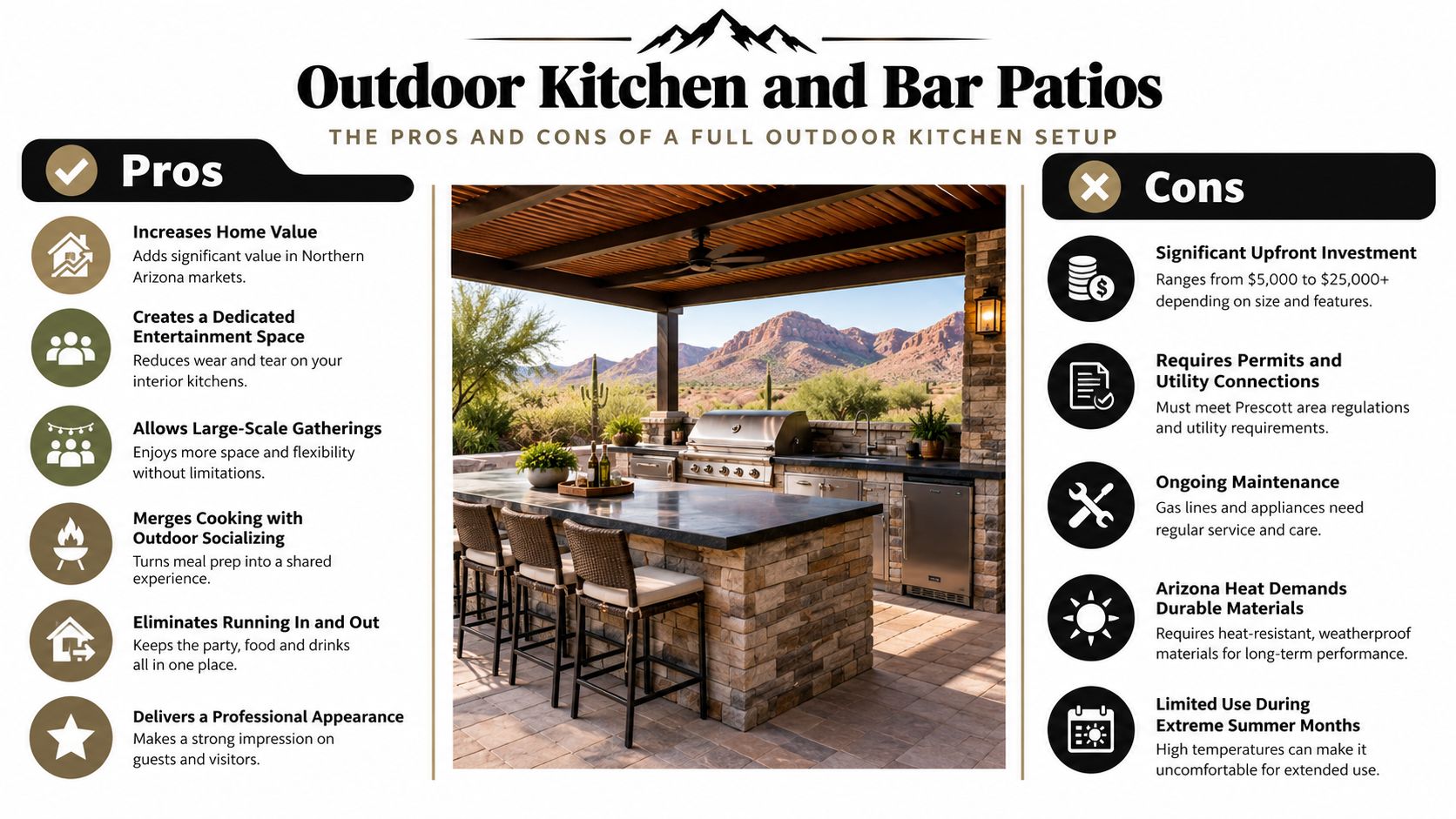
1. Outdoor Kitchen and Bar Patios
An outdoor kitchen and bar turns a patio into a practical entertainment hub, but only when the layout supports how people cook and move. A built-in grill, refrigerator, countertop, storage, and bar seating should form a coherent work zone rather than a collection of expensive appliances.
For Prescott and Prescott Valley homeowners, an L-shaped island often works well because it separates cooking from conversation without requiring a large outdoor room. A Chino Valley property might benefit from a complete kitchen suite with a pizza oven and covered dining area, while a larger Northern Arizona backyard could support separate cooking, dining, and lounge zones with low-glare lighting.
Plan utilities before the pavers
Gas lines, electrical conduit, water connections, drainage, and appliance locations need to be resolved before the paver base or concrete is installed. Retrofitting utilities later can disrupt finished hardscape and limit the kitchen's placement.
Keep the outdoor kitchen reasonably close to the home's existing kitchen when possible. Shorter supply routes make entertaining easier, and the design team can coordinate connections with the existing deck or patio instead of treating the outdoor kitchen as a separate project. Heat-resistant, fade-resistant counters and cabinetry also matter under Prescott's intense UV exposure.
Learn how to plan an outdoor kitchen with R.E. and Sons Landscaping before selecting appliances.
Choose outdoor-rated stainless steel appliances, add shade over the cooking area, and consider a maintenance plan for grills, refrigeration, surfaces, and utility connections. A pergola or shade sail can make summer cooking more comfortable, but it shouldn't block ventilation or create a wind problem.
2. Low-Maintenance Artificial Turf Patios With Hardscape Elements
Artificial turf works best as a soft visual counterpoint to hardscape, not as a substitute for every paved surface. Pairing turf with pavers, gravel, decorative rock, and stone creates defined areas for seating, dining, play, or a fire pit while keeping the overall outdoor space visually green.
This hybrid approach suits dry Northern Arizona yards where homeowners want less mowing, watering, and fertilizing. It can also work in Prescott Valley family spaces that need a durable play area, or in Chino Valley backyards where a putting green and lounge zone share the same yard.
Make turf part of the layout
A successful installation starts with the sub-base and drainage. Northern Arizona's summer monsoons can expose poor grading quickly, so water needs a planned path away from the patio, turf edges, structures, and house foundation.
Use decorative rock as a crisp border and select a turf color and pile that complement the home rather than trying to imitate a wet-climate lawn. Pet-friendly turf may be appropriate for households with dogs, but it still needs cleaning and routine care. Brushing helps restore the blades and keeps high-use areas looking even.
See practical guidance on low-maintenance artificial turf from R.E. and Sons Landscaping.
The trade-off is straightforward. Turf reduces mowing and irrigation demands, but it isn't maintenance-free. Heat, pet use, dust, debris, and drainage all affect how it performs. A thoughtful hardscape-to-turf relationship usually looks more intentional than covering the entire yard in one material.
3. Fire Pit and Fireplace Focal Point Patios
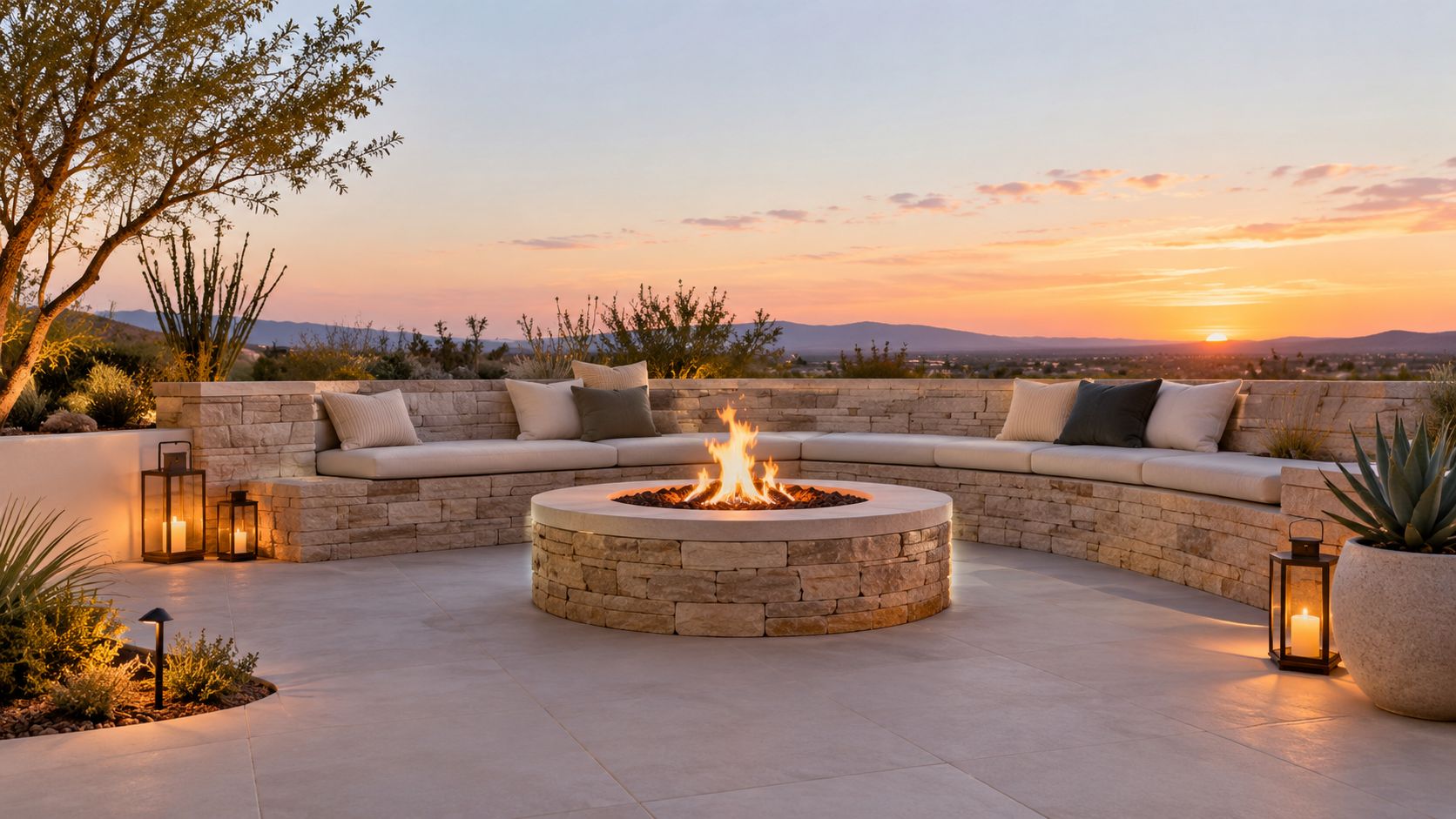
A well-placed fire feature can keep a modern patio useful after sunset and during Northern Arizona's cool evenings. Its location should support circulation, direct seating toward the flame, and leave enough open space for people to pass without crossing the heat zone.
A Prescott estate may suit a stacked-stone fireplace with integrated seating walls. In a Chino Valley backyard, a gas fire pit with movable lounge chairs can provide more flexibility. Contemporary homes often pair well with a linear fireplace, which creates a strong horizontal focal point without taking over the patio.
Choose the fire feature for the way you gather
Fire pits support circular conversation and keep sightlines open from several directions. Fireplaces create a taller architectural anchor and a defined backdrop, but they occupy more space and become a fixed part of the layout.
Gas provides convenient operation and a clean appearance. Wood-burning features offer a traditional experience, though they require planning for smoke, fuel storage, clearances, and local rules. Features attached to structures, or connected to gas and electrical systems, should be coordinated before construction begins.
Explore outdoor fireplaces and fire pits with R.E. and Sons Landscaping when the concept needs to move into a coordinated design and installation plan.
Set the feature where it remains visible from the main living areas. Use weather-resistant stone, brick, or stucco that relates to the home, then add low-level lighting around the seating edge. A cover helps protect the installation from rain and snow. Allow about 2 to 2.5 feet from the fire-pit edge to seating, a common planning clearance noted in this patio size guide.
4. Pergola and Shade Structure Patios
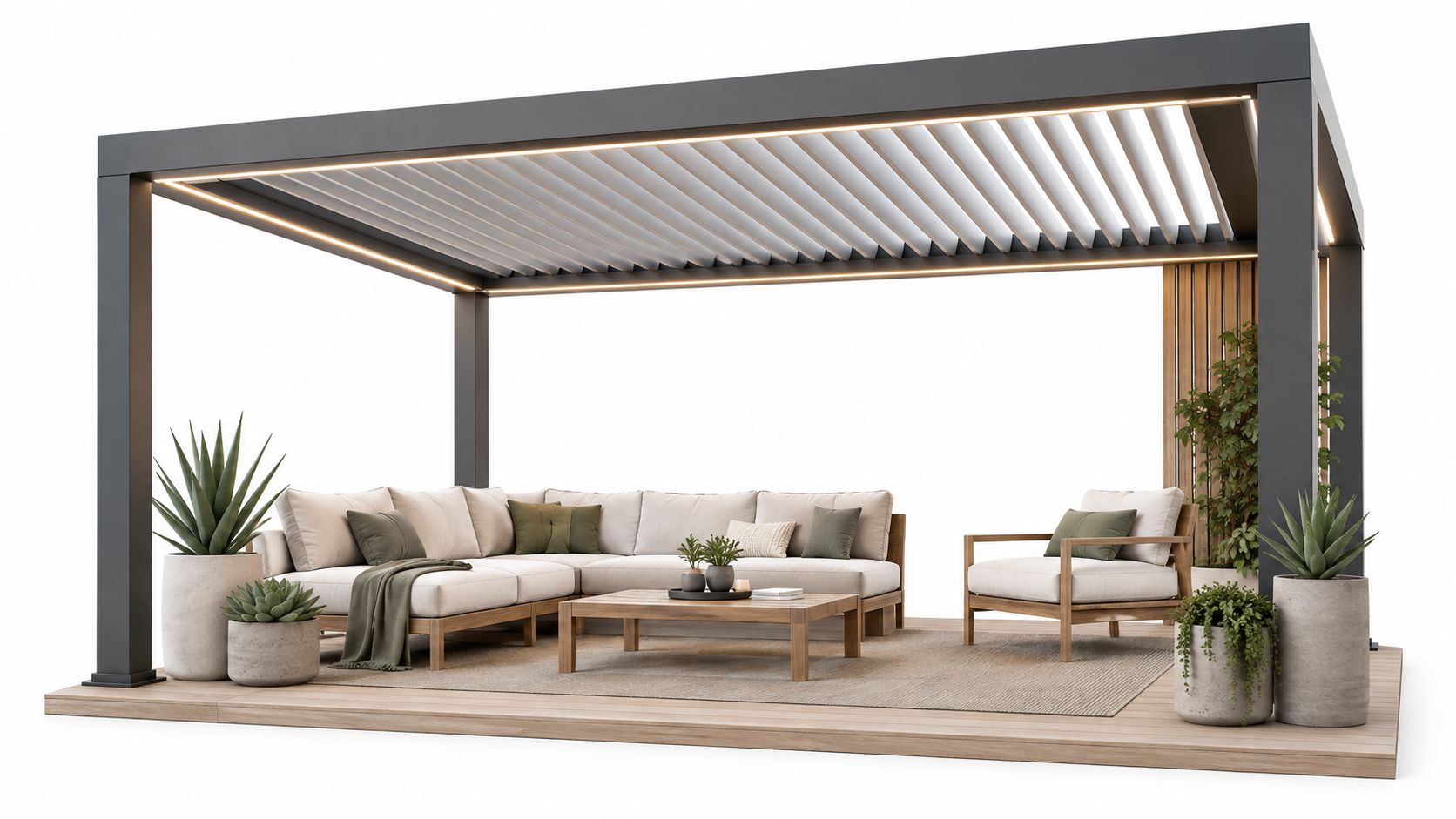
Shade determines whether a patio gets used during the hottest part of the day. A pergola, shade sail, retractable awning, or louvered roof can make a dining or lounge area more comfortable while giving the hardscape a strong architectural frame.
Start with the exposure rather than the structure's appearance. West and southwest-facing areas often need afternoon protection, but the final placement depends on the home, surrounding walls, trees, and seasonal sun. In Prescott Valley, a slatted pergola with integrated lighting may provide the right balance of filtered shade and openness. A contemporary Chino Valley home may be better suited to an aluminum louvered system.
Match shade to maintenance and weather
Wood brings warmth but needs more attention to finish and weathering. Powder-coated aluminum generally offers a cleaner, lower-maintenance appearance, while motorized louvers provide flexible control but add complexity and cost. Shade sails can cover broad areas, though their anchors and wind exposure need careful planning.
Climbing vines can soften a modern structure, but they're a long-term design decision. They need irrigation, support, pruning, and time to mature. Keep drainage away from pergola footings, and have the structure engineered for local monsoon wind conditions.
Most attached pergolas and patio covers may require permits, unlike many basic ground-level patios. Hardscapers' permit and code guidance notes that attached structures, retaining walls over 4 feet, and projects that change grading or drainage often need review. R.E. and Sons Landscaping can coordinate the structural and hardscape planning before installation begins.
5. Custom Paver Patio Installations With Geometric Patterns
A geometric paver pattern can make a modest patio feel deliberate without adding unnecessary features. Herringbone, chevron, running bond, contrasting borders, and mixed-format layouts give the surface visual structure and help define dining, lounge, and circulation zones.
For a Prescott home, a mixed-material herringbone field with a natural-stone border can connect the patio to the exterior walls and planting. In Chino Valley, a larger estate may support a custom pattern that combines color and texture around a fire feature. Permeable pavers can also support a modern appearance while helping manage runoff.
Build the pattern on a stable base
Pattern precision depends more on preparation than on the paver itself. The installer needs a properly compacted base, accurate edge restraints, consistent joints, and planned drainage. A porcelain paver design guide for outdoor living offers broader material inspiration, but Northern Arizona installations still need to be selected for local temperature, drainage, and installation conditions.
Choose colors that relate to the roof, exterior walls, and surrounding rock. Dark materials can create a dramatic modern look, but they may feel hotter and show dust differently than lighter surfaces. Pale surfaces can reflect more light, which may increase glare near large windows.
Plan the pattern from the center outward, use a contrasting border to frame the area, and specify frost-resistant materials appropriate for Northern Arizona. Polymeric sand and correct joint treatment help reduce weed growth and washout. R.E. and Sons Landscaping can handle the layout, base preparation, grading, and installation as one coordinated process.
6. Water Features and Fountain Patios
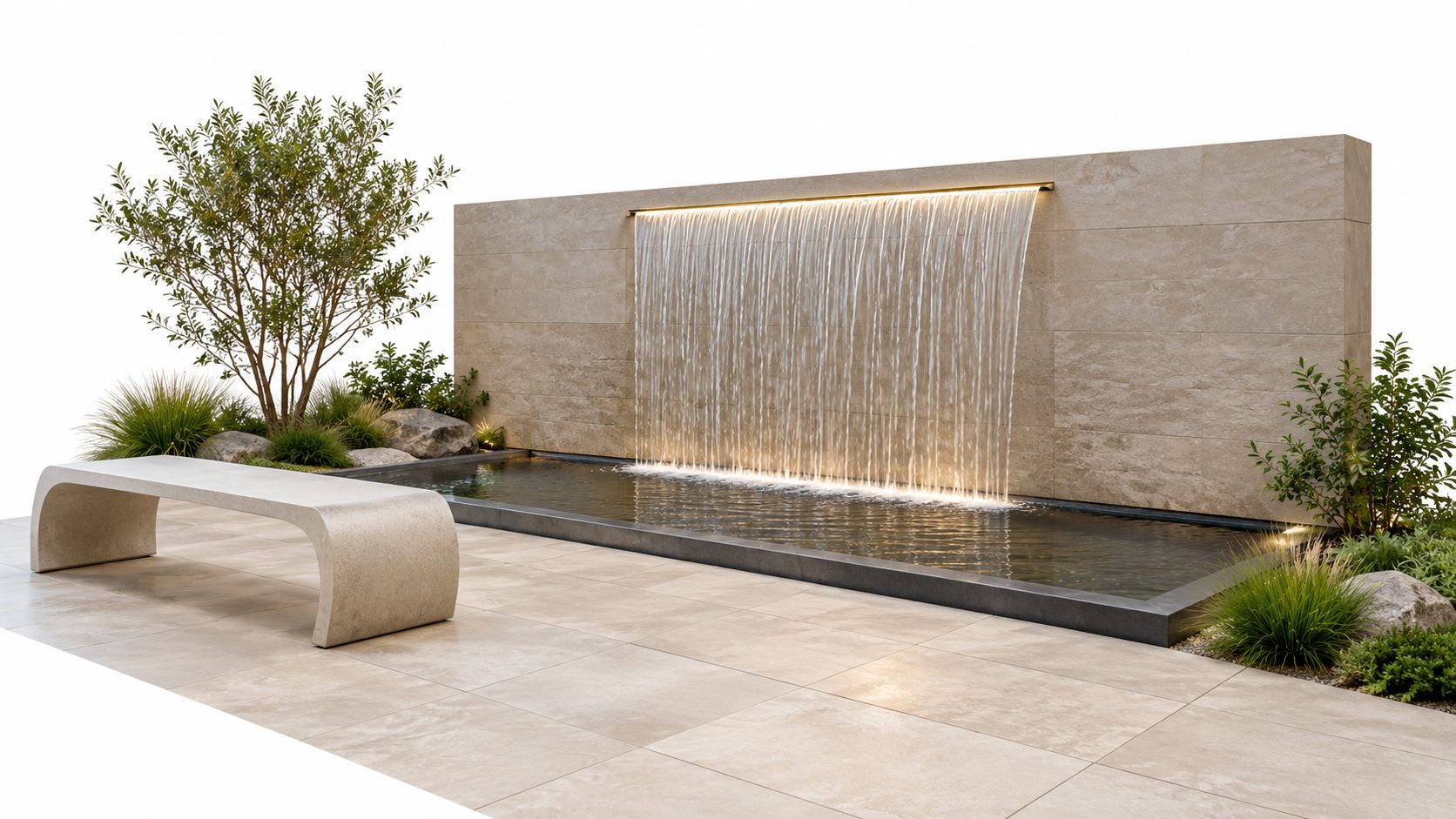
Water features add movement and sound to a patio, but they should be sized for the space and the maintenance routine. A compact recirculating fountain may be enough for a small Prescott courtyard. A larger property could use a water wall, pondless creek bed, or cascading feature integrated into a seating wall or pergola.
The most successful placement is visible from both indoor living areas and the patio itself. That way, the feature contributes to the home's daily experience rather than requiring a trip outside to appreciate it. Natural stone can connect the water feature to the surrounding hardscape, while native plantings soften its edges.
Control water use and upkeep
Recirculating systems reduce unnecessary water replacement, but evaporation, splash, filtration, and algae still require attention. Equipment should remain accessible for seasonal service, even when pumps and electrical components are concealed from view.
Desert sage, yucca, desert willow, and other Northern Arizona-adapted plants can frame the feature without creating a thirsty perimeter. Integrated lighting adds evening interest, but conduit and outlets should be planned before pavers are installed.
A water feature is a poor choice if no one wants to clean filters, monitor pumps, or manage seasonal adjustments. R.E. and Sons Landscaping's maintenance department can establish a practical care routine so the feature remains an asset rather than becoming an ignored mechanical system.
7. Raised Bed and Container Planting Patios
Raised beds and containers bring planting into the patio design without requiring a large in-ground garden. They add fragrance, seasonal color, herbs, vegetables, and vertical interest while giving homeowners more control over soil, irrigation, and plant placement.
Built-in stone beds can form the edge of a dining area or screen an outdoor kitchen. Coordinated ceramic and metal containers can create a more flexible arrangement around a lounge. In Northern Arizona, containers also make it easier to adjust plant selections when a location proves too exposed, windy, hot, or shaded.
Design planting around water needs
Use quality container mix rather than native soil, and group plants with similar irrigation requirements. Drip irrigation with timers can provide consistency during hot periods, but emitters still need inspection because clogged or displaced lines can stress plants quickly.
Large containers hold more root volume and moisture than small decorative pots, while tiered stands and raised beds create depth without crowding pathways. Native perennials, succulents, and ornamental grasses can reduce irrigation demands, but every plant still needs a suitable microclimate.
A container garden should support the patio's use, not interfere with it. Keep dining-chair movement, grill access, and walking routes clear. For inspiration on selecting plants for contained spaces, this native plant container garden guide provides a useful starting point. R.E. and Sons Landscaping can coordinate beds, containers, irrigation, and hardscape so the planting looks built into the patio rather than added afterward.
8. Contemporary Lounge, Seating and Lighting Design Patios
A modern patio succeeds when its furniture, lighting, and circulation support how the household spends time outdoors. Set the primary activity first, whether that is conversation, dining, or quiet relaxation, then size the seating and clearances around it.
In Prescott, a stone seating wall paired with a modular sectional can create a defined lounge without filling the entire surface with furniture. On a Chino Valley property with several gathering areas, separate dining, lounge, and fireside zones may work better than one oversized arrangement. Built-in benches conserve space and stay in place, while movable chairs make seasonal reconfiguration easier.
Organize furniture and activity zones on paper before construction so walking routes remain open. Check door swings, grill access, sightlines, and the space needed to pull out dining chairs.
Give every light a job
Layered lighting produces a more comfortable patio than one bright fixture. Ambient lighting supports general use, accent lighting draws attention to walls, plants, or water, and task lighting improves visibility near cooking areas, stairs, and pathways. Warm LED bulbs in the 2700K to 3000K range are commonly chosen for an inviting appearance. Dimmers allow the brightness to shift from dinner to conversation or a quieter evening.
Choose outdoor-rated fixtures and install conduit before the hardscape goes in. Concealed wiring protects the clean lines of a contemporary design and makes future repairs less disruptive. Pathway lights should mark steps, seating edges, and grade changes without creating glare.
Use UV- and weather-resistant cushions, and plan storage for severe weather. R.E. and Sons Landscaping can coordinate furniture clearances, shade, lighting, and hardscape during design and installation.
9. Sustainable and Eco-Friendly Patio Materials
Sustainable patio design in Northern Arizona starts with using fewer resources over the life of the space. That means choosing durable materials, reducing unnecessary irrigation, managing stormwater, and selecting plants that fit the regional climate rather than forcing a high-water planting scheme into a dry setting.
Permeable pavers, gravel, and grid systems allow water to move through the surface and can reduce pooling and runoff when the base and grading are designed correctly. Lane Built's outdoor living guidance identifies permeable surfaces as practical options for drainage-conscious outdoor spaces.
Combine conservation with comfort
A sustainable patio can still include shade, a fire feature, an outdoor kitchen, or comfortable seating. The key is to prioritize features that support regular use and pair them with efficient infrastructure. Drip irrigation, smart controllers, recycled mulch, locally sourced rock, and drought-adapted planting all help reduce ongoing demands.
Penstemon, desert marigold, and fourflower milkvetch are examples of plants suited to Prescott-area conditions, but plant selection should still account for sun, soil, elevation, exposure, and irrigation zones. Shade structures can also protect furniture and reduce heat around seating areas.
Keep stormwater in mind from the first sketch. A municipal example from Rock Hill notes that a patio or driveway may need to remain 5 feet from property lines to protect drainage, although the actual setback depends on the lot's drainage pattern. The city's residential patio guidance illustrates why site-specific review matters. R.E. and Sons Landscaping can combine grading, hardscape, planting, and irrigation into one Northern Arizona plan.
9 Modern Patio Ideas Comparison
Patio Type | Complexity & Process 🔄 | Resources & Cost ⚡ | Expected Outcomes 📊 | Ideal Use Cases 💡 | Key Advantages ⭐ |
|---|---|---|---|---|---|
Outdoor Kitchen and Bar Patios | High – permits, gas/electrical and professional build required 🔄 | Very high (>$5,000–$25,000+); appliances, utility hookups ⚡ | Major boost in entertaining capability and resale; indoor traffic reduced 📊 | Frequent hosts, resort-style homes, Prescott/Prescott Valley properties 💡 | Professional-grade cooking/entertaining space; strong market appeal ⭐ |
Low‑Maintenance Artificial Turf Patios with Hardscape Elements | Moderate – base prep, drainage, and expert installation 🔄 | Moderate–high upfront ($8–$15/ft²); minimal ongoing water/lawn costs ⚡ | Year‑round green appearance, significant water savings, low mowing 📊 | Water‑conscious families, pet owners, low‑maintenance yards 💡 | Consistent aesthetics, durable high‑traffic surface, long‑term savings ⭐ |
Fire Pit and Fireplace Focal Point Patios | Moderate – masonry or prefabricated install, permitting and safety checks 🔄 | Low–moderate ($2,000–$10,000+); materials and gas/electrical work ⚡ | Extended outdoor season, strong focal ambiance, increased property value 📊 | Cool‑season entertainers, cozy gathering spaces, visible indoor views 💡 | Ambiance and warmth; flexible fuel options; memorable focal point ⭐ |
Pergola and Shade Structure Patios | Moderate–high – structural design, possible motorization and permits 🔄 | Moderate–high ($3,000–$15,000); materials, motors, electrical ⚡ | Lower surface temps, extended comfort hours, architectural enhancement 📊 | Sun‑exposed patios needing shade; flexible style integrations 💡 | Temperature control, furniture protection, visual interest ⭐ |
Custom Paver Patio Installations with Geometric Patterns | High – precision layout, skilled installers and sub‑base work 🔄 | Moderate–high ($10–$25+/ft²); premium materials and labor ⚡ | Durable, distinctive visual statement; improved drainage with permeable options 📊 | Design‑forward homeowners seeking unique, high‑end patios 💡 | Custom aesthetics, easy individual paver repair, long‑term durability ⭐ |
Water Features and Fountain Patios | Moderate – plumbing/electrical, waterproofing and filtration needs 🔄 | Moderate–high ($2,000–$10,000+); pumps, lighting, seasonal care ⚡ | Soothing soundscape, noise masking, wildlife attraction, resort feel 📊 | Meditation or noise‑reduction spaces; focal design elements 💡 | Sensory appeal; recirculating systems conserve water; strong ambiance ⭐ |
Raised Bed and Container Planting Patios | Low–moderate – bed/container construction and irrigation setup 🔄 | Low–moderate; soil, containers, drip irrigation and plants ⚡ | Seasonal color, edible produce, improved soil control and accessibility 📊 | Home gardeners, small‑space growers, mobility‑limited users 💡 | Flexible planting, accessible gardening, seasonal rotation options ⭐ |
Contemporary Lounge, Seating and Lighting Design Patios | Moderate – integrated seating, layered lighting design and wiring 🔄 | Moderate–high (furniture $5k–$20k+; lighting $3k–$8k+) ⚡ | Extended evening usability, improved safety, elevated comfort and ambiance 📊 | Evening entertainers, hospitality‑style outdoor living, safety‑focused yards 💡 | Comfort‑focused layouts, energy‑efficient LEDs, versatile social zones ⭐ |
Sustainable and Eco‑Friendly Patio Materials | Moderate – sourcing eco materials, permeable design and irrigation planning 🔄 | Variable; some sustainable options carry higher upfront cost but save long‑term ⚡ | Reduced water use, better stormwater management, lower environmental footprint 📊 | Environmentally conscious homeowners, water‑restricted or regulation‑sensitive sites 💡 | Long‑term savings, regulatory alignment, supports local ecosystems ⭐ |
Turn Your Patio Concept Into a Buildable Plan
The right choice depends less on which idea looks best in a photo and more on how you'll use the space. For frequent entertaining, combine an outdoor kitchen or bar with shade, durable seating, and layered lighting. For cooler evening use, pair a fire pit or fireplace with comfortable lounge furniture and a protected circulation route. For lower maintenance, start with geometric pavers, artificial turf, decorative rock, and carefully zoned planting.
A small patio doesn't need every feature. A compact lounge with shade and a fire pit may deliver more daily value than an oversized outdoor room that's difficult to maintain. Likewise, a container garden and seating wall may be a better fit than extensive planting if you want greenery without a large irrigation system.
Should you build a modern patio yourself?
Homeowners can handle style research, furniture planning, container selection, plant inspiration, and simple décor. Those decisions are valuable because they clarify your priorities before construction.
Professional planning becomes important when the project includes grading, drainage, paver bases, retaining walls, structural shade, gas lines, electrical work, fire features, water systems, or an integrated outdoor kitchen. Errors in those areas can affect safety, permits, drainage, durability, and the cost of later corrections.
Which patio materials suit Northern Arizona?
Use materials selected for UV exposure, temperature variation, foot traffic, drainage, and maintenance expectations. Pavers, natural stone, gravel, and permeable systems can all work when the base, edges, joints, and grading are appropriate. The best choice also needs to relate to the home's exterior and avoid creating excessive glare or heat in the areas where people sit.
How can you reduce patio maintenance?
Reduce maintenance by matching the outdoor space to the climate, grouping plants by water needs, using drip irrigation, choosing durable outdoor-rated furniture, and planning access to pumps, valves, filters, and appliances. Artificial turf can reduce mowing and watering, but it still needs brushing, cleaning, and proper drainage.
Which features work best for entertaining?
Outdoor kitchens, bars, dining zones, shade structures, fire features, and layered lighting work well together because each solves a different use problem. Don't add them automatically. Choose the combination that supports your preferred gathering style and fits the available circulation space.
Allow about 3 feet for dining-chair pull-out space, 30 to 36 inches for main walkways, and about 4 feet in front of a grill, based on common patio planning guidance from Divine Landscaping's patio size guide. These clearances help prevent a beautiful layout from becoming difficult to use.
When might permits or utility coordination matter?
Basic ground-level patios and walkways often don't require permits, but attached pergolas or patio covers, retaining walls over 4 feet, and work that changes grading or drainage often may. Gas lines, electrical connections, outdoor kitchens, water features, and structural shade should be coordinated before installation begins.
R.E. and Sons Landscaping uses a four-step process, consultation, design approval, transformation, and enjoyment, to move from an idea to a coordinated build. Homeowners in Prescott, Prescott Valley, Chino Valley, and nearby Northern Arizona communities can receive complimentary outdoor design, access to a dedicated maintenance department, and service from a company identified by Arizona ROC #300642. Learn more about the team and its services at R.E. and Sons Landscaping.
Bring a preferred idea, your primary use case, and an approximate budget to the consultation. That information gives the design-build team a practical basis for selecting materials, combining features, addressing drainage and shade, and creating a patio you'll actually use.
R.E. and Sons Landscaping provides design-build services for modern paver patios, artificial turf, outdoor kitchens, fire features, shade structures, water features, planting, and ongoing maintenance in Prescott, Prescott Valley, Chino Valley, and surrounding Northern Arizona communities. Visit R.E. and Sons Landscaping to schedule a consultation and start turning your preferred patio idea into a climate-ready plan.
Comments