
Native Plants Northern Arizona: Your 2026 Landscaping Guide
Hearing native plants often brings assumptions of “easy care.” In Northern Arizona, that shortcut thinking usually creates more work, not less. The test is whether a plant fits the yard's sun, soil, drainage, cold, and microclimate, not whether it grew somewhere in the region.
That's the part homeowners in Prescott, Prescott Valley, Chino Valley, and nearby communities often miss. A plant can be native and still struggle badly in a hot reflective corner, a shaded slope, or a fast-draining lot with shallow soil. R.E. and Sons Landscaping builds outdoor spaces around those realities, because the plant list only works when the site does.
Why Native Does Not Always Mean Low Maintenance
A native plant is not a magic fix. In native plants northern arizona projects, the wrong placement can turn a promising plant into a constant irrigation and replacement problem. Some natives want partial shade, some need moderate moisture, and some only perform well when drainage is excellent, even though all of them are technically native to the region Arizona Native Plant Society plant list.
The hard truth about “easy” plants
The word “native” gets treated like a guarantee, but yards in Northern Arizona do not work that way. A plant adapted to one slope, soil type, or elevation band may fail a few miles away if the yard has different sun exposure, runoff patterns, or cold pockets. The maintenance burden often shows up after installation, when a plant that looked right on paper starts asking for frequent water, pruning, or replacement because the site is too hot, too shaded, or too exposed.
Northern Arizona also has sharp elevation swings, and the University of Arizona Cooperative Extension notes a study area of 8,125 square miles with elevations from 1,900 to 7,979 feet, which is a big reason the same plant behaves differently from yard to yard University of Arizona Cooperative Extension.
Practical rule: if a plant tag says “drought tolerant,” that doesn't mean it can skip establishment watering or survive in the wrong microclimate.
I see this most often when people choose plants by label instead of by conditions. A yard with afternoon heat and reflected light needs a different palette than a cool north-facing space under established trees. Some sites in Prescott and Prescott Valley have shallow soils over caliche or fast-draining fill, and those conditions change how long a plant needs supplemental water and how often it needs attention. Native planting works best when the plant is treated like a site-specific tool, not a decorative symbol.
Elevation matters in another way too. Higher sites can bring colder nights, shorter growing windows, and wind exposure that dries out leaves and soil faster than homeowners expect. Lower sites can stay warmer and push a plant into stress sooner if reflected heat and drainage are not accounted for.
The Arizona Native Plant Society also notes that Arizona may have as many as 4,200 vascular plant species and is the fourth most floristically rich state in the U.S. That richness is useful for homeowners, but only if the selection process is disciplined, because a plant that belongs in Arizona still may not belong in a particular yard Arizona Native Plant Society.
Understanding Northern Arizona Elevation Zones and Plant Diversity
Northern Arizona is one climate only on a map. On the ground, elevation, slope, exposure, and how water moves through the site create very different growing conditions. A plant that looks healthy in one part of the region can struggle in another, even when the two yards are only a short drive apart.
Why the regional plant pool matters
Arizona's plant diversity gives homeowners more useful choices than they often expect. That breadth means Prescott yards can draw from high-desert shrubs, pine-country perennials, or mixed transition plants depending on slope and exposure. The advantage is selection flexibility, but only if the plant fits the site instead of just fitting the label.
The practical point for native plants northern arizona is that location controls performance. A hillside near Prescott can shed water quickly, while a basin area may hold moisture longer and support a different mix. Local plant decisions have to account for that kind of variation, because the same species can behave very differently from one property to the next.
What this means for a Prescott yard
A good native plan starts with the yard, not the catalog. Sun exposure changes through the day, drainage changes after rain, and walls, trees, and paved areas create their own microclimates. Two properties in the same neighborhood can still need completely different plants.
That is why plant selection has to match microclimates and water movement, not just a general “Arizona native” label. A site with reflected heat and fast drainage needs a different approach than a cooler pocket with deeper moisture. In Prescott and Prescott Valley, good design means reading where water lands, where roots can settle, and where a plant can establish without constant rescue.
Matching Native Species to Your Yard Conditions
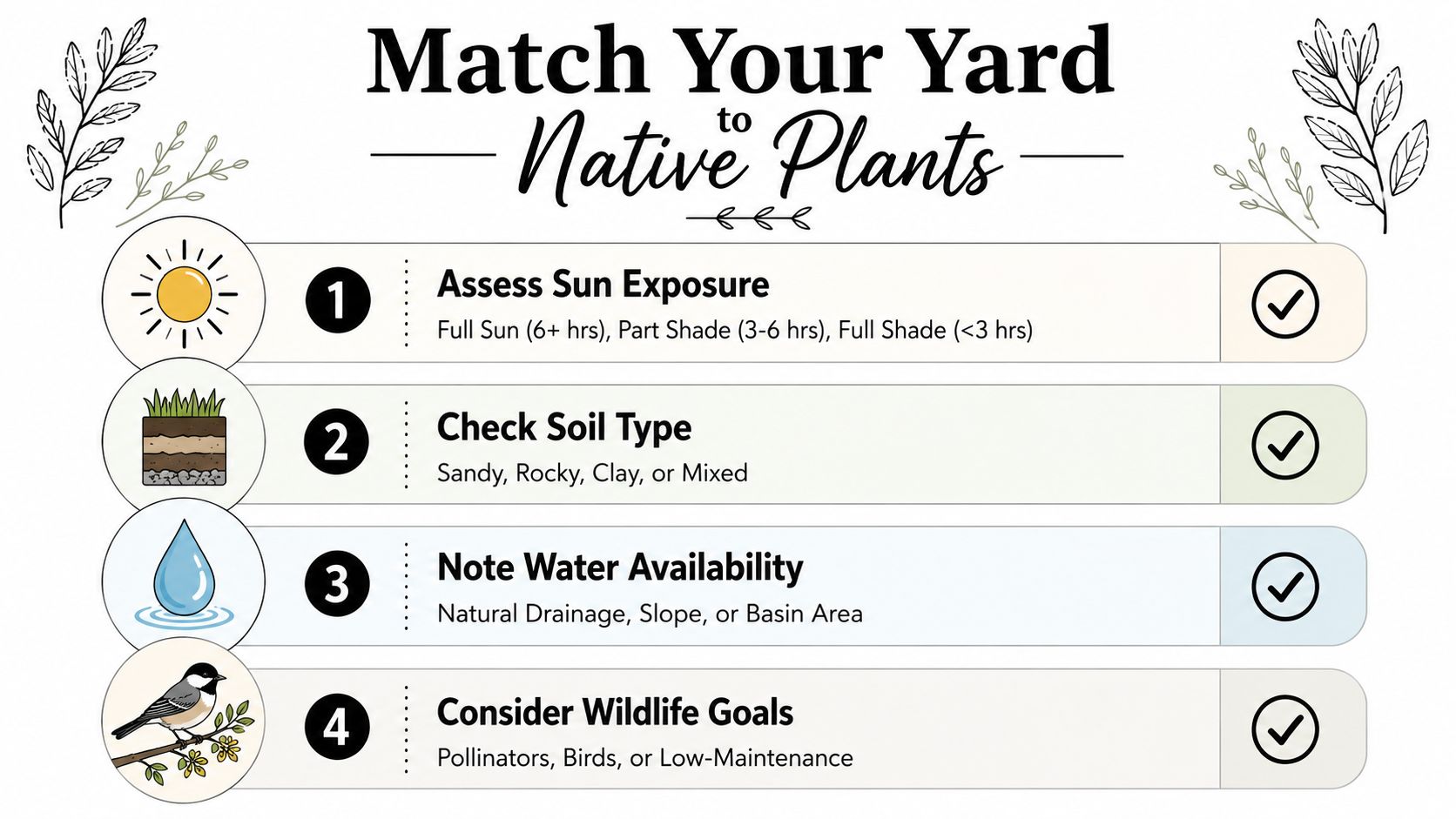
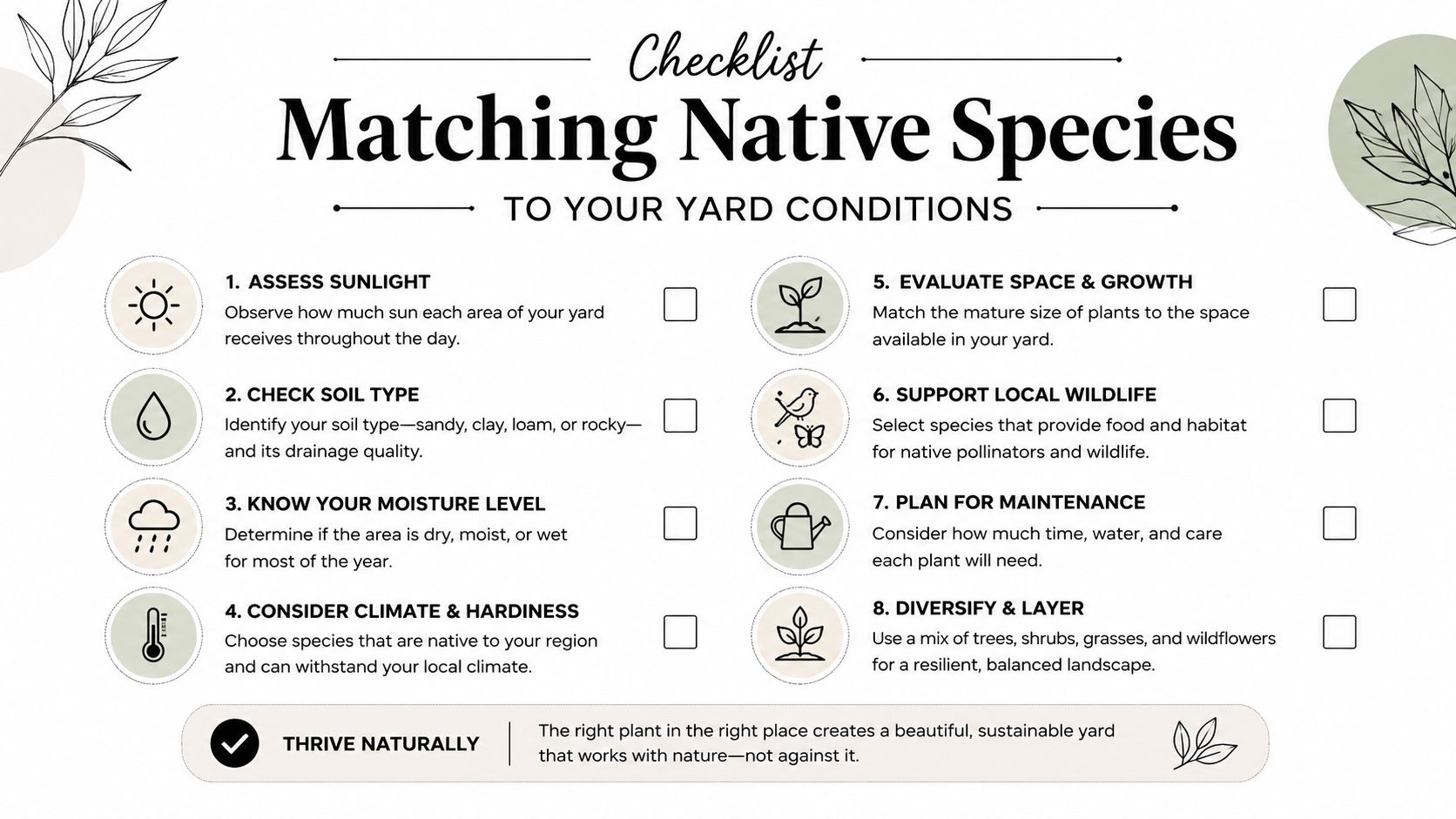
Start with the yard, then pick the plant. That sounds simple, but it's where most failed outdoor spaces begin. The best native plants northern arizona properties use are chosen after you've read sun patterns, soil type, drainage speed, and available water, not before.
How to read the site before you buy plants
Walk the property in the morning, at midday, and late afternoon. Make note of where shadows move, where walls hold heat, and where the soil dries first after irrigation or rain. If water collects in one area, that can support a different group of natives than a slope that drains almost immediately.
Coconino County recommends using microclimates, water-harvesting features, and seasonal timing to improve establishment Coconino County native plants guide. Clay soils may need organic amendment, while excessively drained soils can benefit from compost to improve retention and infiltration. That matters because a root zone that wets thoroughly and then dries between events is far more reliable than shallow, frequent watering.
A plant that stays alive only with surface watering usually never becomes a strong landscape plant.
For a plain-language companion to broader planting ideas, the US native plants for a sustainable garden guide is useful context. It's broad, but it reinforces the same practical point, the plant has to fit the site.
The other part of this is irrigation planning. If a plant needs more water during establishment or has different needs from its neighbors, the irrigation zones should reflect that. A good starting point is the local approach outlined in irrigation and landscape planning, because native plants still need a system that matches how water moves through the yard.
What to look for in your own yard
Sun exposure: Full sun, part shade, and shaded corners are different planting environments, even within one lot.
Soil behavior: Fast-draining rocky soil, compact clay, and mixed fill each change rooting success.
Water access: A hose-run bed and a basin area support different establishment strategies.
Existing shelter: Trees, walls, and fences can protect some natives and overheat others.
The cleaner the site read, the fewer surprises later. That's the difference between a native planting that looks good for a season and one that holds up for years.
Top Performing Native Plants for Prescott Area Yards
The most useful native plants are not the prettiest entries on a generic list, they are the ones that keep working in real yards. Around Prescott and Prescott Valley, I look for species that hold their shape, tolerate local temperature swings, and still perform when the site is a little imperfect.
Reliable choices and where they fit
The table below focuses on traits homeowners need to know.
Native Plant Performance Guide for Prescott Area | Mature Size | Water Need | Sun Exposure | Bloom Season |
|---|---|---|---|---|
Blackfoot daisy | Compact groundcover form | Low to medium | Full sun | Seasonal bloom, timing varies by site |
Cutleaf coneflower | About 7 feet tall and about 3 feet wide | Moderate | Partial shade to sun | July to September |
Locally adapted native shrubs | Varies by species | Low to moderate | Sun to part shade | Seasonally variable |
Accent natives for structure | Varies by species | Species-specific | Species-specific | Species-specific |
Blackfoot daisy is useful where drainage is good and the yard gets real sun. It fits open, bright spaces better than heavy shade or wet soil. Cutleaf coneflower is the other kind of choice, it brings size and seasonal bloom, but it wants moderate moisture and does well in partial shade to sun. The same Northern Arizona perennial guidance that lists its size, exposure, and bloom window is a practical check before you plant it in the wrong spot Flagstaff native perennials guide.
That pattern shows up across native design. Some plants are there for low mats and texture, others for height and summer color, and others for screening or structure. The best planting plans mix those roles instead of trying to make one plant do everything.
A helpful rule is to choose plants by performance category, not just by origin. That is one reason our local shrub recommendations start with function first and appearance second, the same way best shrubs for Arizona approaches plant selection. The state's native plant range is broad, but every yard still needs plants that behave predictably in local conditions.
If a native plant needs special babysitting forever, it is probably not the right plant for that location.
The Arizona Native Plant Society's Northern Arizona resources include a Yavapai County database with over 150 native plants and photos, which is useful as a reference base Northern Arizona native plant database. The challenge is narrowing that broad list to the few species that suit the property.
Planting and Establishment Techniques That Work
The right plant can still fail if it is planted poorly. In Northern Arizona, establishment comes down to timing, root-zone preparation, and watering discipline. I pay as much attention to how a plant goes into the ground as to which species was chosen, because a good plant in the wrong setup still struggles.
Timing and hole preparation
Planting as monsoon moisture arrives gives roots a better start before harsher weather returns. The soil usually holds some natural moisture, and the root system can begin extending instead of fighting immediate drought stress. For species planted on a larger scale, the guidance in the best time to plant a tree covers seasonal timing in more detail, and Coconino County's native plant guidance also points homeowners toward seasonal planting and water-harvesting practices.
The planting hole should help roots expand without turning into a water trap. In clay, the surrounding soil often needs careful amendment, while sites that drain too fast benefit from compost to improve retention and infiltration. The point is not to create potting soil everywhere. It is to help the plant move into native ground conditions without a hard adjustment.
Watering for the first year
Water thoroughly, then let the root zone dry between irrigations. That pattern pushes roots down instead of keeping them at the surface, where heat and wind do the most damage. It also avoids the common mistake of training native plants to depend on frequent light watering.
Practical rule: deep watering plus dry-down beats shallow daily watering for almost every native planting in this region.
Mulch helps protect roots from heat and winter swings, but placement matters as much as material. Keep it away from the crown so the plant does not hold moisture where it should stay dry. For homeowners doing the work themselves, a good cart saves time moving soil, mulch, and rock, and the shopping guide for garden carts is useful before starting a project.
A yard with mature trees, slopes, or rocky soil often needs more patience during establishment. That is normal. The difference between success and failure usually comes down to whether the installer respected the site conditions and the plant's growth habit from day one.
Designing Landscapes That Balance Beauty and Resilience
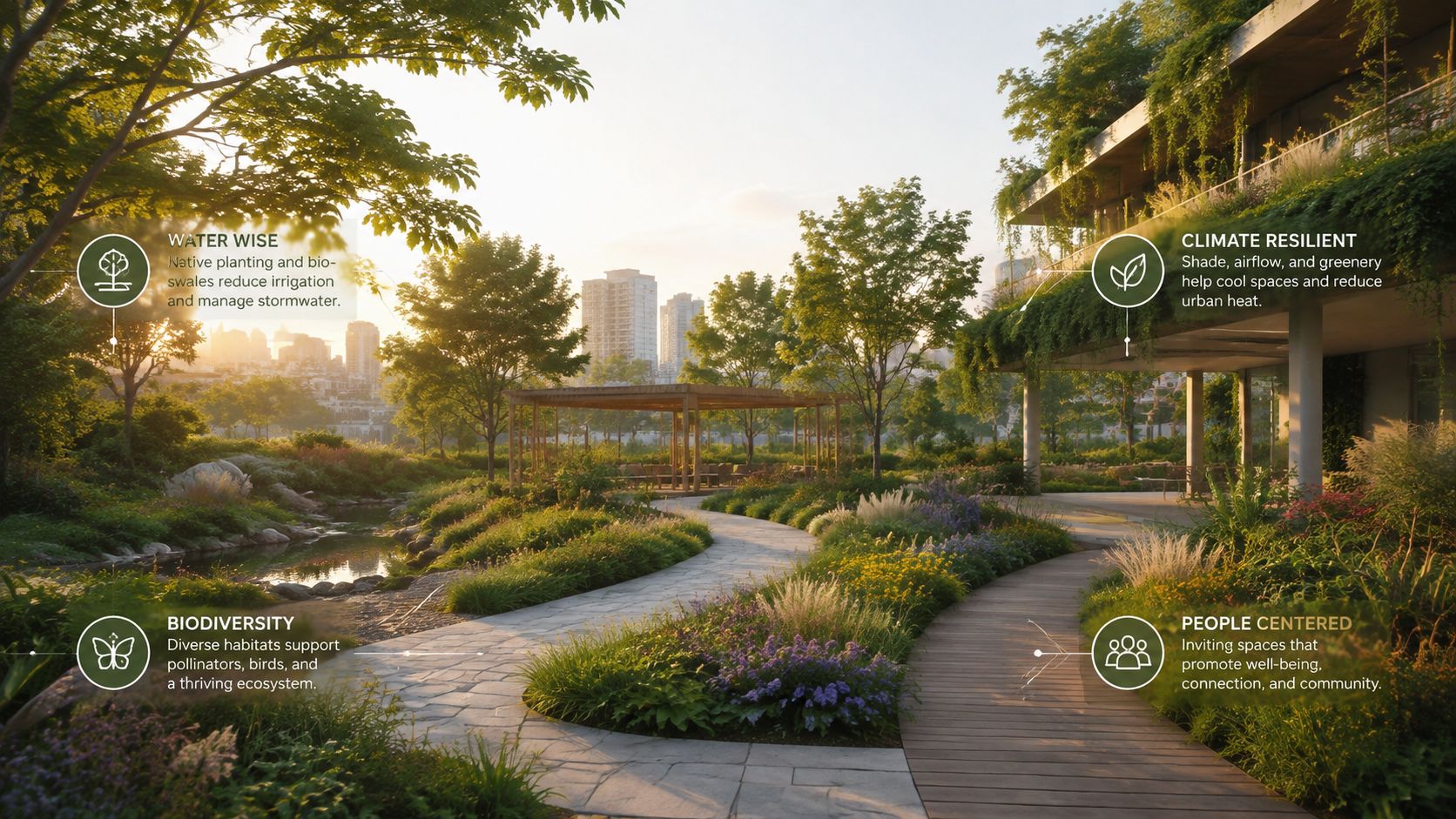
Native plants should do more than survive. They should help the whole property feel finished, usable, and appropriate to the region. The strongest outdoor spaces in Northern Arizona combine native planting with hardscape, irrigation, and fire-wise layout so the yard works in every season.
Native plants and outdoor living need to work together
A patio surrounded by the wrong plants feels unfinished. A well-planned native border softens stone, frames walkways, and gives outdoor spaces privacy without demanding heavy upkeep. That's why native planting should be drawn into the whole design, not dropped in afterward as an afterthought.
Fire-wise planning matters here too. Plant placement near structures, spacing between masses, and the choice of low-fuel species all affect how a yard performs in a dry season. In Northern Arizona, those choices aren't theoretical, they're part of responsible site design.
The Arizona Department of Agriculture also regulates native plant use through a permit system, including a one-time permit fee of $7, annual “Salvage Assessed” and “Harvest Restricted” permits at $35 each, a $0.15 seal fee, and a $6 tag fee for protected native plants Arizona Department of Agriculture permit framework. That shows native-plant work in Arizona isn't just about looks, it's also about following the rules when plants are sourced, salvaged, or transferred. The same agency also notes permit sales are handled by appointment in Phoenix and Tucson during weekday office hours Arizona Department of Agriculture native plants program.
Where resilience and beauty overlap
The best designs use natives to solve more than one problem. A shrub can provide screening, a perennial can bring seasonal color, and a well-placed accent plant can guide movement along a path. When the palette is chosen correctly, the yard feels intentional without needing high-input maintenance.
For homeowners thinking about a full project, R.E. and Sons Landscaping offers a native-plant-focused design-build approach in Prescott and surrounding communities, and that's one practical route for turning a rough site into a durable outdoor space. It's most useful when the plant palette, irrigation plan, and hardscape layout all need to work together instead of separately.
Working with R.E. and Sons Landscaping for Your Native Plant Project
R.E. and Sons Landscaping is a fit for homeowners who want a garden plan that respects local conditions instead of fighting them. Their process is built around consultation, design approval, transformation, and enjoyment, which matters when the job calls for more than just plant delivery and placement.
The advantage of a structured process is clarity. A good native planting project in Northern Arizona has to account for exposure, soil behavior, water use, and long-term maintenance, and those details are easiest to handle when the same team is responsible from design through installation. That also helps homeowners avoid the common mismatch between the plan on paper and the yard on the ground.
The company serves Prescott, Prescott Valley, Chino Valley, and nearby Northern Arizona communities, which gives them the local context these projects demand. Office hours are Monday through Friday, 8am to 4pm, so it's straightforward to start a conversation and move toward a site-specific plan.
Homeowners who want a native garden that looks good and holds up over time should ask for a design that starts with conditions, not trends. A clear consultation, a layout that fits the yard, and maintenance support after installation are the pieces that make the difference.
If you're ready to turn a difficult yard into a native design that fits Northern Arizona, contact R.E. and Sons Landscaping for a consultation. Their team can help you choose plants that match your microclimate, your soil, and your water reality, then build the area so it lasts.
Comments