
Putting Green Installation Guide for Prescott Homeowners
A sloped backyard, thirsty lawn, and limited room for practice are familiar challenges around Prescott. A custom putting green can turn part of that yard into a usable golf surface without asking the homeowner to maintain a full natural-grass lawn, but it still needs thoughtful grading, drainage, material selection, and care.
R.E. and Sons Landscaping serves homeowners in Prescott, Prescott Valley, Chino Valley, and nearby Northern Arizona communities with design-build work, including artificial turf and custom putting greens. The right design can create a consistent practice surface and a polished gathering spot. It won't make every yard maintenance-free or comfortable in full summer sun, and local elevation, soil, exposure, and HOA review can all affect the plan.
What a Backyard Putting Green Really Does for a Prescott Home
A putting green makes sense when you want a place to practice, but don't want to devote a large part of the yard to irrigated turf. In a Prescott yard with a slope or an awkward patch of lawn, a designed green can make that area more useful while tying it into patios, planting beds, and outdoor seating.
The value depends on how you'll use it. A golfer may want a surface that rewards a deliberate putt, with contours and cup positions chosen for practice. A family may prefer a forgiving layout with room to gather around it. For some homeowners, the green is mainly a visual feature that gives the backyard a focal point.
Northern Arizona conditions should shape the design from the start. Sun exposure can make synthetic turf hot to the touch, while rocky or caliche subsoil can complicate excavation and drainage. Monsoon runoff needs somewhere to go, and an HOA may require a review before work begins. A green designed without those checks can look finished but perform poorly after rain or settle into uneven spots.
A putting green also isn't the only water-wise outdoor choice. If you're comparing it with natural turf or drought-adapted planting, consider how much of the yard needs to serve as a practice surface. A smaller green with surrounding low-water planting may fit your routine better than covering most of the yard.
Evaluating Your Yard Before Any Dirt Gets Moved
A useful site assessment starts with the space you can build on, not the yard's total size. Measure the potential green area and note where a golfer needs room to stand, putt, and retrieve balls. A layout that fills every open corner may leave little space for walking or other outdoor uses.
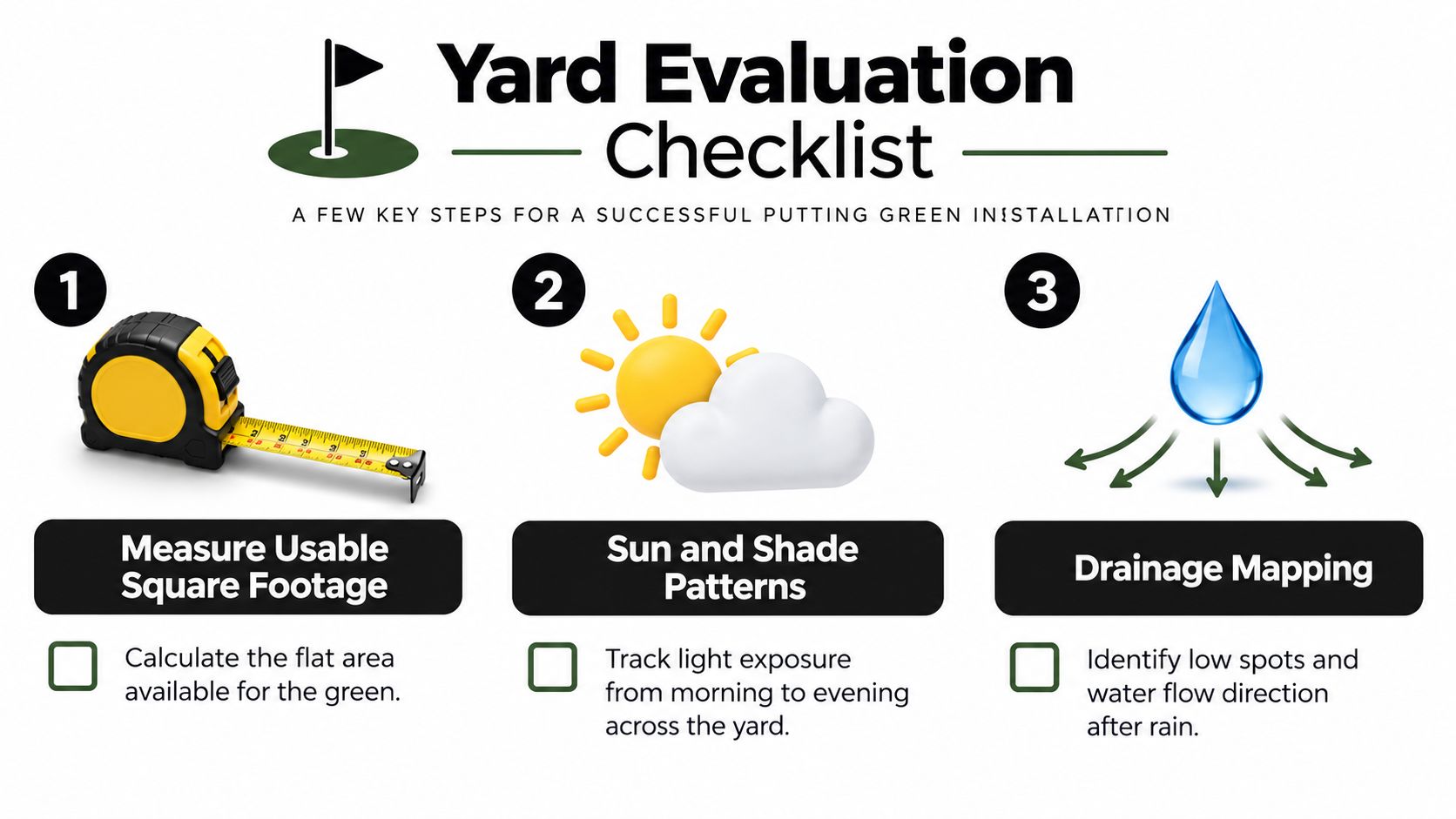
A contractor should then check how the site behaves through the day and after rain. Shade from a house, trees, or a neighboring structure affects comfort and where people will want to sit. Drainage fall lines show where water moves, while low spots reveal where it may collect. In Prescott, the assessment should also account for monsoon runoff, rocky or caliche subsoil, and any nearby utility easements or tree roots that limit excavation.
Before a consultation, gather a few practical details:
Mark possible locations: Note the area you're considering and any views or existing features you want to keep.
Check approval requirements: Find your HOA's rules and review process, including whether it requires a plan before construction.
Observe water movement: After rain, note where runoff travels or stands. Don't assume a surface that looks level drains well.
List site constraints: Flag gates, narrow access, roots, utilities, and places where equipment might not reach easily.
Slope is often manageable, but it can change where the green sits and how the base and drainage are designed. A utility conflict, a protected tree, or an outlet that can't drain safely may require a new location. The useful first conversation is about those choices, not just a guess at square footage.
Choosing the Right Green Type for Northern Arizona
There are three practical directions for most Prescott homeowners: natural turf, synthetic turf, or a hybrid yard that reserves a small area for natural grass and uses low-maintenance landscaping around it. Each solves a different problem.
Surface type | Water needs | Year-round playability | Maintenance effort | Best fit |
|---|---|---|---|---|
Natural turf | Regular irrigation, with needs shaped by turf and conditions | Varies with weather and care | Higher, including mowing and turf care | Homeowners who value a living surface and accept ongoing upkeep |
Synthetic turf | No irrigation for the putting surface itself | Generally consistent, subject to weather and heat | Lower than living turf, but not zero | Frequent practice with less daily lawn care |
Hybrid landscape | Depends on the size of the living area and planting plan | The synthetic section remains usable while natural turf varies | Mixed, based on the natural areas included | Families balancing golf practice, greenery, and water-conscious design |
For many Prescott homeowners, synthetic turf is a practical choice because it avoids irrigation for the putting surface and offers a consistent playing area. The trade-off is heat: under direct sun, the surface can become uncomfortable for children, pets, and barefoot use. A natural surface may feel cooler, but it calls for more water and ongoing care.
A hybrid plan can keep the actual practice area compact and use drought-adapted planting or shade around it. That's often a more balanced design than making the green larger than anyone will use. If you're comparing synthetic turf options, R.E. and Sons Landscaping's overview of artificial grass durability can help you think through how the surface fits your household's use.
Arizona law limits planned communities and HOAs from banning artificial grass where natural grass is allowed, but that doesn't mean you should skip the association's design-review process. Check the rules for placement, appearance, and approval requirements before choosing materials or starting work.
How a Custom Putting Green Is Actually Built
Good putting green installation starts below the turf. The crew first lays out the design, excavates to the planned depth, and shapes the subgrade so the finished surface and drainage work together. In Northern Arizona, rocky or caliche soil may affect excavation, so the base plan needs to reflect what's under the yard rather than a generic detail.
The subgrade must be stable. USGA construction guidance calls for soil placed in 6-inch lifts and compacted to at least 90% Standard Proctor density under ASTM D698, helping limit later settlement and the depressions that can hold water. Drainage design matters just as much: the guidance specifies minimum 4-inch drainage pipe, a continuous slope of at least 0.5%, and lateral lines spaced no more than 15 feet apart. For soil-based or poorly draining sites, University of Arkansas extension guidance recommends closer spacing, under 10 feet. USGA putting-green construction guidance
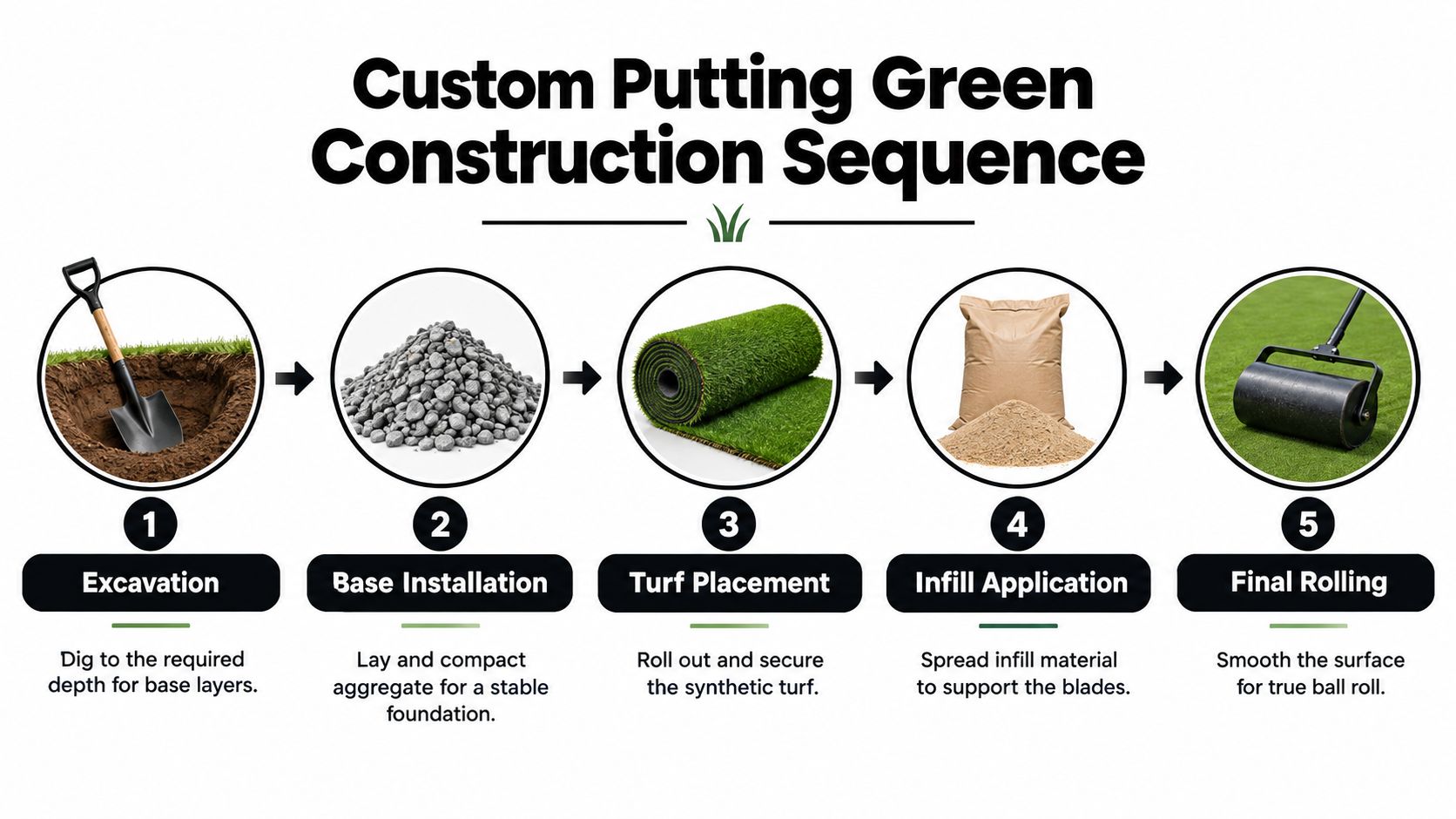
After excavation, the crew installs and compacts the aggregate base, places drainage components, and checks elevations before covering the lines. A laser level or surveying instrument can help verify slope and outlet fall. Clean gravel surrounds the pipes, with at least 4 inches of drainage gravel above the pipe network, according to the same USGA guidance. Perimeter drains are important where water could gather at the edge.
The surface choice changes the profile. For a natural or hybrid surface built to USGA guidance, the sand-based rootzone is 12 inches deep, with a tolerance of plus or minus 1 inch. A synthetic backyard green instead uses a compacted base suited to the turf system. The crew then installs any weed barrier specified for the design, lays the turf, aligns and secures seams, applies suitable infill, and places cups where the contours make them useful for practice.
Practical rule: A smooth-looking surface on installation day doesn't prove the base is sound. Consistent compaction and verified drainage are what help the green stay even after use and weather.
If you're planning a larger outdoor project around the green, this guide to how to build a patio offers useful context for coordinating a hardscape with the design. After installation, the surface may need brushing and adjustment as the infill settles into place.
What a Putting Green Actually Costs in Prescott
There isn't a reliable price based on square footage alone. A small, simple practice area on an accessible, workable site is a different project from a contoured green with difficult excavation, custom edging, surrounding planting, and a patio or fire feature.
Because the cost depends on the actual site and scope, treat an online square-foot estimate as a starting point at most. Ask for a written design and proposal that separates the green itself from related work. That makes it easier to compare contractors and understand what's included.
The main cost drivers are:
Size and shape: More area and complex contours generally require more material, preparation, and finish work.
Existing conditions: Rocky or caliche subsoil, substantial grading, or difficult equipment access can add work before turf goes down.
Playing features: Turf grade, number and placement of cups, fringe or collar design, and edge treatments affect the specification.
Surrounding improvements: Lighting, seating walls, planting, a patio, or a fire pit expand the project beyond the green.
R.E. and Sons Landscaping uses a four-part process: consultation, design approval, transformation, and enjoyment. The consultation and design-approval stages are where the layout, material choices, and scope can be clarified before a contract is signed. Ask for a complimentary design rather than trying to infer the final cost from a single area measurement.
A clear proposal should describe excavation, base preparation, drainage, turf, infill, edging, and cup placement. It should also identify any outdoor features being bundled into the work. When you compare bids, check that they cover the same scope. A low price that leaves out grading or drainage isn't a like-for-like comparison.
Honest Maintenance and What to Expect After Install
Synthetic turf doesn't need mowing or irrigation, but it isn't maintenance-free. Leaves, needles, and other debris can collect from nearby junipers and pines, and fibers can flatten with use. Routine care helps preserve the surface and gives you a chance to spot problems before they become disruptive.
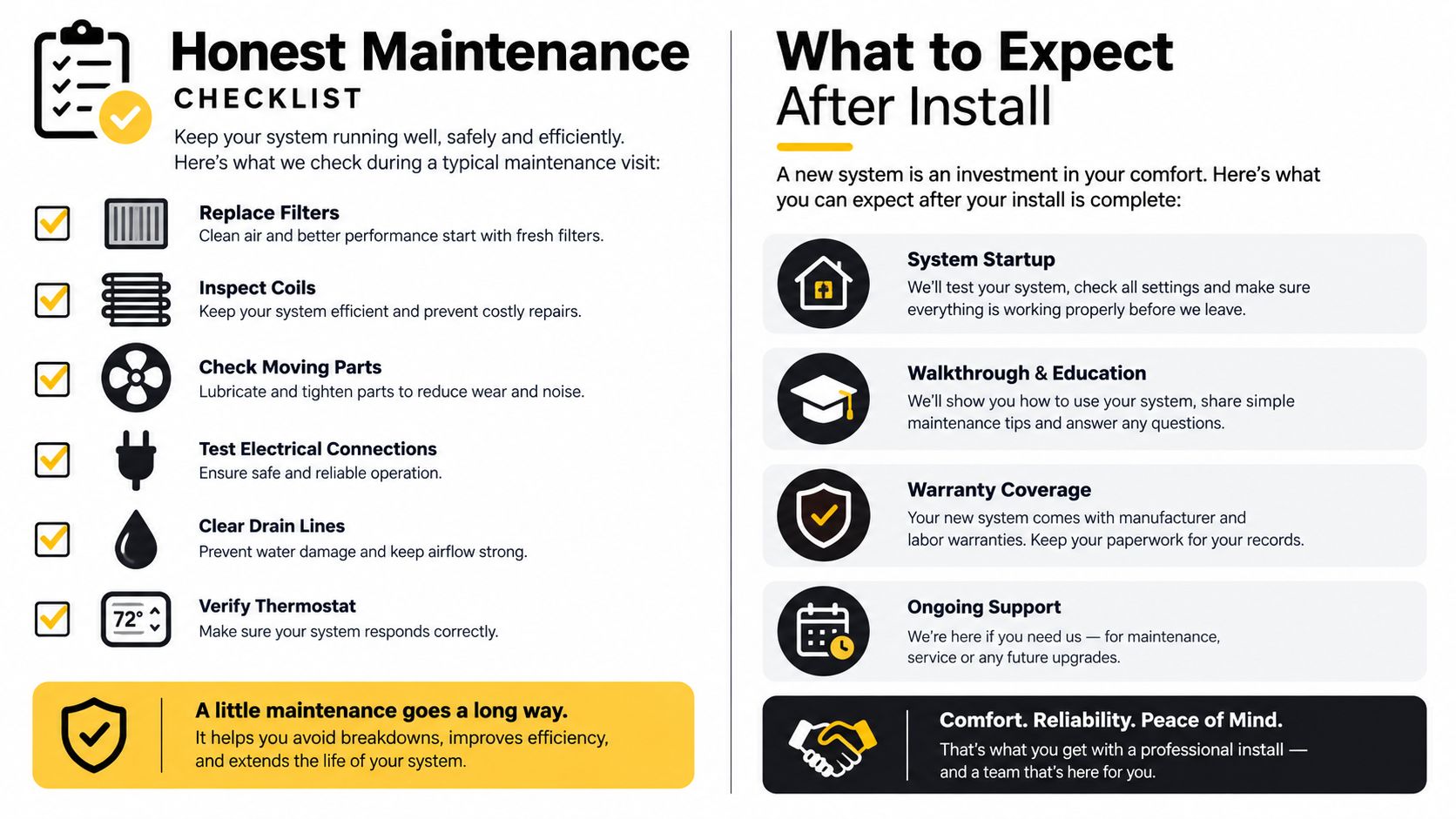
For the early period after installation, follow the installer's instructions and watch for changes in the surface. Brush the turf as recommended to keep fibers upright, check whether infill has shifted, and look for loose edges or seams. After monsoon storms, inspect the drainage outlets and note any persistent standing water. Keep weeds from establishing at the edges, and clean pet mess promptly to help manage odor.
The heat trade-off deserves a real test, not an assumption. A 2025 systematic review of 23 studies found artificial turf surfaces were consistently 9.4–33.7°C hotter than natural turf, with air temperatures 0.5–1.2°C higher; the review's findings are reported in the NCCEH artificial-turf assessment. An Arizona-focused turf report recorded artificial turf reaching 145°F at solar noon, so plan for shade and appropriate use rather than assuming the surface will always be comfortable.
Test the green at the times your household expects to play. Check the surface temperature, decide whether footwear is needed, and establish a clear rule for children and pets when it's too hot. Shaded seating can make the area more usable even when the surface itself is warm. For a fuller care overview, see R.E. and Sons Landscaping's putting green maintenance guide.
No specific replacement schedule suits every yard. Exposure, use, installation quality, and upkeep all affect how a surface ages. Ask the installer what signs to monitor and what maintenance or repairs are available so you can plan for the full lifecycle rather than judging the project only by its first day.
A short video can help homeowners understand the surface and its care:
Working With a Prescott Design-Build Landscaping Team
A putting green is easier to plan when the same team evaluates the yard, develops the design, and manages construction. Splitting those roles across separate companies is where I see projects stall, usually when the grading plan never accounted for Prescott's rocky, decomposed granite soil or the HOA's review calendar. R.E. and Sons Landscaping serves Prescott, Prescott Valley, Chino Valley, and surrounding Northern Arizona communities with design-build services. The company is licensed, bonded, and insured, holds Arizona ROC #300642, and reports 2,500+ satisfied customers.
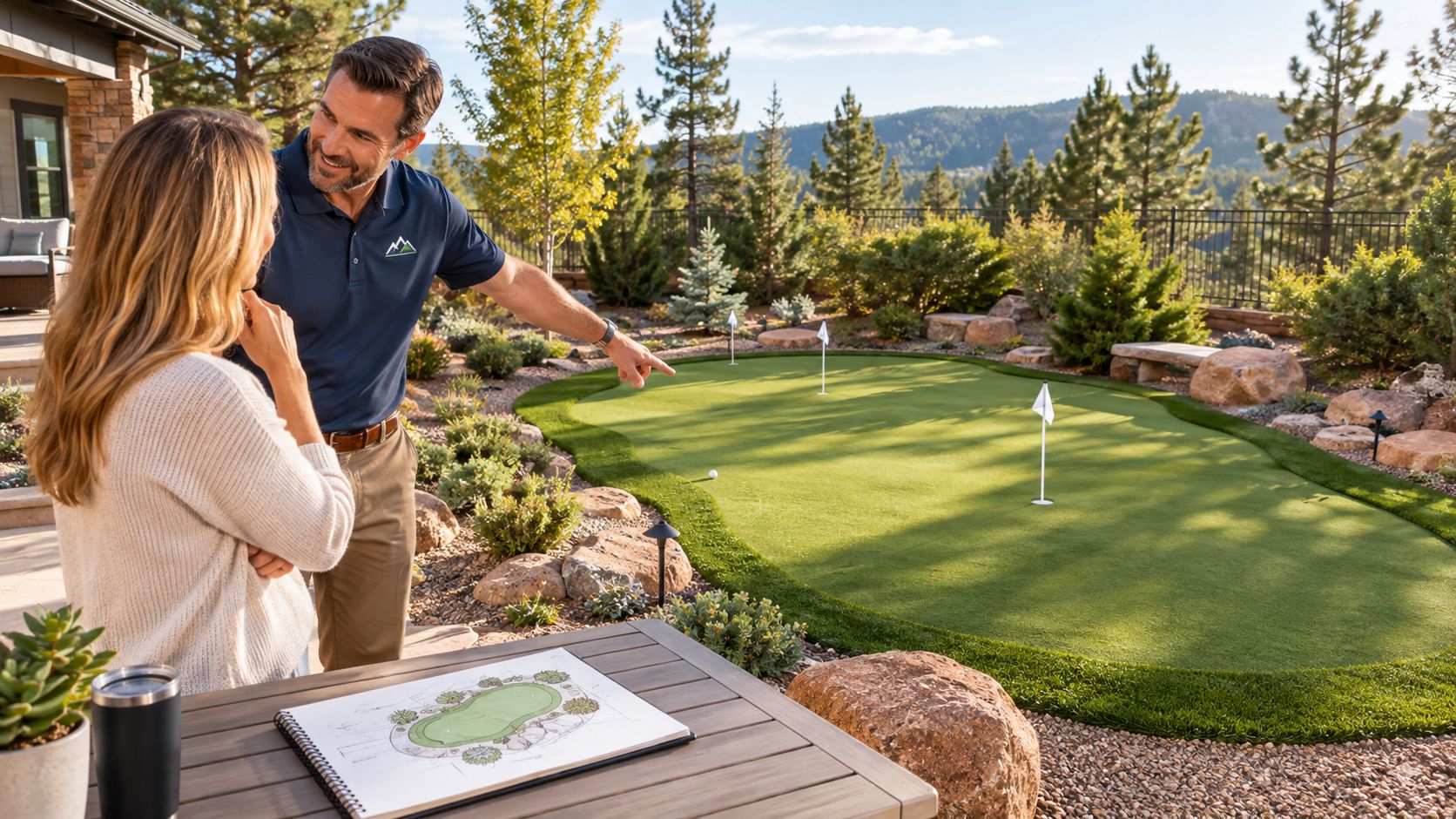
The process begins with a complimentary consultation. Bring an approximate idea of the green's location, photos of the yard, and any HOA rules or site concerns you already know about. Those details give the team what they need to talk through use, access, grade, drainage, and how the green might fit the wider grounds.
During design approval, the homeowner reviews a rendered plan and material selections before construction proceeds. This is the point to check cup placement, contours, edges, and how the green connects to paths or seating. Shade deserves a hard look here. A cup that sits in full afternoon sun at Prescott's elevation plays differently than one tucked near a ponderosa, and moving it on paper costs nothing compared to moving it after the base is compacted. Homeowners also receive an easy guide for choosing a trusted contractor, which can help make comparisons clearer. R.E. and Sons Landscaping's guide to choosing a contractor is a useful reference when preparing for that conversation.
The build runs on a clear schedule with a single point of contact. Summer monsoon storms can pause base work, and a crew that plans around them keeps the aggregate dry enough to compact properly. If the green is part of a larger outdoor project, the scope can include a paver patio, fire pit, water feature, or outdoor kitchen, coordinated as one design-build project instead of separate additions. Once construction is complete, the company's dedicated maintenance department can support the upkeep phase.
The design should account for the ground around the green, too. Prescott's conservation guidance says pressure-regulated drip emitters, pump valves, and high-efficiency turf spray nozzles can reduce water use by 10 to 25 percent. That's a benchmark for improving irrigation where the project includes living plants or irrigated turf, not a guaranteed savings rate for installing artificial turf. Prescott Water's water-smart tips provide guidance for making those surrounding irrigation choices.
Can an Arizona HOA stop me from installing an artificial putting green?
Arizona law limits planned communities and HOAs from banning artificial grass where natural grass is allowed, but design review still applies. Submit a simple plan showing placement, edging, and sightlines from the street so the board can approve it in one pass instead of requesting revisions.
How long does it take from consultation to my first putt?
The overall calendar depends on design approval, site conditions, scheduling, and weather, so there isn't one timeline that fits every yard. Ask the contractor to explain the expected schedule for your project and identify any HOA review or other approvals that need to happen first.
Can you install a putting green in a sloped Prescott yard?
Often, yes, but the slope needs to be assessed before the design is settled. Hillside lots are common across Prescott-area neighborhoods, and the team may adjust the location, grading, or drainage plan to create a stable, usable surface and give water a safe route away from the green.
How does a putting green fit into a water-wise Prescott yard?
Keep the practice surface only as large as your household will use, then plan the surrounding space with low-water planting, shade, and efficient irrigation where living plants need it. That approach balances recreation with water-conscious yard design without assuming synthetic turf makes the whole yard maintenance-free.
Office hours are Monday through Friday, 8am to 4pm, and homeowners can schedule a consultation online or by phone. Bring your yard photos, rough measurements, and any HOA requirements you have. The discussion should help you decide whether a green suits the site and how to coordinate it with the rest of your outdoor space.
R.E. and Sons Landscaping offers complimentary design services and custom putting green installation for homeowners in Prescott, Prescott Valley, Chino Valley, and nearby Northern Arizona communities. Visit R.E. and Sons Landscaping to schedule a consultation and discuss a design that fits your yard, playing goals, and outdoor plans.
Comments