
Putting Green Installation Cost for Northern Arizona
Putting green installation cost usually runs $15 to $40 per square foot for professional work, and a typical 500-square-foot backyard green usually lands around $7,500 to $20,000. In Prescott and Prescott Valley, that's the right ballpark for most homeowners who want a real practice surface, not a toy strip in the yard.
If you're budgeting for a backyard green in Northern Arizona, the number that matters most isn't the turf alone. It's the base underneath it, especially on rocky lots that have to handle drainage, slope, and monsoon runoff without turning the surface into a maintenance problem later.
R.E. and Sons Landscaping handles these projects throughout Prescott, Prescott Valley, Chino Valley, and nearby Northern Arizona communities, so the quotes homeowners see are usually tied to local site conditions, not generic national averages. That matters because a green on a flat, easy lot can price very differently from one cut into decomposed granite, caliche, or a sloped backyard that needs real preparation.
What Putting Green Installation Actually Costs in Prescott
A lot of homeowners start with one simple question, what does a backyard putting green really cost here? The honest answer is that residential installed pricing in the U.S. commonly lands around $3,500 to $9,000 for a typical backyard project, with an average near $4,300, but broader market estimates can stretch from $2,500 to $75,000 depending on size, site work, and add-ons (Angi). That spread is why square-foot pricing is more useful than one headline number.
For Northern Arizona, the most common backyard project size often ends up in the $7,500 to $20,000 zone when a homeowner wants a professionally built green with enough base work to last. Independent industry pricing also puts installed costs in a more standardized band of $15 to $40 per square foot in 2025 to 2026 estimates (TourGreens). A small, simple practice area can sit near the low end, while a contoured build with fringe, multiple holes, or accessories moves quickly upward.
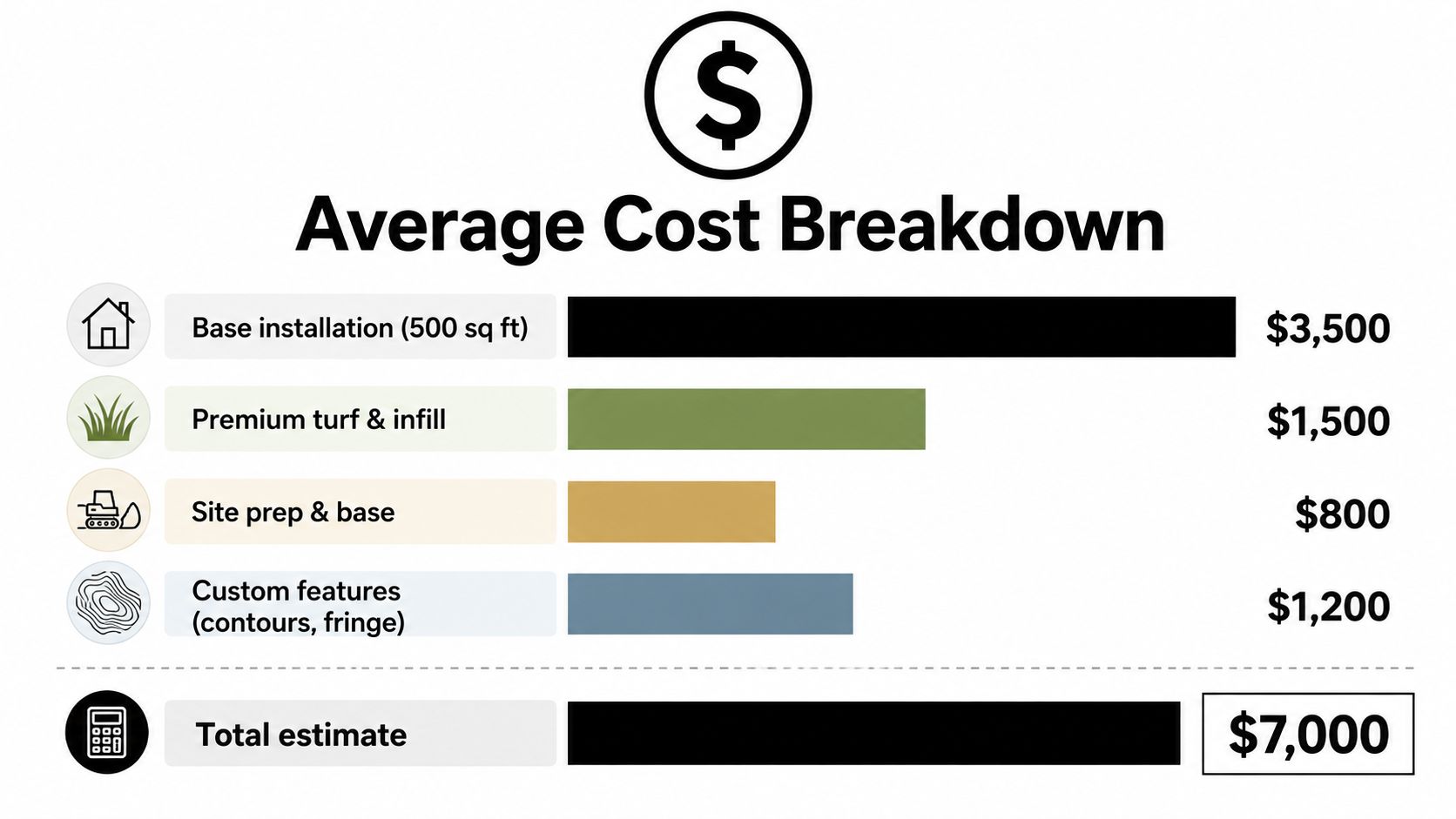
What a realistic quote looks like
A bid that looks high at first glance may still be fair if it includes excavation, drainage correction, and proper compaction. The same kind of “invisible work” drives other hardscape prices too, which is why a detailed resource like stamped concrete quote factors can help homeowners understand why site prep changes the bottom line so much.
Practical rule: If a quote is light on base details, it's usually light on the part that keeps the green playable.
R.E. and Sons Landscaping also publishes a helpful breakdown in its own turf install cost guide, which is useful if you're comparing synthetic turf work beyond just putting greens. The main takeaway is simple, the project category sounds small, but the actual build can range widely depending on preparation and design.
Where the Money Goes in a Putting Green Build
Homeowners often look at the turf first and assume that is where the budget goes. In practice, a good putting green is mostly a sitework job that ends with a finished playing surface, and the price usually follows that order.
Base and drainage form the foundation
A useful cost model puts 35 to 50 percent of the budget into grading and compacted aggregate base, 20 to 30 percent into turf material, 15 to 25 percent into labor, and 5 to 15 percent into drainage or sub-surface work (Santa Rosa Artificial Grass). That breakdown matters because the base controls how true the roll stays and how well the surface resists settling. If the foundation gives way, the rest of the build shows it quickly.
A homeowner comparing bids should also look at the kind of grading and drainage work behind the numbers, because that is where one quote can separate from another. A clear example of that kind of site work is grading and drainage planning, which often determines whether a green handles runoff well or starts trapping water after heavy weather.
Typical Putting Green Budget Allocation | Share of Budget |
|---|---|
Cost Category | Share of Budget |
Grading and compacted aggregate base | 35% to 50% |
Turf material | 20% to 30% |
Labor | 15% to 25% |
Drainage or sub-surface work | 5% to 15% |
Why cheap shortcuts age badly
Cutting corners on drainage, base depth, or compaction usually saves money only on the first invoice. After that, the homeowner is left with low spots, uneven roll, or water sitting under the turf after a storm. A bid with a serious base line item can be more trustworthy than a bargain bid that mostly prices the visible surface.
A putting green is only as good as the compacted rock below it. If that layer is wrong, the surface will show it fast.
Material choice also changes the budget in a direct way. Turf materials can run $2 to $8 per square foot, while a complete DIY installation can total $5 to $15 per square foot and professional installation can run $15 to $40 or more per square foot (Turf Factory Direct). That spread explains why the same backyard can land in a moderate range or turn into a higher-end custom build depending on how much hidden work the site needs.
Size, Shape, and Features That Change the Price
Two greens can look similar from the patio and still quote hundreds or thousands apart. Size changes the math, and shape and feature count do too, because each one affects labor time, layout complexity, and how efficiently a crew can work on site.
Why bigger greens often cost less per square foot
Pricing usually softens as project size grows. Southwest Greens lists under 400 square feet at $30 to $35 per square foot, 400 to 2,000 square feet at $25 to $30 per square foot, and 2,000 square feet and above at $20 to $25 per square foot (Southwest Greens). The reason is simple, fixed design and mobilization costs get spread over more square footage.
Historical guides show the same pattern in a slightly different range. Small greens under 400 square feet are often quoted at $25 to $40 per square foot, while medium greens of 401 to 2,000 square feet may land closer to $20 to $30 per square foot. A 500-square-foot green often falls around $7,500 to $20,000, while a 1,000-square-foot installation can run $11,000 to $30,000 depending on features and location.
Features that change the bid
Custom contours, fringe turf, extra cup locations, and irregular shaping all take more labor than a simple rectangle. A flat practice strip goes in faster, but it also gives you less realistic shot variety. If you want a green that feels like a real practice area instead of a flat mat, the quote will show it.
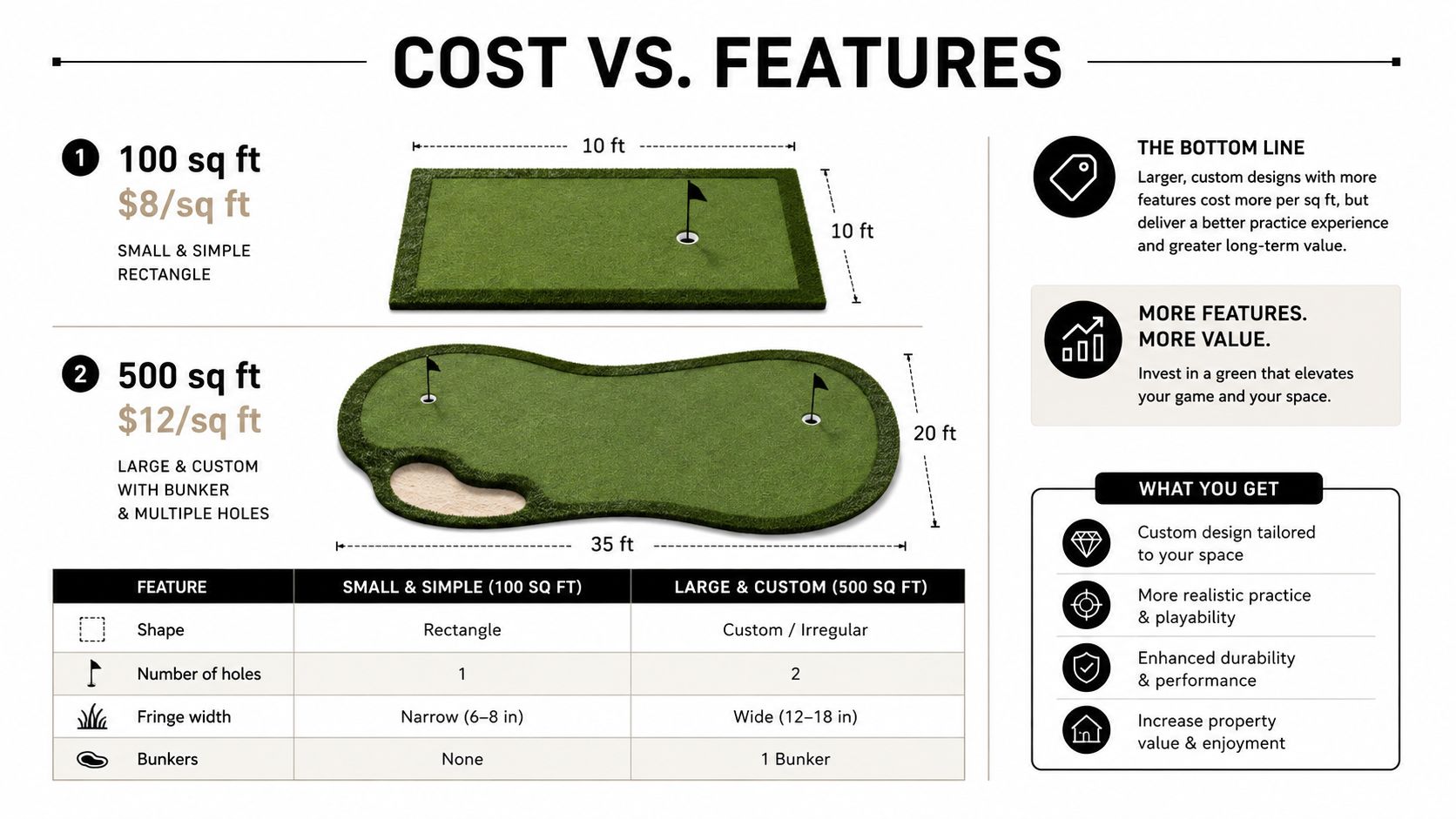
A simple way to compare bids is to ask what the square footage includes. Does the price cover fringe? Are the cups set for multiple practice lines? Is the shape a clean rectangle, or is the installer cutting around trees, walls, and grade changes? Those details usually explain the gap between two estimates that look similar at first glance.
Why Northern Arizona Site Prep Changes the Estimate
Northern Arizona doesn't behave like a flat, forgiving build site. Prescott and Prescott Valley lots often bring rock, grade changes, and water management concerns that force a contractor to spend more time below the surface before the turf ever goes down.
What the ground here changes
Rocky decomposed granite and caliche can mean deeper excavation and more effort to get a stable base. Sloped lots usually need extra aggregate, shaping, and sometimes retaining work to keep the green level enough for a believable roll. If a contractor walks the site and sees those conditions in person, the quote should reflect them.
Monsoon drainage is the other local issue that homeowners shouldn't ignore. A base that looks fine in dry weather can still fail if water has nowhere to go when the summer storms hit. That's why a serious build needs grading and drainage to work together, not as separate afterthoughts.
For a closer look at how those decisions affect the finished surface, R.E. and Sons Landscaping has a useful grading and drainage guide that lines up well with what matters on these properties. The point is simple, the green has to handle both play and weather.
Local reality: In Northern Arizona, the cheapest bid is often the one that assumes your yard is easier than it really is.
What to expect before the bid is written
A contractor who only quotes from satellite images can miss the things that make a project expensive. On-site evaluation usually catches access limits, rock conditions, and drainage paths that affect labor and material movement. That's not padding, it's pricing the actual work.
The best builds here start with the property itself, then the design follows the site. That approach usually costs more up front, but it protects the green from the kind of settling and water issues that show up after the first hard rain.
DIY Installation Versus Hiring a Pro
A backyard putting green can look simple on paper, then turn into a grading project the moment the shovel hits Northern Arizona ground. The decision is not only about turf cost, it is about how much base work the site needs and how much risk the homeowner is willing to carry.
What DIY really saves
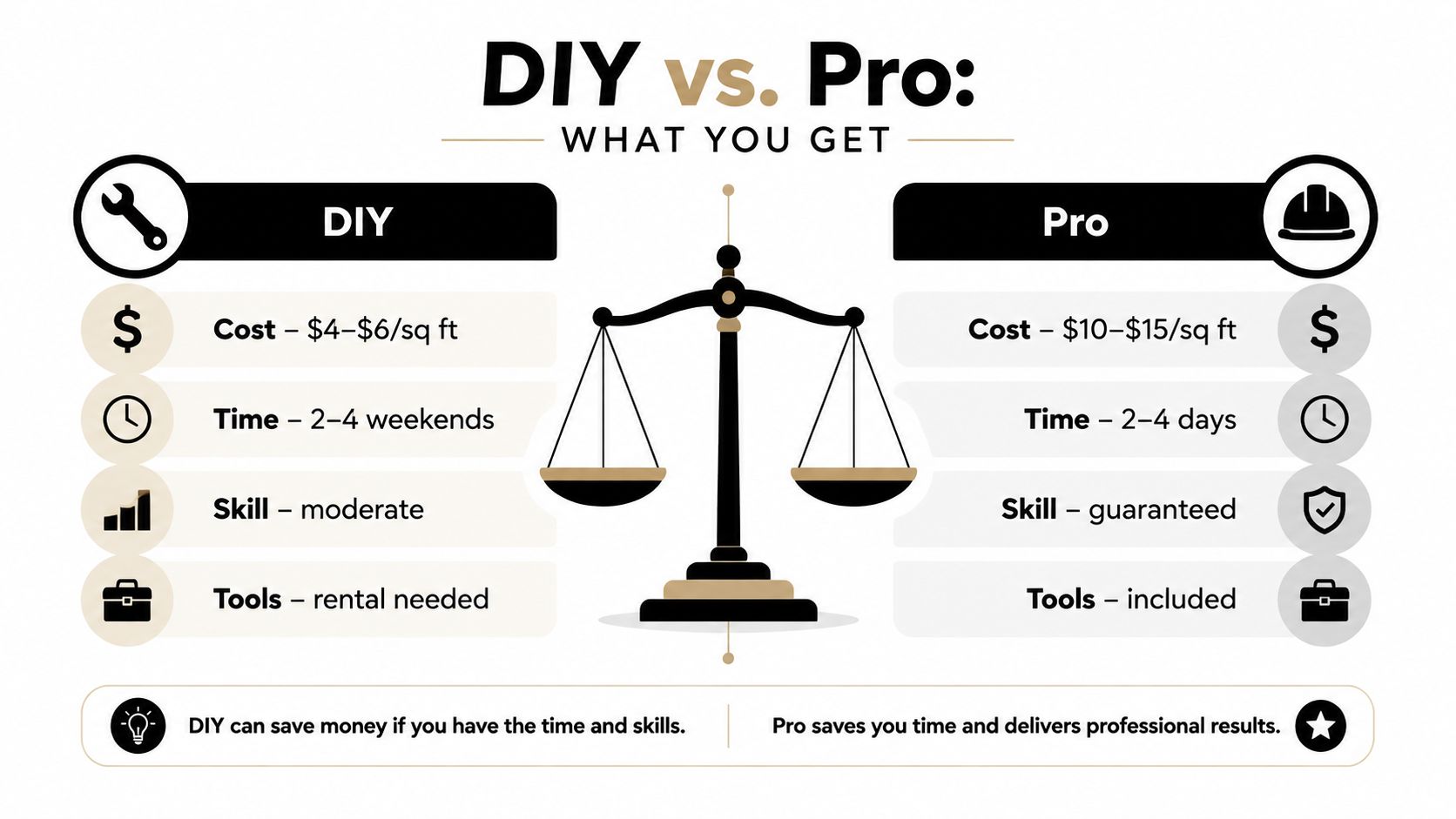
DIY can cut the invoice if the yard is flat, access is easy, and the design stays small. It also puts the labor, the tool rentals, and the mistake correction on the homeowner. A reliable turf contractor in Prescott will price that work into the job because the base, drainage, and finish grade all have to work together.
The savings get thin fast on Prescott and Prescott Valley properties with caliche, buried rock, or a slope that needs reshaping. Hauling spoil, building a compacted base, and setting drainage lines all take time and equipment, and those steps are where a DIY project usually gets expensive in a hurry. If the surface is only meant to be a simple practice strip, a homeowner can sometimes handle it. If the green has to stay level through monsoon runoff and repeated use, the margin for error shrinks.
When hiring a pro makes more sense
A professional crew brings the excavation equipment, base knowledge, and drainage experience needed for a more predictable result. That matters when the goal is a putting surface that rolls evenly and holds up after the first hard rain. It also matters when the homeowner wants one crew responsible for the full build instead of coordinating separate trades and rentals.
DIY vs. Pro at a glance | DIY | Professional |
|---|---|---|
Cost | Lower upfront | Higher upfront |
Time | Longer | Faster |
Skill requirement | Moderate to high | Handled by the crew |
Tools | Rental and purchase needed | Included in the service |
The stronger financial choice is usually the one that matches the site, not the one with the lowest first quote. On properties with real grading, drainage, or access problems, a licensed, bonded, and insured design-build team often reduces the chance of a rebuild later. That is the kind of difference that matters when the green is meant to stay in place for years.
Maintenance, Lifespan, and Return on Investment
A putting green should be judged by more than the installation invoice. The key question is how well it holds up, how much use it gets, and whether it keeps adding value after the first season of play.
What Ongoing Care Involves
Synthetic greens need light maintenance, not constant attention. Brushing the fibers, clearing leaves and pine needles, checking infill, and keeping the edges clean are usually enough to keep the surface playing well. If the base was built correctly and the drainage was handled right, the maintenance stays straightforward instead of turning into a chore.
That is especially true in Northern Arizona. A green that sits on a stable base with proper runoff control will handle dust, wind-blown debris, and monsoon water better than one that was rushed through prep work. The surface still needs care, but the work stays predictable.
Quality turf is also built for a long service life. A well-installed putting green commonly lasts 15 to 20 years when it is installed and maintained correctly (Turf Factory Direct). That helps put the upfront cost in context, because the project behaves more like a long-term outdoor improvement than a short-term amenity.
The costly green is the one that wears out early. A careful build usually costs less over the full life of the project.
How Homeowners Should Think About Value
A backyard green gives the homeowner a dedicated practice area without mowing, watering, or the upkeep that comes with a natural putting surface. It also turns a dead corner of the yard into usable space, which makes the property feel more finished and more purposeful. In a market like Prescott, that kind of practical outdoor feature tends to appeal to buyers who want low-maintenance living.
The better question is not whether the project is inexpensive. It is whether the finished green gives years of use without drainage problems or surface failure. If it does, the build starts to look like a durable improvement rather than a discretionary luxury.
Choosing the Right Contractor in the Prescott Area
The quote matters, but the contractor matters more. A putting green in Prescott, Prescott Valley, or Chino Valley should come with clear scopes, visible local experience, and a build plan that explains what's happening under the turf.
What to verify before you sign
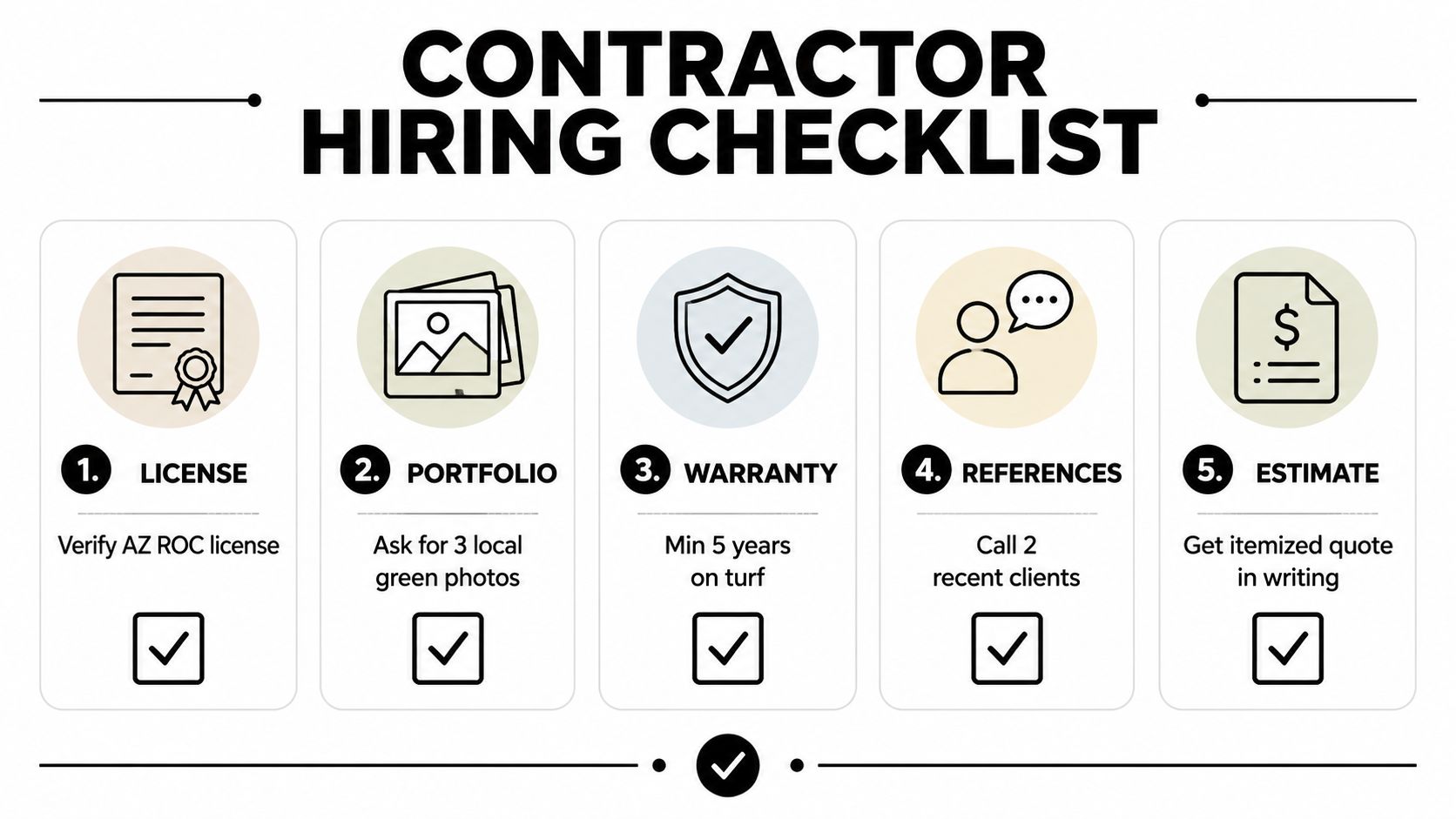
Start with the basics, Arizona ROC licensing, insurance, and bonded status. Then ask to see completed local putting greens, not just generalized outdoor projects. A contractor who can explain base depth, drainage approach, and turf spec in plain language usually knows what they're building.
You should also ask for an itemized estimate in writing. If the quote doesn't separate base prep, drainage, turf, labor, and any add-ons, it's hard to tell whether the price is low because the scope is efficient or because important work is missing. R.E. and Sons Landscaping's turf contractors Prescott AZ page is a useful reference point for the kind of service clarity homeowners should expect from a local design-build team.
Questions that separate the pros from the low-bid noise
License and insurance: Ask for proof, not a promise.
Portfolio: Ask for three local green photos with similar site conditions.
References: Call two recent clients and ask about communication and cleanup.
Warranty: Get the turf and workmanship coverage in writing.
Scope: Make sure the bid says how the base and drainage will be built.
If a contractor avoids those questions, that's usually the answer. Good installers are comfortable talking about compaction, access, drainage, and edge detailing because those details determine whether the green holds up.
For homeowners who want one local team to handle design, construction, and long-term care, R.E. and Sons Landscaping offers putting green installation as part of its broader design-build work in Prescott and the surrounding area. That can simplify the process when you want the green to fit into a full backyard plan instead of feeling like a standalone add-on.
If you're planning a backyard putting green in Prescott, Prescott Valley, or Chino Valley, R.E. and Sons Landscaping can help you compare site conditions, materials, and build options before you commit to a number. Visit R.E. and Sons Landscaping to schedule a consultation and get a local estimate that reflects how your yard needs to be built.
Comments