
8 Paver Color Options for Prescott Homes
The best paver color is the one that coordinates with your home, suits the sun and shade, and matches your maintenance preferences. Independent testing found Solar Reflectance Index values from 95 for white to 7 for black, so a mid-tone earth blend is a versatile starting point for many Prescott homes.
Could the color that looks best on a showroom sample turn into an uncomfortable or demanding surface outside? In Prescott, color affects more than curb appeal. Sun exposure, dust, nearby stone and stucco, and the paver's finish all shape how the finished space looks and feels over time.
R.E. and Sons Landscaping helps homeowners in Prescott, Prescott Valley, Chino Valley, and nearby Northern Arizona communities compare paver colors for patios, driveways, and walkways. This roundup covers eight practical options and how they pair with concrete, clay, textured, tumbled, and natural stone-inspired finishes. It also explains why local sunlight, granite surroundings, monsoon debris, and seasonal weather belong in the decision.
A useful rule is to compare full-size, cured samples outdoors, not just small chips or product photos. Pigment, cement color, aggregate, surface texture, and weathering all affect the final appearance. For visual inspiration beyond pavers, browse these stone stain color ideas.
1. Desert Sand and Buff Pavers
Desert sand and buff pavers bring a warm, light tan palette that sits naturally beside Northern Arizona's stone, gravel, and native planting. They're an easy fit for many Prescott and Prescott Valley homes because they coordinate with common exterior materials without making the paved area compete with the surroundings.
Light colors generally reflect more sunlight than very dark colors, which can help reduce heat exposure in sunny outdoor spaces. That doesn't guarantee a cool surface in direct Arizona sun, but it makes buff a sensible option for patios, pool surrounds, and paths used during the day. For a family patio, a darker border around a buff field can give the space definition while keeping the main surface visually bright.
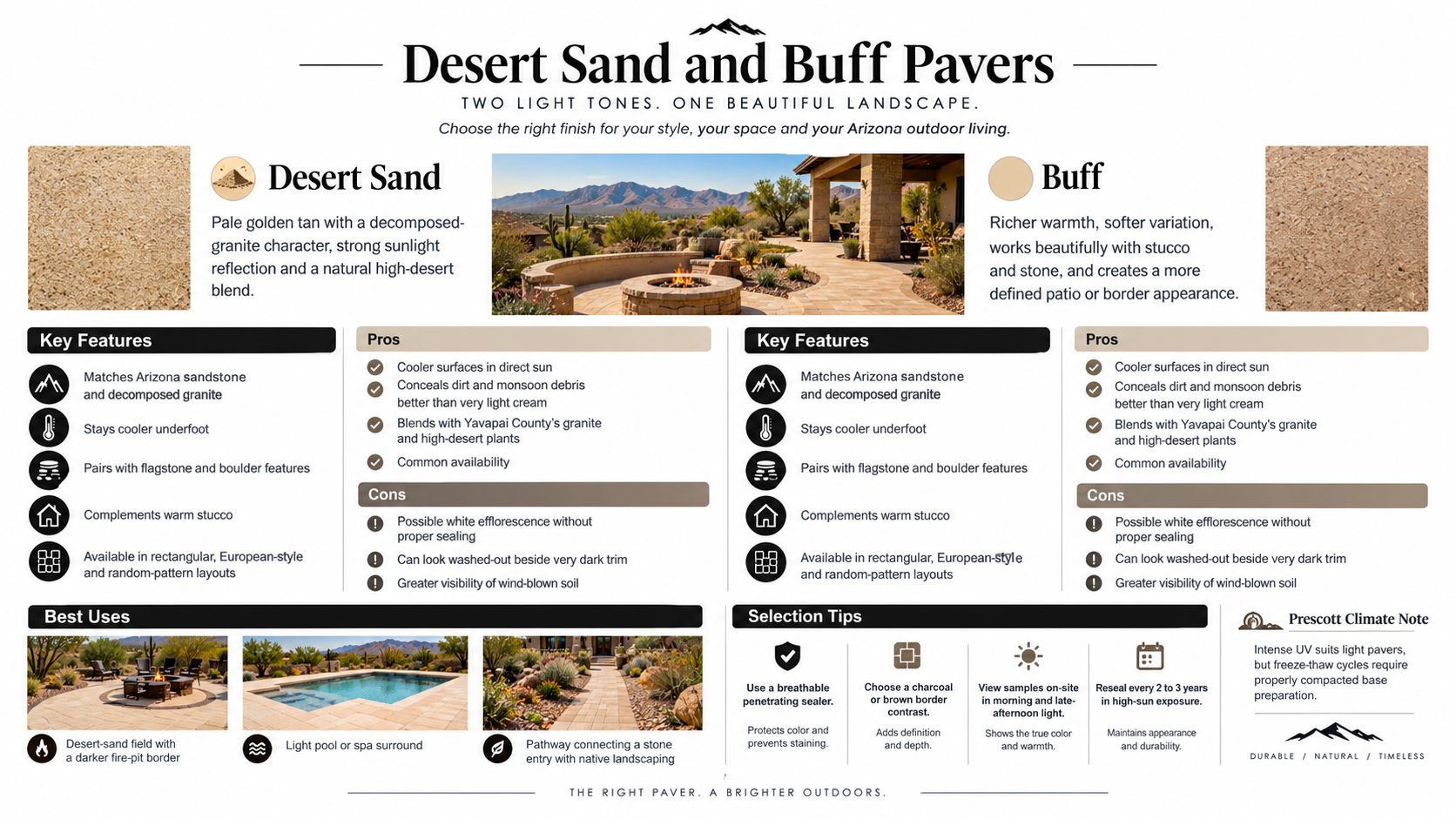
Where buff works best
Buff pavers make a graceful transition from a stone entry to a native-plant garden. They also pair well with a fire feature when a contrasting band frames the seating area instead of letting a large expanse of one color look flat. For patio layout ideas, see R.E. and Sons Landscaping's guide to choosing pavers for patios.
Light finishes can show certain marks more clearly than a varied blend, so consider where irrigation overspray, food spills, and leaf litter are likely to land. Ask about the manufacturer's cleaning and sealing guidance rather than assuming sealer will preserve the original shade. Concrete paver color changes gradually as weathering and wear affect the cement and pigment at the surface, and sealing is maintenance, not a promise of permanent color.
Sample check: Set samples in the actual project area and view them in both morning and late-afternoon light. Dry, cured pavers can look different from wet ones and from small showroom chips.
2. Charcoal Gray Pavers
Charcoal gives a patio a crisp, grounded appearance and creates a strong contrast with light stucco, pale countertops, or warm stone. It can suit a contemporary Prescott home, but it's usually easier to live with when used as a border or accent than as the entire surface.
Color has a measurable relationship with solar reflectance. In one concrete-paver test, SRI ranged from 95 for white to 7 for black, while light gray measured 44, standard gray 35, dark gray 17, and anthracite 9 (paver reflectance testing). Those values show why dark charcoal deserves careful placement in sunny areas. Ask the manufacturer for solar-reflectance and thermal-emittance information instead of relying on a color name alone.
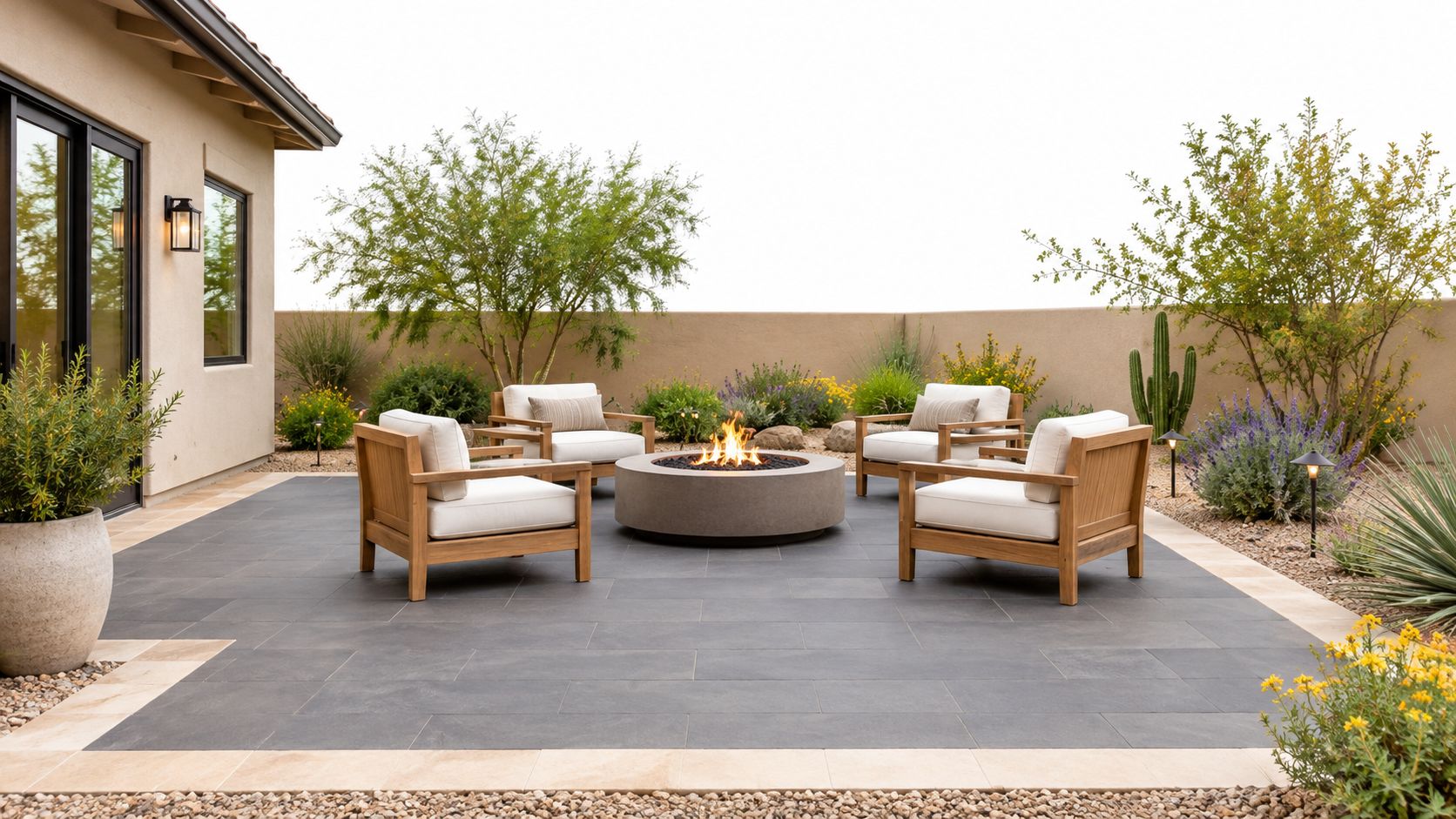
Use contrast with purpose
A charcoal border can sharpen the edge of a lighter patio, while a charcoal apron near an outdoor kitchen can visually anchor the cooking area. On a hillside property, a dark path can look striking among boulders and gravel, but test it in afternoon sun before extending it through exposed walking routes.
Texture also matters. A textured or tumbled finish can soften the look of a dark surface and make minor scuffs less obvious than a smooth, uniform finish. Near water, choose a finish appropriate for the setting and prioritize traction along with color.
Dark pavers can create a strong design statement, but don't judge them under indoor lighting. Check the exact sample where it will be installed, particularly if people will walk barefoot nearby.
3. Terracotta and Rust Red Pavers
Terracotta and rust red add warmth that can echo Southwestern architecture, iron-rich soil, and the tones of a timber door or stacked-stone fireplace. They're a natural option for a courtyard with cream-colored walls or a walkway meant to connect the home visually to the surrounding area.
Concrete paver color commonly comes from pigment added during manufacturing, with mineral pigments such as iron oxides used for earth-tone shades. Technical guidance describes red, yellow, and black iron oxides as principal pigment tones, with blends producing reds, browns, tans, and charcoals. Typical guidance puts pigment loading around 3%–4% by weight of cementitious material, while broader technical ranges extend from 2% to 7% (technical guidance on color in concrete). The finished color still depends on the cement, aggregate, curing, texture, and exposure, so sample the actual product rather than choosing by a shade name alone.
Keep warm color in balance
Terracotta can work beautifully around an outdoor fireplace, where the warm paving complements the firelight and masonry. On a front walkway, it can also pick up the color of nearby earth and planting beds. If the home already has a warm façade, a tan or gray border can keep the palette from feeling overly saturated.
Pigment family matters for long-term appearance. Comparative weathering information distinguishes stable iron-oxide colors from carbon-black and some other alternatives, so ask what pigment system the manufacturer uses and how the color is incorporated (concrete pigment durability guidance). A well-chosen red should feel integrated with the architecture, not like a bright patch added to the yard.
4. Multi-Color Earth Blend Pavers
A multi-color earth blend mixes shades such as tan, brown, gray, and rust. That variation makes it a practical choice for busy areas because dust, small stains, and ordinary surface wear are less likely to stand out than on a single uniform color.
In Prescott, a blended patio can sit comfortably beside granite, river rock, native plants, and artificial turf. It also helps connect separate outdoor zones without demanding that every material match exactly. For a yard that combines paving and rock, R.E. and Sons Landscaping's article on pavers and river rock offers another way to think about the transition between hardscape materials.
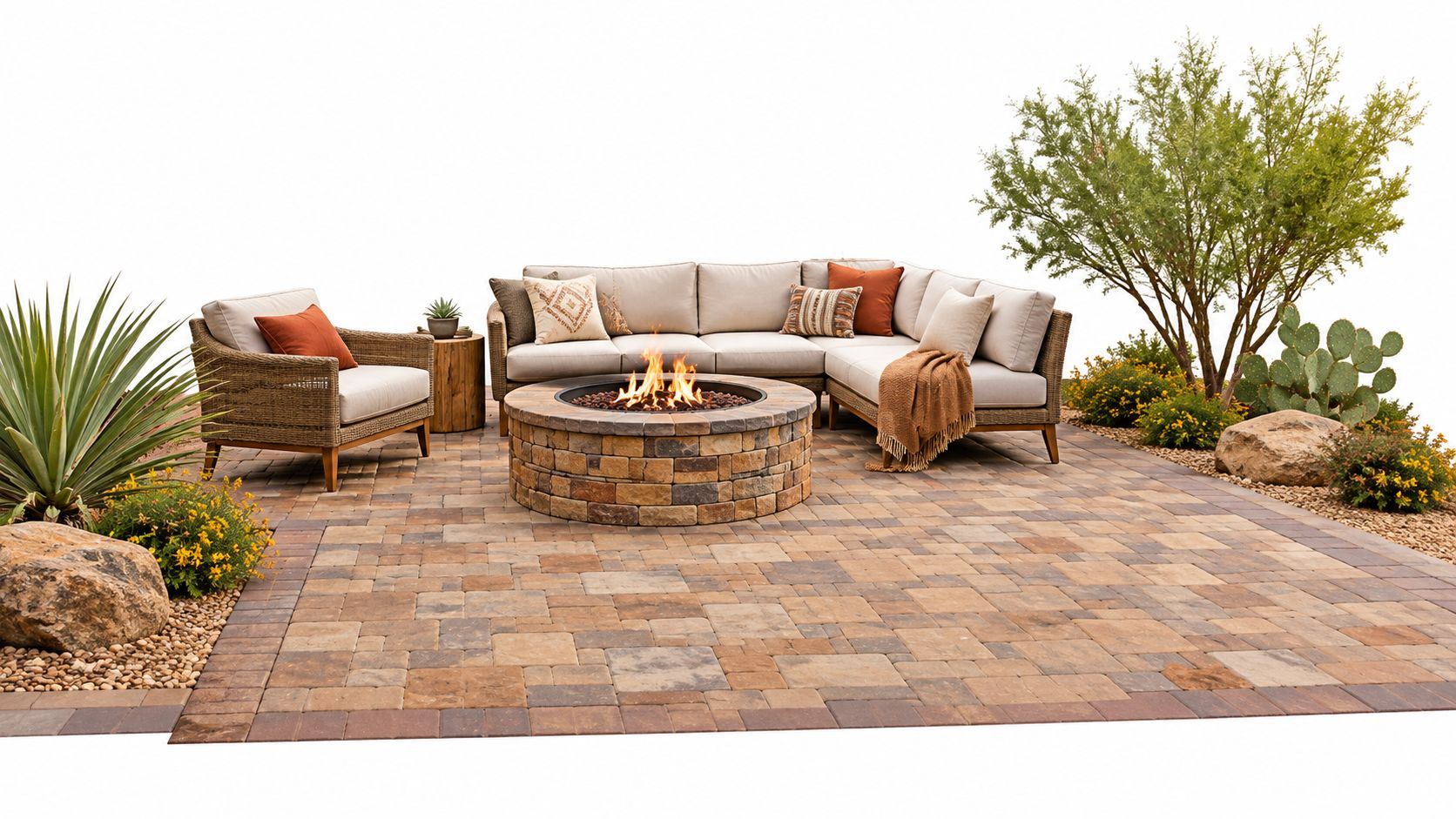
Make the mix look intentional
For a family patio, a blend can disguise the everyday dust and debris that collect around seating and walkways. On a driveway, it can give a broad surface visual texture while still coordinating with the house. A single-color border can frame the blend and bring order to an otherwise varied field.
Ask to see a full-size sample board outdoors. If the product comes from multiple pallets, the installer can draw from them during placement so the color variation is distributed across the project rather than clustered in patches. Confirm that the pavers come from a consistent production run when that's important to the design.
Watch the video below for another look at outdoor paver layouts and material combinations.
5. Chocolate Brown and Walnut Pavers
Chocolate brown and walnut tones bring depth without the starkness of black. They pair naturally with timber pergolas, bronze fixtures, wood-toned furniture, and outdoor kitchens with dark cabinetry or warm stone counters.
A walnut patio can make a lodge-inspired Prescott backyard feel cohesive, especially when the pavers meet a natural-stone fire feature. Brown also works on a front walkway where it can bridge a wood door and a flagstone landing. The trade-off is that a large, dark-brown surface may feel heavy beside a small home or a shaded courtyard.
Add a lighter counterpoint
A pale border, light stone landing, or planting bed can break up the field and give the design contrast. For a driveway, brown pavers can complement a warm exterior, but the final choice should also relate to the roof, garage door, and surrounding gravel. Don't select the brown from a product name alone: the same label can look different depending on surface texture, aggregate, and light.
Solar-reflectance testing has shown that paving color can influence heat performance, so consider how much direct sun reaches a brown surface and where people will spend time. A covered seating area or nearby shade can make a dark palette more comfortable and usable. If the project is fully exposed, compare brown with a mid-tone gray or earth blend before committing.
6. Ivory and Cream Pavers
Ivory and cream brighten a shaded courtyard and complement white stucco, light stone, and restrained planting. They can be a strong choice for a pool surround or a compact patio where a pale surface makes the space feel open.
The trade-off is maintenance. Pale pavers may show soil, leaf marks, and irrigation residue more clearly than a variegated blend, especially near trees or planting beds. A textured finish can add visual character and provide a more appropriate surface near wet areas, but the product should still be chosen for the specific use.
Think about light as well as cleaning
A light paver reflects more solar energy than a very dark one, but that doesn't mean every cream finish will feel cool in direct summer sun. Surface texture, nearby shade, and the direction the space faces all affect comfort. Very bright paving can also redirect sunlight toward seating or exterior walls, so the brightest option isn't automatically the most comfortable one.
For a small patio in Prescott Valley, cream pavers might lift a shaded seating area, while a mid-tone border helps define its edge. Before choosing, wet and dry the sample to see how the surface changes, and ask the manufacturer for care instructions. For project-planning context, consult R.E. and Sons Landscaping's guide to paver patio cost per square foot.
7. Black and Onyx Pavers
A black border around a buff patio reads sharp from the street, and the same move frames a fire pit or outlines an outdoor kitchen. As a full field under Prescott sun, black is a harder sell. Independent reflectance testing consistently places the darkest pavers at the bottom of the range, so an exposed onyx patio can get too hot for bare feet by early afternoon. Keep it to shaded courtyards, covered seating areas, and accent bands, and compare samples at the hottest hour of the day before committing.
Dust is the other local factor. Prescott's fine airborne soil and hard-water sprinkler spots show up faster on a uniform black surface than on a variegated blend. A charcoal-and-onyx mix hides that film far better on a front walk or driveway edge, while a solid black field suits spaces that get rinsed or swept regularly.
Don't mistake surface haze for pigment failure
Efflorescence is more visible on dark pavers. This white, powdery deposit forms when water carries soluble salts from the cement toward the surface; the film sits on top while the pigment underneath stays intact. Specialized cleaners can remove it, and the deposits taper off once the available compounds are consumed (cleaning and sealing guidance for concrete pavers).
Finish changes how black reads. A matte or tumbled surface cuts glare and disguises minor scuffs, and pairing onyx with cream stone, green planting, or a warm earth blend keeps the contrast deliberate. Around pools and water features, weigh barefoot traction alongside the dramatic look.
8. Pewter and Bluestone Gray Pavers
Pewter and bluestone gray sit between light gray and charcoal, so they pair well with stone veneer, stucco, and contemporary siding without locking the design into one style. Their cooler undertones can echo Prescott granite without copying it exactly, which helps a patio or entry walk feel connected to the property.
A mid-tone gray also adapts across uses. On a patio, it stays quiet behind colorful furniture and planting. On a walkway, it can link a stone entry to garden paths. Around an outdoor kitchen, it gives a neutral surface that leaves cabinetry and counters room to carry the design.
Warm up the surrounding palette
Cool grays can read flat under harsh afternoon sun if nothing balances them. Tan stone borders, terracotta planters, or warm-toned furniture pull warmth back in, and native planting like blue grama grass or desert sage softens the edge without turning the space formal. For a more unified look, order pavers from the same production run and review the finish in natural light before installation.
Judge a gray surface by its specific reflectance and finish rather than the color label on the pallet. On a pewter or bluestone gray field, weathering tends to expose lighter aggregate gradually, so a blended or textured gray ages less abruptly than a uniform one (concrete paver color and maintenance guidance). Cleaning or sealing can moderate that shift, though normal aging still shows over time. Driveways and front walks benefit most from a variegated gray blend, since tire marks and dust fade into a mixed field faster than they do on a flat solid tone.
8 Paver Color Options Comparison
Paver Option | Appearance & Style | 🔄 Design Complexity | ⚡ Heat & Upkeep | 📊 Expected Outcome | ⭐ Ideal Use |
|---|---|---|---|---|---|
Desert Sand and Buff | Light tan to warm beige; blends with high-desert landscapes | Low; optional contrasting border adds definition | Reflects heat; moderate upkeep, including periodic sealing | Natural, cohesive patio with a cooler surface | Sun-exposed patios, pool surrounds, and pathways |
Charcoal Gray | Deep neutral gray; modern and grounded | Low to moderate; warm accents help avoid a stark look | Absorbs more heat; conceals many stains and leaves | Strong visual anchor with a polished, contemporary feel | Outdoor kitchens, entertainment areas, and accent borders |
Terracotta and Rust Red | Warm orange, red, and rust; Southwestern character | Moderate; balance with neutral borders and compatible home colors | Moderate upkeep; UV-stable pigments and sealing help preserve color | Distinctive, welcoming space with a strong sense of place | Southwestern courtyards, fireplace patios, and walkways |
Multi-Color Earth Blend | Varied tan, gray, brown, and rust; natural stone-like look | Moderate; blend pallets during installation and plan a consistent layout | Low visible upkeep; camouflages dirt, stains, and wear | Natural appearance that stays visually forgiving | Family patios, high-traffic walkways, and mixed-material landscapes |
Chocolate Brown and Walnut | Rich brown and chestnut; warm, lodge-inspired look | Low to moderate; light accents can prevent a heavy appearance | Absorbs significant heat; hides dirt but shows light debris | Cozy, upscale setting that coordinates with timber and stone | Mountain-style patios, pergola areas, and fire features |
Ivory and Cream | Off-white to pale cream; bright and refined | Low; consider shade and textured finishes to manage glare | Reflects the most heat; frequent cleaning may be needed | Brighter, more open-feeling space with a cooler surface | Pool decks, shaded patios, and small courtyards |
Black and Onyx | Near-black; bold, sleek contrast | Moderate; best used selectively with lighter materials | Absorbs the most heat; water spots and light debris may show | Dramatic focal points without overwhelming the full patio | Borders, fire pit surrounds, and contemporary accents |
Pewter and Bluestone Gray | Cool mid-gray with blue or silver undertones; natural look | Low to moderate; warm accents can balance the cool palette | Moderate heat absorption; generally hides dirt and wear reasonably well | Refined, versatile finish between light gray and charcoal | Patios, pool decks, and entry walks |
Choose a Palette That Works Beyond the Sample
The strongest paver color isn't the one that looks best for a few minutes in a showroom. It's the one that still feels right beside the home after Arizona sun, dust, seasonal weather, and everyday use have affected the surface.
For a Prescott patio, desert sand, pewter gray, or a multi-color earth blend can provide a flexible foundation. Charcoal, walnut, and onyx are often most effective as intentional accents. Terracotta and rust red suit Southwestern character, while ivory and cream can brighten shaded spaces but may call for closer attention to cleaning.
Before finalizing the color, compare full-size samples in the project area at morning and late-afternoon light. Check the paver manufacturer's finish and care guidance, and consider how the surface will work with the home's architecture, nearby stone, gravel, and plantings. A sample viewed dry may not tell the full story, so look at it after wetting and drying as well.
Color is only one part of a successful installation. The paver's material and finish need to suit the intended use, and the layout should work with the yard's drainage, shade, and circulation. A driveway, a pool surround, and a quiet garden path may need different colors and textures, even when they sit within the same property.
R.E. and Sons Landscaping designs and builds paver patios, driveways, and walkways throughout Prescott, Prescott Valley, and Northern Arizona. Its process covers consultation, design approval, installation, and ongoing support, so homeowners can compare options with the project as a whole in mind. For another way to consider color and finish choices, see this guide to concrete paint color options.
Frequently Asked Questions
Which paver color works best in Prescott?
Start with exposure. A mid-tone earth blend often hides trail dust and pine pollen on a patio or walkway, while a cooler pewter can calm a west-facing driveway that gets harsh afternoon sun. Match the field color to the roof, stucco, and nearby stone, then use darker tones where an accent border or band will look intentional.
Are light pavers cooler than dark pavers?
Lighter, higher-reflectance colors absorb less solar energy than very dark colors, and the testing cited earlier shows a substantial gap between the palest and darkest shades. Barefoot comfort still depends on texture, airflow, shade, and whether the surface sits beside a pool, a courtyard wall, or open gravel.
Do concrete pavers keep their original color forever?
Color can mellow as pigment weathers and the surface wears, especially where tires turn, chairs drag, or sprinklers leave mineral spots. As noted earlier, cleaning and sealing can slow visible change, but neither locks the original shade in place. Plan for a graceful shift by choosing blends and finishes that age evenly.
What should I ask about when comparing samples?
Ask if the color runs through the full paver or only the face, which pigment family is used, and what cleaner or sealer the manufacturer allows. Then judge a cured, full-size piece where it will live: bright morning light on a front walk, reflected heat near a south wall, and dust carried across a driveway apron.
Why do dark pavers sometimes look faded after installation?
A white haze is often efflorescence, salts moving to the surface as moisture evaporates. It shows up faster on charcoal and onyx because the contrast is stronger. The cleaning guidance discussed earlier covers removal and sealing; the practical check is whether the haze lifts after cleaning and drying before assuming the pigment failed.
R.E. and Sons Landscaping helps Prescott-area homeowners compare paver colors and plan patios, driveways, and walkways around the home, sun exposure, and maintenance needs. Visit R.E. and Sons Landscaping to explore design-build services and arrange a consultation.
Comments