
8 Artificial Turf Landscaping Ideas for Prescott Homes
What good is a green yard if it's too hot to use or holds water after a monsoon? The best artificial turf landscaping ideas for Prescott pair a usable patch of grass with shade, dependable drainage, and surfaces suited to the activity. Pet runs, putting greens, xeriscape hybrids, patio lawns, play areas, pool borders, front-yard accents, and courtyards all work when the preparation matches the site.
For homeowners in Prescott, Prescott Valley, Chino Valley, and surrounding Northern Arizona communities, turf means no mowing, fertilizing, or reseeding, fewer muddy patches, and less watering than a natural lawn. Occasional cleaning and light upkeep still matter, so treat synthetic grass as low maintenance rather than no maintenance. R.E. and Sons Landscaping guides homeowners through local design-build planning, beginning with a free consultation and complimentary design. The important decisions happen before installation: where water goes, when shade reaches the yard, and how the finished surface meets patios, planting beds, and fences.
High-desert sun, freeze-thaw cycles, monsoon runoff, and HOA requirements all shape the layout. Boundary planning matters too, so confirm fence and edge placement against Prescott's climate and neighborhood requirements before finalizing the layout. Homeowners weighing perimeter styles can review examples such as residential fences in Palm Beach County for design ideas, then adapt materials and placement to Northern Arizona conditions.
Start with what your household will use. A small, well-positioned lawn usually serves a family better than synthetic grass stretched across every available surface.
1. Pet-Friendly Artificial Turf Yard
A pet-friendly turf yard works best as a washable drainage system, not just a durable green surface. Urine needs a clear route through the backing and base, and homeowners need convenient access for rinsing.
A practical layout combines a shaded play area with a separate potty zone near a hose connection. For a large-breed dog, a corner run can preserve the rest of the backyard for entertaining; for cats using an enclosed outdoor space, secure boundaries matter just as much as the ground surface.
This layout shows how an open turf area can accommodate active play.
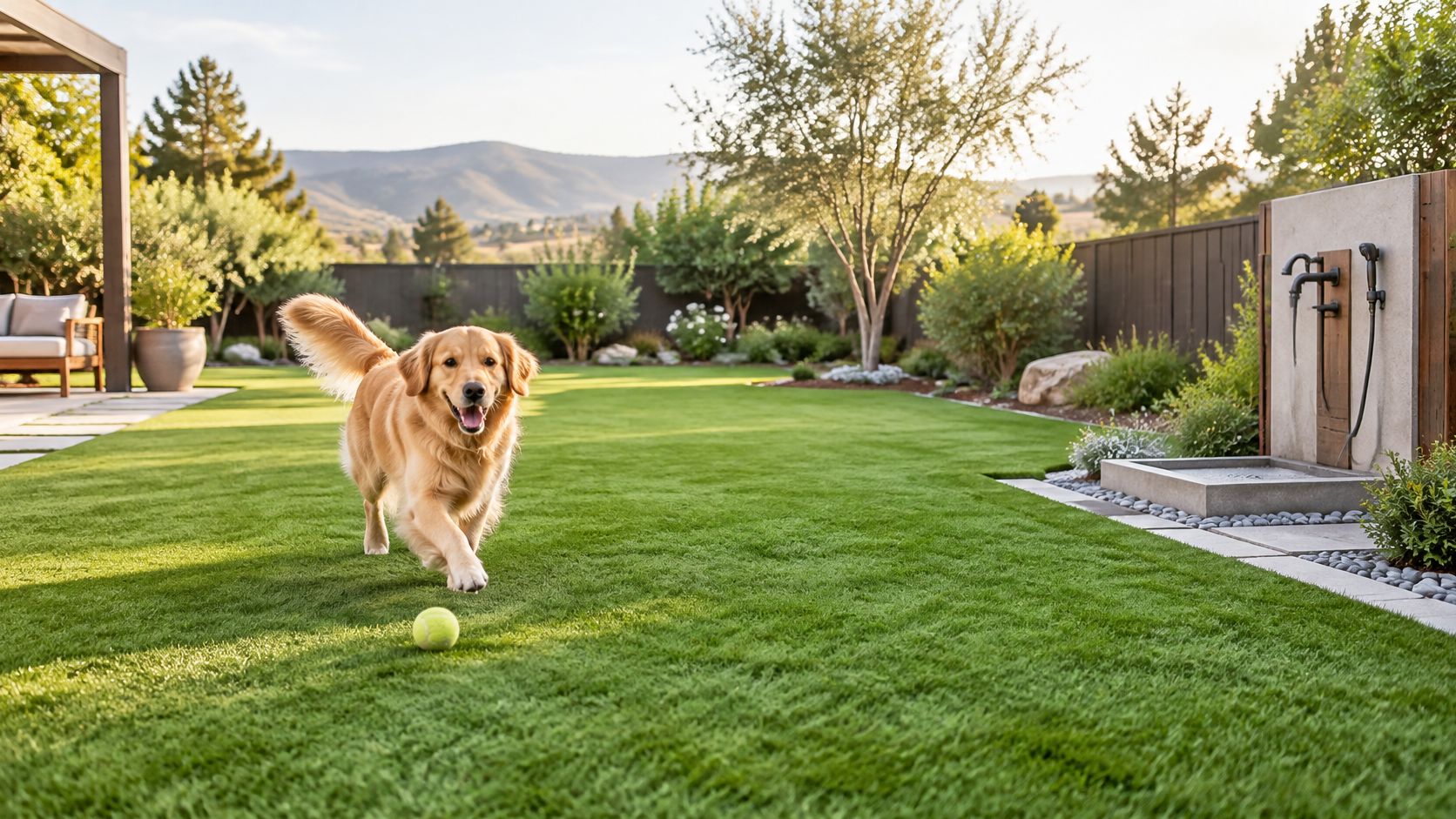
What makes artificial turf suitable for dogs?
Choose pet-specific turf with perforated backing, a graded aggregate base, and an infill selected for drainage and odor management. An antimicrobial treatment may be useful, but it doesn't replace waste removal or cleaning. Compare artificial turf infill options before choosing a system based on softness alone.
Keep rinsing practical. Position the hose connection where you can reach the whole run without dragging a hose through the house.
Secure the perimeter. Use a proper edge restraint; decorative river rock can frame the run, but loose rock shouldn't be the only thing holding turf in place.
Maintain the surface. Remove solids promptly, rinse regularly, and use a pet-safe enzyme cleaner compatible with the turf.
Practical rule: Plan shade over the area where your dog rests, not just over the gate.
In Prescott Valley and Chino Valley, an exposed afternoon run needs particular attention. Check the surface before pet access, and increase cleaning when frequent use or persistent odors call for it.
2. Backyard Putting Green
A backyard putting green turns an awkward corner into a place you'll use rather than another area to mow. The key is predictable ball roll, which starts with the contours and compacted base, not the color of the grass.
A compact green beside a patio can accommodate casual practice and entertaining. A side-yard version can use stone edging, a fringe strip, and shielded outdoor lighting without taking over the main backyard.
The surrounding area should frame the playing surface without interrupting it.
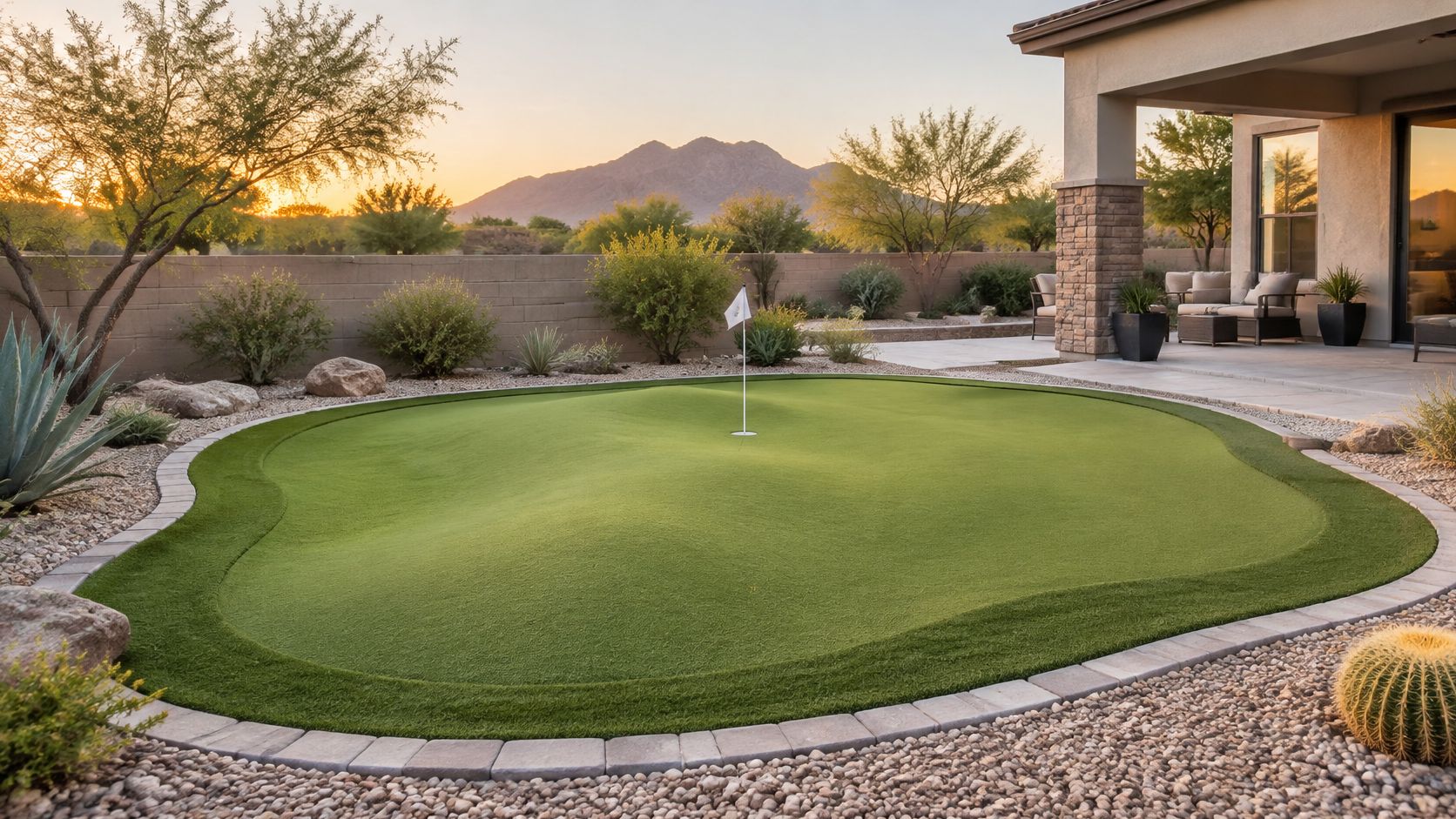
How do you make a backyard putting green play well?
Design the breaks before selecting the turf. Gentle changes in grade make a small green interesting; exaggerated slopes can make it frustrating. Place cups where you can practice different approaches without standing in planting beds or blocking patio circulation.
Build the aggregate base in compacted lifts, establish drainage beneath the finished contours, and secure the perimeter. In Prescott's freeze-thaw conditions, a soft or poorly drained base isn't something the turf can hide.
The New Jersey Department of Environmental Protection review reports that long-pile turf can be hotter than short-pile systems, reinforcing the value of choosing a use-specific surface rather than the tallest outdoor grass.
This video provides additional visual context for a backyard putting-green concept.
Keep loose gravel outside the putting perimeter so it doesn't migrate into the playing surface. In Williamson Valley or Prescott, position the green for the hours you'll practice, with attention to glare, shade, and access from the house.
3. Xeriscape and Turf Hybrid Landscape
Keep turf where people use it, and keep living plants where they contribute shade, habitat, and seasonal interest. That's the strongest starting point for a high-desert hybrid yard.
For a Prescott front yard, use a narrow green strip along a walkway, then surround it with climate-appropriate planting, decomposed granite, and anchored boulders. In a Chino Valley backyard, a modest play lawn can sit between a covered patio and drought-tolerant beds.
This design illustrates the contrast between a defined green area and a broader desert-style planting palette.
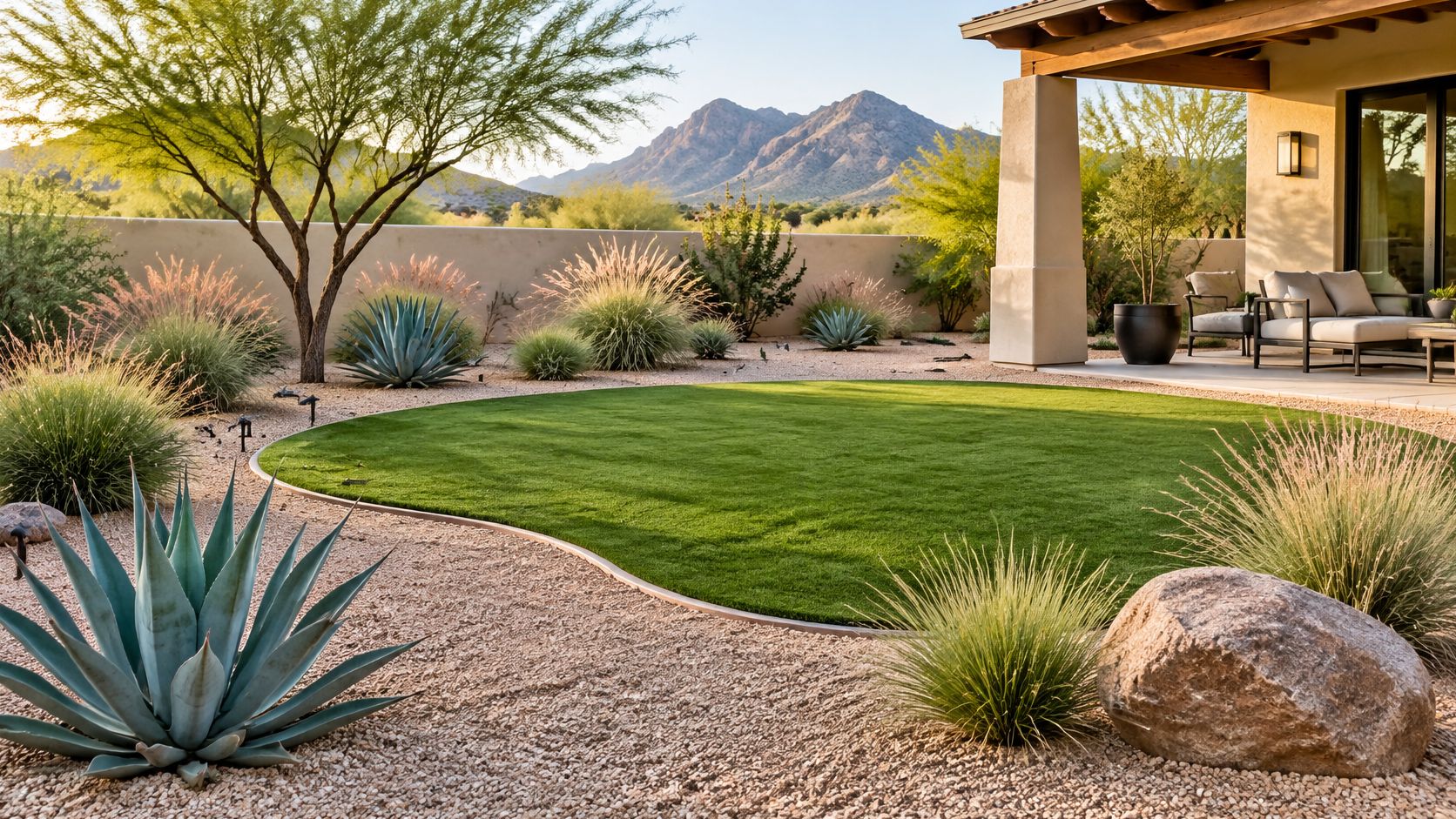
Is a turf-and-xeriscape yard environmentally friendly?
It can reduce lawn irrigation, but synthetic turf isn't a substitute for living habitat. Utah State University Extension identifies trade-offs that include greater runoff potential, lower rainfall capture and infiltration than living turf, and potential water-quality impacts from microplastics and leached substances.
Preserve soil and planting areas outside the turf footprint rather than sealing the entire yard. Use native or locally adapted plants suited to the elevation, and don't assume a succulent pictured in a desert garden will tolerate a Prescott winter.
Separate irrigation zones. Group plants by water needs instead of watering everything on the same schedule.
Contain loose materials. Metal or stone edging keeps decomposed granite out of turf fibers.
Give runoff somewhere appropriate to go. Consider planted collection areas or carefully graded channels, informed by these dry creek bed landscaping ideas.
The goal isn't a yard made entirely of rock and plastic. It's a useful green space surrounded by plants and drainage features that suit Northern Arizona.
4. Turf and Paver Outdoor Living Zone
Start with the furniture, cooking area, and walking routes. Then place turf in the remaining space where people will enjoy a softer surface.
A backyard with an outdoor kitchen, dining patio, and adjacent play lawn works because each material has a clear job. Pavers support chairs, grills, and regular circulation; turf provides a green area for games or stretching out.
This patio arrangement shows how hardscape can define the gathering area while turf softens its perimeter.
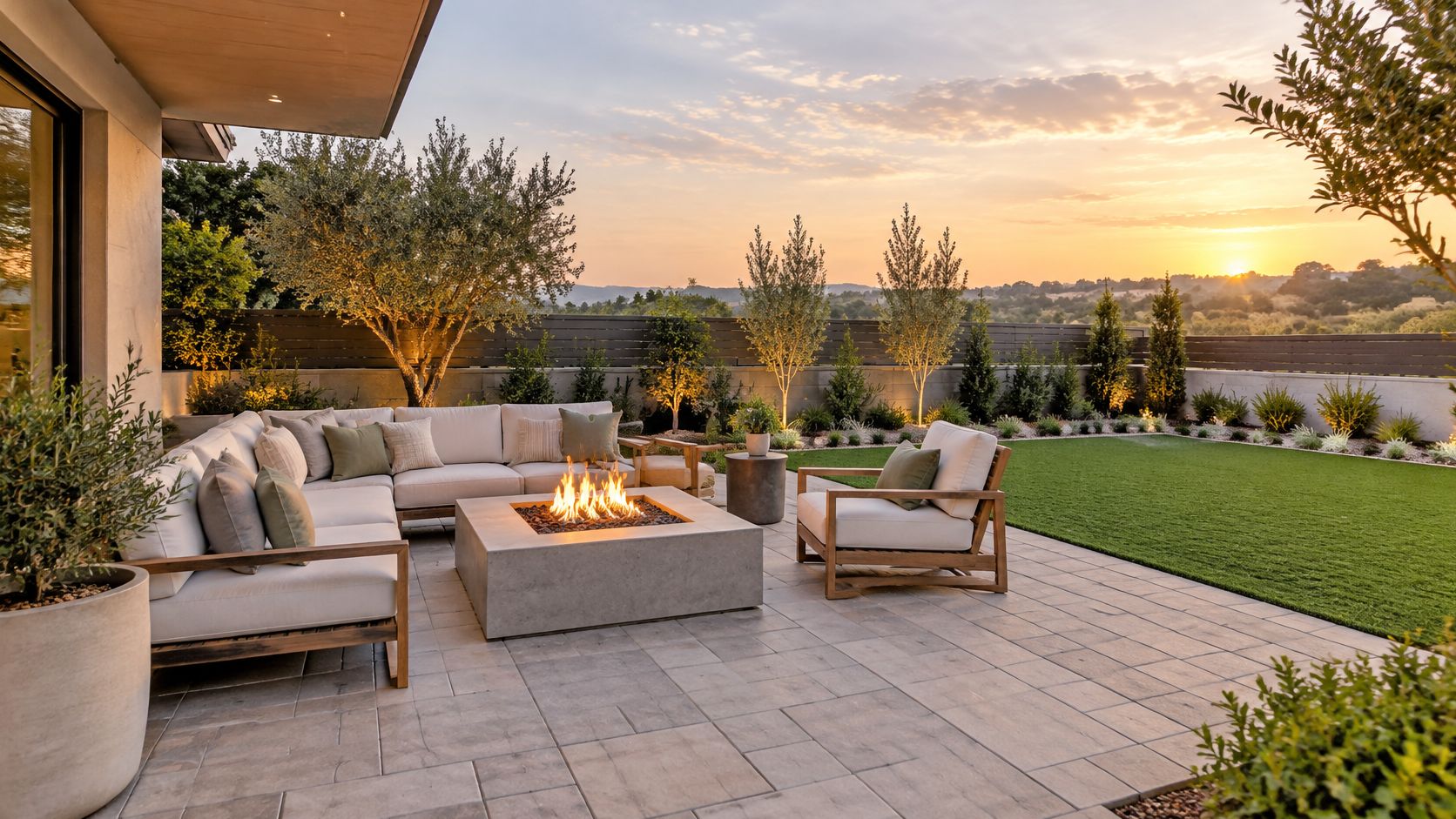
Where should turf meet the patio?
Set transitions so people don't catch a toe on exposed backing or a raised edge. Grade the patio away from the house toward an appropriate drainage route, and prepare the turf and paver bases as coordinated parts of the same project.
Keep fire features on suitable noncombustible hardscape, with clearances determined by the appliance, applicable requirements, and the surrounding construction. Avoid extending synthetic grass beneath a fire pit just to maintain a continuous green border.
Put the dining set on pavers and the play space on turf. Neither surface needs to do every job.
Shade should be part of the plan, not an afterthought. A University of Nevada, Las Vegas and Desert Research Institute study measured artificial turf surface temperatures reaching approximately 169°F under the study conditions.
For a raised seating platform, compare decking materials alongside the paver and stone palette. Keep the design cohesive, but evaluate each surface for heat, drainage, winter conditions, and its intended use.
5. Kids' Play Turf Lawn
A good play lawn needs shade, drainage, and secure edges before it needs a swing set. Artificial grass can reduce mud and worn patches, but it doesn't automatically make every activity safe.
For a family backyard in Prescott Valley, place an open play rectangle where adults can see it from the patio or kitchen. Add a shaded picnic spot nearby, and keep the main running route clear of boulders, exposed stakes, and abrupt changes in elevation.
Is artificial turf safe under play equipment?
Artificial turf and cushioned infill alone should not be considered a fall-protection system. Under swings, climbing equipment, or raised play structures, use a tested impact-attenuating assembly suitable for the equipment's fall height.
Heat deserves equal attention. Penn State's Center for Sports Surface Research found that watering significantly reduced synthetic-surface temperatures, but the cooling wasn't maintained for the duration of a standard sporting event under the tested conditions.
Provide real shade. Use a properly positioned shade sail, covered area, or suitable tree placement rather than relying on cooling infill alone.
Check the surface before play. Assess conditions at the time children will use the lawn, especially before barefoot activity.
Build smooth boundaries. Secure rounded edging and flush transitions help keep backing and fasteners out of reach.
Keep debris out. Separate the play lawn from loose gravel and planting beds that shed sharp or messy material.
Safety comes first: A green surface can still be hot, and a soft-feeling surface isn't necessarily fall-rated.
A toddler side yard can work well with a secure boundary and shade. A larger lawn can accommodate portable goals and games, provided equipment is anchored correctly and drainage doesn't cross the main play area.
6. Poolside Turf Surround
A poolside turf strip can soften the transition between a deck and planting beds without introducing the muddy edges associated with worn natural grass. It works best as an accent beside a properly designed pool deck, not as a replacement for every hard surface.
For example, place a green lounging strip beyond the deck, with pavers carrying the main route between the house, pool gate, and spa. Around a small spa, a turf accent can balance stonework while leaving equipment access clear.
Will poolside turf stay cool and dry?
Not automatically. Splash water still needs somewhere to drain, and a sun-exposed synthetic surface can become uncomfortable under bare feet.
A UCLA analysis of artificial athletic turf distinguishes cooling-water demand from irrigation for plant growth, an important reason not to describe residential turf as requiring no water at all. Around a pool, plan for cleaning and occasional cooling rather than assuming the splash zone will take care of both.
Confirm material compatibility. Select turf and installation components suitable for the anticipated chlorine exposure and cleaning products.
Coordinate elevations. Set the turf transition to drain away from the pool without creating a toe-catching drop.
Preserve the deck route. Keep a stable, appropriate walking surface around access points and pool equipment.
Plan shaded lounging. Position umbrellas or structures where people will step out and sit.
In Prescott and Chino Valley, keep winter conditions in mind as well. Don't route splash water or rinse water toward a shaded walkway where it may freeze.
Rinse away residues when needed, and keep drainage outlets clear. Poolside turf reduces lawn chores, but it doesn't eliminate surface cleaning or the need to check barefoot comfort.
7. Front Yard Curb Appeal Turf Border
A front-yard turf border should look intentional from the street, not like a leftover strip squeezed between gravel beds. Simple shapes, restrained turf coverage, and clean edging usually produce the most convincing result.
A curved lawn edge can frame boulders and cold-hardy architectural plants. Beside a driveway, a narrow turf panel can work if it's wide enough to look deliberate and doesn't interfere with drainage or vehicle clearance.
Does an HOA have to approve artificial turf?
Approval depends on the property and the applicable rules. Before removing the existing yard, verify the city, utility, and HOA requirements, including any conversion incentive conditions.
The University of Arizona Cooperative Extension's turf-conversion publication explains that program requirements differ and that some municipalities don't allow artificial turf as replacement ground cover in nonresidential areas. A neighbor's installation isn't proof that your proposed design is permitted or eligible for an incentive.
For the visual design, compare samples outdoors against your home's exterior rather than under showroom lighting. An overly bright green can stand out sharply against Prescott's stone, gravel, and dormant seasonal planting.
Plan seam placement. Keep joins away from the most prominent street-facing view where the layout allows.
Use consistent fiber direction. Different orientations can make adjacent pieces appear mismatched.
Frame the green. Planting beds, mulch, and stone borders help integrate turf with the rest of the property.
Protect sight lines. Keep planting and boulders clear of driveway visibility and utility access.
A modest turf border is often easier to integrate than a full synthetic front lawn. It also leaves room for shade trees and living plants that give the property character.
8. Courtyard Turf with Stone Feature Wall and Water Feature
A small courtyard benefits from a layered design: turf for a green floor, stone for texture, and moving water for sound. Keep the arrangement simple enough that people can still move comfortably between the door, seating, and garden.
A stacked-stone wall with a recirculating fountain can anchor one end of the space. In a narrow side courtyard, a bubbling boulder beside a turf seating area may fit better than a pond or broad waterfall.
What should go in before courtyard turf?
Install underground utilities, drainage provisions, and the foundations for fixed features first. Provide accessible electrical connections and shutoffs, and keep pump servicing possible without lifting the finished lawn.
Use water feature rocks to explore shapes and textures that fit the scale of the space. For a warmer stone palette, the Varun Marbles guide to brown granite offers material inspiration, but confirm exterior suitability, finish, and freeze-thaw performance before specifying any stone.
Leave room to service the fountain. A concealed pump shouldn't become an inaccessible pump.
Enclosed yards need particularly careful grading because walls and thresholds can restrict runoff routes. Penn State's publication on synthetic-turf temperature management also demonstrates why temporary watering shouldn't replace a broader shade strategy.
Add overhead shade or appropriate planting where afternoon sun reaches the seating area. Position lighting to reveal the stone texture without shining into nearby windows.
In Prescott's colder weather, follow the water-feature equipment's winterization requirements. Keep overspray and overflow off walking routes, and don't allow the fountain basin to become the accidental drainage outlet for the courtyard.
Artificial Turf Landscaping Ideas at a Glance
Idea | Best For | Footprint Needed | Maintenance Level | Key Consideration |
|---|---|---|---|---|
Pet-Friendly Artificial Turf Yard | Pet owners seeking a clean, year-round yard | Flexible; suitable for a play area or dog run | Low; rinse and groom periodically | Proper drainage and odor-control infill are essential |
Backyard Putting Green | Golfers wanting a convenient short-game area | Small to large, depending on layout | Low; brush fibers and remove debris occasionally | A well-compacted base and planned contours support playability |
Xeriscape and Turf Hybrid Landscape | Homeowners seeking water-wise curb appeal with usable turf | Flexible; turf limited to high-use areas | Low to moderate; plants need care, especially while establishing | Match plants to local climate and group them by water needs |
Turf and Paver Outdoor Living Zone | Families seeking defined areas for dining, lounging, and play | Moderate to large, depending on features | Low to moderate; maintain turf and outdoor features | Keep turf safely clear of fire features and plan drainage |
Kids' Play Turf Lawn | Families wanting a durable, clean play surface | Flexible; sized for play equipment and activities | Low; occasional grooming and surface checks | Shade or cooling infill helps manage heat |
Poolside Turf Surround | Pool owners seeking a soft, tidy barefoot area | Flexible; fits around pool decks or spa areas | Low; rinse after use and remove debris | Use pool-rated turf and carefully manage drainage and heat |
Front Yard Curb Appeal Turf Border | Homeowners seeking a polished, low-upkeep front yard | Flexible; works as a strip or lawn area | Low; occasional cleaning and inspection | Clean installation, natural-looking turf, and HOA rules matter |
Courtyard Turf with Stone Feature Wall and Water Feature | Homeowners seeking a private, calming outdoor retreat | Small to moderate courtyard | Moderate; maintain the water feature, lighting, and turf | Plan utilities, drainage, and shade before installation |
Bring Your Turf Idea to Life in Prescott
The best turf project starts with a specific use, not a decision to replace every square foot of grass. Walk the property during the hours you'll use it, note the hot and shaded areas, and identify where water currently collects. Bring those observations, along with HOA requirements and a few useful inspiration photos, to the consultation.
R.E. and Sons Landscaping follows a 4-step process that keeps those decisions organized:
Consultation. Discuss your vision, daily activities, site conditions, and priorities.
Design approval. Review a custom layout that fits the grade and integrates with existing hardscape.
Transformation. Complete site preparation and installation in the approved sequence.
Enjoyment. Use the finished yard with a clear understanding of routine care.
Installation timing depends on the size and condition of the property. Most turf projects proceed faster than a full traditional lawn installation because there's no ongoing grow-in period, although drainage work and other exterior construction still affect the schedule.
Our kid- and pet-safe, UV-resistant turf is installed with proper base preparation and precision seaming. Those details matter as much as the visible grass, particularly where turf meets patios, drains, planting beds, and frequently used gates.
How much does artificial turf cost, and is it worth it?
A useful estimate must account for access, excavation, base preparation, drainage, edging, turf selection, and any putting-green or play-area requirements. There isn't a responsible blanket price or guaranteed resale return for every Prescott yard.
Compare the full installed scope against the lawn watering and maintenance you'll avoid. Include cleaning, infill upkeep, and eventual replacement in that comparison rather than assuming all future costs disappear.
Can artificial turf handle Prescott's freeze-thaw cycles?
Yes, with site-appropriate preparation and drainage. The important work is below the surface: remove unsuitable material, compact the base properly, and prevent trapped water from undermining edges and transitions.
A frozen or saturated subgrade isn't ready to cover just because the turf itself can be unrolled. Installation should proceed when the base can be prepared and compacted correctly.
What maintenance will the finished yard need?
Turf doesn't need mowing, fertilizer, or reseeding, but it still needs debris removal, occasional brushing, and cleaning. Pet zones require waste removal and rinsing; all areas need periodic checks of seams, edges, infill, and drainage outlets.
Keep monsoon debris out of drains and check surface temperature before children or pets use exposed areas. Low maintenance works best when the maintenance is planned.
R.E. and Sons Landscaping is licensed, bonded, and insured under Arizona ROC #300642, trusted by 2,500+ customers, and offers a free turf consultation and complimentary design for a yard planned around Prescott's climate and your household's needs. Visit R.E. and Sons Landscaping to schedule online or arrange your consultation by phone, Monday–Friday, 8am–4pm.
Comments